

Orion Tweeters: Bringing Crisp High Frequencies, Detailed Vocals, and Greater Sound Definition to Your Car Audio System
Learn how high-frequency car audio drivers improve vocal clarity, treble detail, and overall sound definition. Explore tweeter designs, placement strategies, crossover settings, amplifier compatibility, equalization, and installation techniques for a balanced and comfortable in-vehicle listening experience.


High-frequency reproduction plays an important role in making music sound complete, natural, and engaging. While subwoofers provide depth and main speakers handle much of the musical foundation, tweeters reproduce the upper frequencies that bring out details such as cymbal strikes, string textures, vocal nuances, and subtle instrumental effects. When these sounds are reproduced accurately, music gains a greater sense of openness and definition, helping listeners appreciate details that might otherwise become difficult to hear.
A well-planned tweeter upgrade can make a noticeable difference in a vehicle's sound presentation, especially when the existing system struggles with dull highs, unclear vocals, or an unbalanced frequency response. However, achieving crisp treble is not simply a matter of choosing the brightest speaker available. Tweeter design, placement, crossover settings, amplifier compatibility, and cabin acoustics all influence the result. Understanding these factors helps create a refined audio system that delivers detail without harshness during everyday listening.
Understand Why High-Frequency Reproduction Matters
Tweeters are designed to reproduce the upper portion of the audible frequency spectrum. They work alongside midrange and midbass speakers to create a more complete musical presentation. Without suitable high-frequency reproduction, music may sound less detailed, with cymbals, vocal articulation, and delicate instrumental textures becoming less noticeable.
The right tweeter can help improve several aspects of playback:
-
Vocal articulation: Subtle details in voices become easier to distinguish.
-
Instrument definition: High-frequency elements such as cymbals and strings gain greater presence.
-
Soundstage openness: Properly positioned tweeters can contribute to a more spacious presentation.
-
Musical separation: High-frequency details can become easier to distinguish from midrange elements.
-
Overall balance: Treble reproduction helps complete the sound produced by the rest of the system.
The goal is to achieve a natural top end rather than excessive brightness. A system with too much treble can become tiring, particularly during long journeys or when listening at higher volume levels.
Explore the Design Characteristics of High-Performance Tweeters
Orion High-Frequency Audio Components can be considered when planning an upgrade focused on clearer treble, more detailed playback, and improved sound definition. Before selecting a particular model, it is important to understand the design characteristics that influence how a tweeter performs.
Different tweeters use different diaphragm materials, motor structures, and mounting arrangements. These design choices influence sensitivity, frequency response, dispersion, and overall tonal character.
Common specifications worth examining include:
-
Frequency response: Indicates the range of frequencies the tweeter is designed to reproduce.
-
Sensitivity: Helps determine how efficiently the tweeter converts amplifier power into sound output.
-
Impedance: Must be compatible with the amplifier or crossover configuration.
-
Power handling: Shows the power levels the tweeter is designed to handle under specified conditions.
-
Mounting dimensions: Determine whether the tweeter fits the dashboard, door panel, or another installation location.
-
Dispersion characteristics: Influence how high-frequency sound spreads throughout the cabin.
These specifications should be considered together. A tweeter with impressive sensitivity may still produce an unsuitable result if its tonal character, placement, or crossover configuration does not match the rest of the system.
Compare Tweeter Designs Before Making a Selection
Different tweeter designs can produce different listening characteristics. Understanding their construction helps narrow down the options according to your installation space and preferred sound signature.
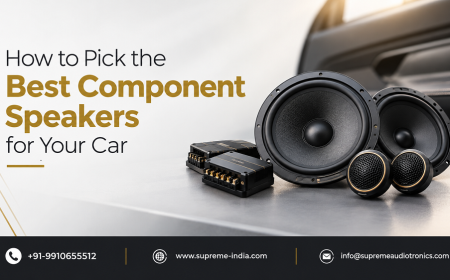
Dome tweeters are widely used in vehicle audio systems because they can offer broad dispersion and a relatively compact installation footprint. Their performance depends on diaphragm material, motor design, and crossover configuration.
Silk dome tweeters are often associated with a smoother presentation. They may appeal to listeners who prefer a softer treble character and want to avoid excessive brightness.
Metal dome tweeters can provide a more pronounced and detailed high-frequency presentation. Their behavior depends on the individual design, and careful tuning is important to prevent an overly sharp sound.
Bullet tweeters are commonly used in high-output and pro-audio-oriented installations. They can provide strong output and are often selected when projection and sensitivity are priorities. Their sound character and dispersion should be considered carefully, especially in a relatively small vehicle cabin.
There is no universally superior design. The right choice depends on the intended system, listening distance, speaker arrangement, and personal preference.
Position Tweeters for a More Natural Soundstage
Tweeter placement has a significant influence on how high frequencies reach the listener. Because treble wavelengths are relatively short, the position and direction of the speaker can affect perceived brightness, detail, and stereo imaging.
Common installation locations include dashboard corners, sail panels near the side mirrors, door panels, and dedicated speaker pods. Each position creates a different relationship between the tweeter and the driver's listening position.
A tweeter aimed directly toward the listener may produce a stronger high-frequency presentation, while a different angle can create a smoother balance. Reflections from glass and other hard surfaces can also change the perceived treble response.
When planning placement, consider:
-
Listening position: Evaluate how the tweeter performs from the driver's seat rather than judging its output from outside the vehicle.
-
Mounting angle: Test different directions where the installation allows adjustment.
-
Distance from midrange speakers: Consider how the physical separation affects integration.
-
Surface reflections: Avoid positions that create excessive brightness or distracting reflections.
-
Installation security: Use suitable mounting hardware to prevent movement and vibration.
Whenever possible, test the proposed location before completing permanent modifications. Small placement changes can make a meaningful difference to the final presentation.
Integrate Tweeters with Midrange and Midbass Speakers
A tweeter does not operate independently in a well-designed component system. It works with the other speakers to reproduce the complete frequency range. Poor integration can create an uneven response, with some frequencies becoming too prominent and others appearing weak.
The crossover determines which frequencies are sent to each speaker. A high-pass filter protects the tweeter from lower frequencies that could cause excessive cone movement or damage. The selected crossover point and slope should follow the tweeter manufacturer's recommendations.
A passive crossover can divide frequencies between the tweeter and midrange driver without requiring separate processing channels. Active systems use dedicated amplification and signal processing to provide greater control over crossover points, slopes, and output levels.
When integrating components, focus on:
-
Selecting a crossover point that suits both speakers.
-
Using appropriate filter slopes to control unwanted frequency overlap.
-
Matching output levels so the tweeter does not overpower the midrange.
-
Checking polarity and phase relationships.
-
Listening for smooth transitions across the crossover region.
A successful combination should make the individual speakers difficult to distinguish. Vocals and instruments should sound connected rather than separated into obvious frequency bands.
Preserve Vocal Detail Without Creating Harshness
Vocals are among the most revealing parts of an audio system. A well-balanced treble response can help reproduce consonants, breath details, and subtle changes in vocal expression. However, excessive upper-frequency energy can make voices sound sharp or unnatural.
If vocals become tiring, the problem may involve more than the tweeter itself. Incorrect crossover settings, poor positioning, excessive equalization, or reflections from the windshield can all contribute to an overly bright presentation.
Begin with neutral equalizer settings and moderate tweeter output. Use familiar recordings that contain different vocal styles, including male and female voices. Listen for clarity without excessive sharpness.
Avoid increasing treble simply because the system sounds dull. First examine the condition of the source signal, midrange speakers, crossover configuration, and installation position. Addressing the actual cause usually produces a more balanced result than making large equalizer adjustments.
Match Power Handling and Amplifier Output Carefully
Although tweeters generally require less power than subwoofers, amplifier compatibility remains essential. Sending an unsuitable signal or excessive power to a tweeter can damage its voice coil or diaphragm.
Check the manufacturer's recommended power handling and impedance before connecting the equipment. If the tweeter is part of a component set, follow the supplied crossover and wiring instructions. Do not assume that the tweeter can safely receive the full output of an amplifier channel without the correct filtering.
Amplifier gain should also be configured carefully. Gain controls input sensitivity rather than increasing the amplifier's rated power. Excessive gain can introduce clipping and distortion, which may send harmful signals to high-frequency drivers.
A dependable installation should provide:
-
Compatible impedance.
-
Correct crossover protection.
-
Suitable amplifier output.
-
Secure electrical connections.
-
Properly adjusted gain and signal levels.
Clean signal delivery and appropriate filtering help preserve clarity while reducing the risk of equipment damage.
Use Equalization to Refine Treble Performance
Equalization can help shape the high-frequency response, but it should be used with a clear objective. Boosting every treble band may make the system sound brighter at first, yet it can also increase listening fatigue and expose weaknesses in the speakers or installation.
Start by listening to familiar recordings with the equalizer set close to neutral. Identify specific frequency areas that sound too strong or too weak. Make small adjustments rather than applying broad changes across the entire treble range.
A digital signal processor can provide more detailed control through parametric equalization, crossover management, and time alignment. These features can help address acoustic differences between the driver's position and individual speaker locations.
If measurement equipment is available, use it to identify frequency-response irregularities. Measurements can provide useful guidance, but final adjustments should also consider listening comfort and the character of the music.
The ideal result is detailed treble that remains smooth across different recordings and volume levels.
Account for Reflections Inside the Vehicle Cabin
The interior of a vehicle creates a challenging acoustic environment. Glass, plastic trim, dashboard surfaces, and other hard materials reflect sound. These reflections can make high frequencies seem stronger in some seating positions and weaker in others.
Windshield reflections are particularly relevant when tweeters are installed near the dashboard. The angle of the tweeter and the distance from reflective surfaces can influence the perceived tonal balance.
Sound treatment may help reduce unwanted panel vibration, but it should not be treated as a universal solution for every treble issue. Placement, aiming, crossover settings, and equalization often deserve attention first.
When evaluating the system, listen from the normal driving position and consider how the sound changes between the driver and passenger seats. A setup designed for one listening position may not provide identical results throughout the cabin.
Understanding these acoustic limitations helps establish realistic expectations and makes tuning decisions more effective.
Avoid Common Mistakes During a Tweeter Upgrade
Even quality equipment can produce disappointing results when installation and setup are rushed. Some common mistakes can be avoided with basic planning.
Choosing based on brightness alone: A tweeter that sounds extremely bright during a quick demonstration may become uncomfortable during longer listening sessions.
Ignoring crossover requirements: Incorrect filtering can expose the driver to frequencies it is not designed to reproduce.
Using unsuitable mounting positions: Poor placement can create harsh reflections, uneven coverage, or weak integration with the midrange speakers.
Overusing equalization: Excessive treble boosts can increase distortion and reduce listening comfort.
Neglecting polarity: Incorrect wiring can affect the relationship between the tweeter and other speakers.
Skipping final listening tests: A system should be evaluated with different recordings and realistic volume levels before the installation is considered complete.
Avoiding these mistakes helps create a more reliable and balanced upgrade.
Maintain Consistent Performance Over Time
Once the installation is complete, periodic inspection can help preserve sound quality. Vehicle movement and temperature changes can affect mounting hardware, wiring connections, and trim components.
Check that tweeter mounts remain secure and that wiring insulation is intact. Listen for rattling or buzzing around the installation area, especially when music contains strong high-frequency content or the vehicle travels over uneven roads.
If the sound suddenly becomes weak, distorted, or uneven, inspect the connections and crossover before changing amplifier settings. A loose terminal or damaged cable can affect performance and may be mistaken for a speaker problem.
Keep the system's settings documented after successful tuning. This makes it easier to restore the preferred configuration if adjustments are made later.
Bring Greater Definition to Every Listening Session
A well-chosen tweeter upgrade can add an important layer of detail to a vehicle's sound system. Clearer vocals, more defined instruments, and smoother high-frequency reproduction help create a presentation that feels complete rather than dominated by bass or midrange output.
The best results come from treating tweeters as part of a coordinated audio system. Consider their design, match their specifications to the amplifier, use suitable crossover protection, and select mounting positions that support natural sound distribution. Careful tuning then helps bring the different components together.
Ultimately, high-frequency performance should improve the music without drawing unnecessary attention to the speakers themselves. When clarity, balance, and listening comfort work together, everyday journeys become more enjoyable and every recording has greater room to express its detail.









Comments (0)