

Common Mistakes Singapore Students Make When Applying to Australian Universities
Planning admission in Australia? Discover common university application mistakes, course selection problems, entry requirements and practical strategies for Singapore students.

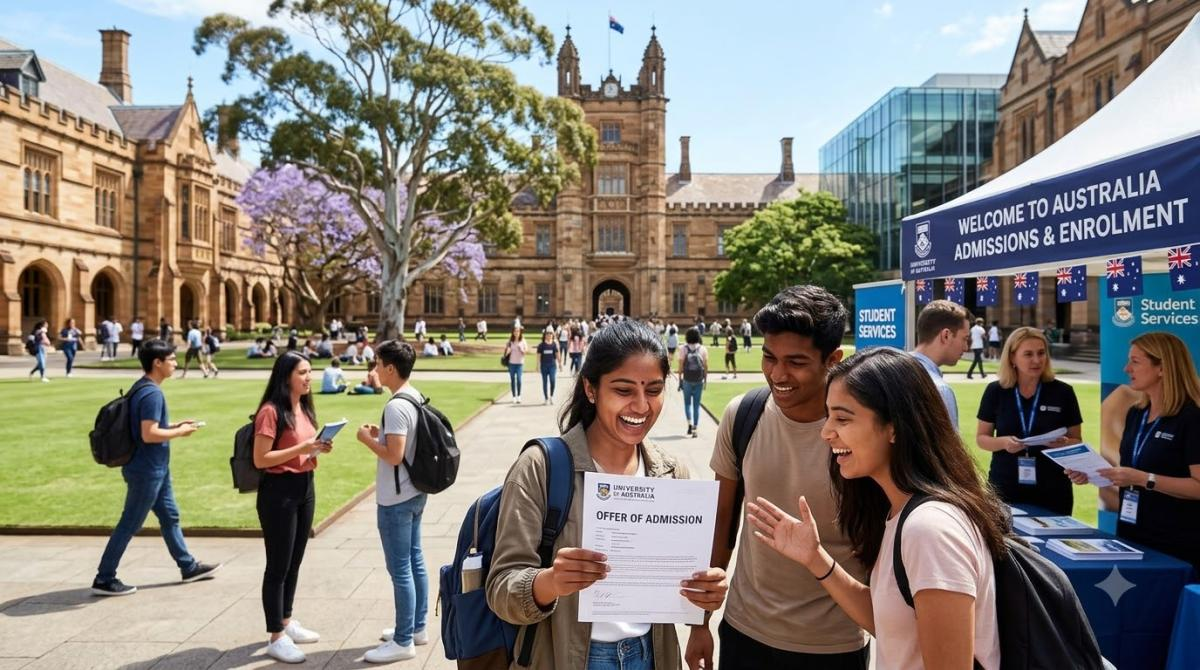
Applying to an Australian university can be an exciting opportunity for Singapore students, but the process involves more than selecting a university and submitting an application. Students must understand academic entry requirements, course prerequisites, application deadlines, tuition fees, accommodation options and the differences between university programmes.
Students researching how to plan admission in Australia successfully as a Singapore student should begin by identifying their academic goals and understanding the requirements of their preferred courses. A mistake made early in the application process can limit university choices, create unnecessary expenses or delay the start of studies.
This guide explains common application mistakes and provides practical strategies to help Singapore students make more informed decisions.
Mistake 1: Choosing a University Before Choosing the Right Course
Many students begin their research by looking at university rankings, campus facilities or the reputation of a particular institution.
Although these factors are important, choosing a university before understanding the course can lead to problems.
A university may be highly regarded overall but may not offer the specific specialisation, professional accreditation, practical opportunities or academic structure a student needs.
For example, a student interested in engineering should compare the available engineering disciplines, laboratory facilities, industry placements and accreditation requirements.
A student interested in business should examine the majors, internship opportunities, industry connections and the flexibility of the degree.
How to make a better decision
Start by identifying:
-
Your preferred career direction.
-
The subjects you enjoy studying.
-
The qualifications required for your future career.
-
The university programmes that match your interests.
-
The opportunities available during the degree.
After identifying suitable courses, compare universities that offer those programmes.
This approach makes the decision more meaningful because the course itself becomes the primary consideration.
Mistake 2: Assuming Every University Has the Same Entry Requirements
Australian universities do not necessarily have identical admission requirements.
Different courses may require different academic qualifications, subject prerequisites, minimum grades or additional selection criteria.
A student applying for medicine, engineering, law, architecture or another specialised programme may face requirements that differ significantly from those of a general undergraduate degree.
Students should also understand how their Singapore qualifications are assessed.
Depending on the university and programme, applicants may be evaluated using their Singapore-Cambridge qualifications, IB Diploma, A-levels, polytechnic qualifications or other recognised credentials.
What students should check
Before submitting an application, verify:
|
Requirement |
What to check |
|
Academic qualification |
Whether your qualification is recognised |
|
Minimum grades |
Required grades or score thresholds |
|
Subject prerequisites |
Specific subjects required |
|
English requirements |
Whether additional English testing is necessary |
|
Additional assessments |
Interviews, portfolios or tests |
|
Application deadlines |
Dates for international applicants |
|
Course availability |
Whether the programme accepts applications for your intended intake |
Students should not assume that meeting the general university requirements automatically means they qualify for every course.
Mistake 3: Applying Only to One University
Students sometimes apply to only one institution because they are confident about their preferred university.
However, admission outcomes can be affected by academic requirements, competition, course availability and application timing.
A balanced university shortlist helps students manage uncertainty.
Building a balanced shortlist
Students can organise their options into three categories:
Higher-target options: Universities or programmes where admission may be more competitive based on the student's academic profile.
Realistic options: Programmes where the student's qualifications appear reasonably aligned with published requirements.
Alternative options: Courses or universities that provide suitable academic opportunities and alternative pathways.
This approach does not mean students should lower their ambitions. It means they should create a plan that offers flexibility.
A student interested in studying business, for example, may apply to several universities with different entry requirements, course structures and locations.
Mistake 4: Underestimating the Total Cost of Studying in Australia
Tuition fees are only one part of the financial commitment.
Students must also consider accommodation, food, transport, health insurance, study materials, personal expenses and travel.
Living costs can vary considerably depending on the city, accommodation type and lifestyle.
|
Expense category |
What to consider |
|
Tuition fees |
Annual course fees and potential increases |
|
Accommodation |
Rent, deposits and utilities |
|
Food |
Groceries and meals outside |
|
Transport |
Public transport and commuting |
|
Health insurance |
Relevant student insurance requirements |
|
Study materials |
Textbooks, equipment and technology |
|
Travel |
Flights and local travel |
|
Emergency expenses |
Unexpected costs |
Students should create a realistic budget before accepting an offer.
A useful approach is to estimate annual expenses, then calculate the total expected cost over the duration of the degree.
This helps families understand the financial commitment and avoid making decisions based only on the first year's expenses.
Mistake 5: Missing Application Deadlines
University applications involve several deadlines.
Students may need to submit academic documents, proof of qualifications, English test results, portfolios or other materials.
Missing one deadline may delay an application or affect eligibility for a particular intake.
Create an application timeline
Students should organise the process into stages.
Stage 1: Research
Identify suitable universities and courses, then check their application requirements.
Stage 2: Prepare documents
Collect academic transcripts, certificates, identification documents and any additional materials.
Stage 3: Submit applications
Complete applications carefully and ensure all required documents are included.
Stage 4: Monitor applications
Check emails and university portals regularly for updates, requests for additional documents or offer notifications.
Stage 5: Accept the offer
Review the offer conditions, deadlines, fees and required next steps before accepting.
A calendar with reminders can help students manage several applications simultaneously.
Mistake 6: Choosing a Course Without Understanding Its Structure
Two courses with similar names may have very different structures.
One programme may focus heavily on theory, while another may include practical training, industry placements, electives or specialised modules.
Students should review the course structure rather than relying only on the degree title.
For example, two business degrees may differ in their available majors, internship opportunities, international study options and quantitative requirements.
Questions students should ask
-
What subjects will I study in the first year?
-
Can I select a specialisation?
-
Are internships available?
-
Can I participate in exchange programmes?
-
Is the course flexible enough to accommodate different interests?
-
What qualifications or professional opportunities may the degree support?
Understanding these details can help students avoid enrolling in a programme that does not match their expectations.
Mistake 7: Ignoring Accommodation and Location
The university's location can affect daily life, finances and the overall student experience.
Students should investigate accommodation availability, travel distances, public transport, campus facilities and the surrounding environment.
A university located in a major city may offer different opportunities and expenses compared with one in a smaller regional location.
Comparing locations
|
Factor |
Questions to consider |
|
Accommodation |
Is student housing available? |
|
Transport |
Can students travel conveniently without a car? |
|
Cost of living |
How expensive are everyday expenses? |
|
Campus facilities |
Are libraries, laboratories and student services accessible? |
|
Lifestyle |
Does the location match the student's preferences? |
|
Career opportunities |
Are internships or industry connections accessible? |
Students should consider their personal preferences as well as academic requirements.
A Practical Application Planning Process
Students preparing for Study in Australia from Singapore can follow this process to organise their decisions.
Step 1: Define your academic interests
Identify the subjects you enjoy and the fields you may want to pursue professionally.
Avoid selecting a degree simply because it is popular.
Step 2: Research suitable courses
Compare course structures, academic requirements, specialisations and practical opportunities.
Step 3: Check your eligibility
Review the requirements for your specific qualification and intended programme.
Step 4: Create a shortlist
Select a balanced group of universities based on academic suitability, affordability, location and personal preferences.
Step 5: Prepare application documents
Organise transcripts, certificates, identification documents and other required materials.
Step 6: Track deadlines
Create a timeline for each university, including application dates, document submission deadlines and offer acceptance dates.
Step 7: Compare offers carefully
If you receive several offers, compare the course structure, tuition fees, living costs, location and long-term opportunities before making your final decision.
Practical Examples
Example 1: Choosing Between Two Business Degrees
A Singapore student receives offers from two Australian universities.
The first university has a stronger overall reputation but offers limited flexibility in selecting business majors.
The second university offers a broader range of specialisations, industry projects and internship opportunities.
Rather than automatically choosing the institution with the higher ranking, the student compares the course structures and career opportunities.
The decision becomes based on academic suitability and personal goals rather than reputation alone.
Example 2: Planning the Financial Commitment
A student initially calculates the cost of studying overseas using tuition fees alone.
After reviewing accommodation, food, transport, insurance and travel expenses, the family realises that the total annual budget is significantly higher than expected.
The student then compares accommodation options, evaluates universities in different locations and prepares a more realistic financial plan.
This allows the family to make a better-informed decision before accepting an offer.
Illustrative Case Study: A Singapore Student Preparing University Applications
A hypothetical Singapore student plans to study computer science in Australia.
Initially, the student focuses on university rankings and applies to only two institutions.
After reviewing the requirements, the student discovers that different programmes have different mathematical prerequisites and academic entry criteria.
The student expands the shortlist, compares course structures and identifies additional suitable programmes.
The student also prepares an application timeline, organises academic documents and compares the expected costs of studying in different cities.
The expected benefit is a more organised application process with a wider range of suitable options and fewer avoidable mistakes.
The key lesson is that successful planning involves more than choosing a university. It requires understanding course requirements, financial considerations and personal academic goals.
How Professional Admissions Guidance Can Help
Students and families may benefit from admissions guidance when they are uncertain about university selection, course requirements, application timelines or documentation.
When researching admission in Australia, students should consider whether the guidance they receive is specific to their academic qualifications and preferred courses.
Useful support may include:
-
University and course selection.
-
Reviewing academic eligibility.
-
Understanding application requirements.
-
Organising application documents.
-
Preparing application timelines.
-
Comparing university offers.
-
Planning alternative options.
Students can explore the services and information available through Princeton Review Singapore when researching university admissions and educational guidance.
Conclusion
Applying to Australian universities requires careful planning and research. Singapore students should avoid choosing institutions based only on rankings, overlooking course prerequisites, underestimating expenses or missing application deadlines.
The most effective approach is to identify suitable courses, verify eligibility, build a balanced shortlist, prepare documents early and compare offers according to academic and financial considerations.
A well-organised application process can help students make more informed decisions and reduce unnecessary stress when planning their overseas education.
Frequently Asked Questions
1. When should Singapore students start applying to Australian universities?
Students should begin researching universities and courses well in advance of their intended intake. Application timelines vary depending on the institution, programme and intake date.
2. Can Singapore students apply to multiple Australian universities?
Yes. Applying to several suitable universities can provide greater flexibility and alternative options.
3. Do Australian universities have the same entry requirements?
No. Requirements vary by institution, course, qualification and academic background.
4. How much does studying in Australia cost?
The total cost depends on tuition fees, accommodation, living expenses, insurance, travel and personal spending. Students should prepare a budget based on their specific university and location.
5. Should students choose a university based only on rankings?
No. Rankings can provide useful information, but course structure, academic suitability, practical opportunities, cost and location should also influence the decision.
6. What documents are generally required for university applications?
Requirements vary, but students may need academic transcripts, qualification certificates, identification documents, English-language evidence and additional course-specific materials.








Comments (0)