

India's Critical Mineral Mission 2026: How E-Waste Recycling Can Recover Valuable Natural Resources
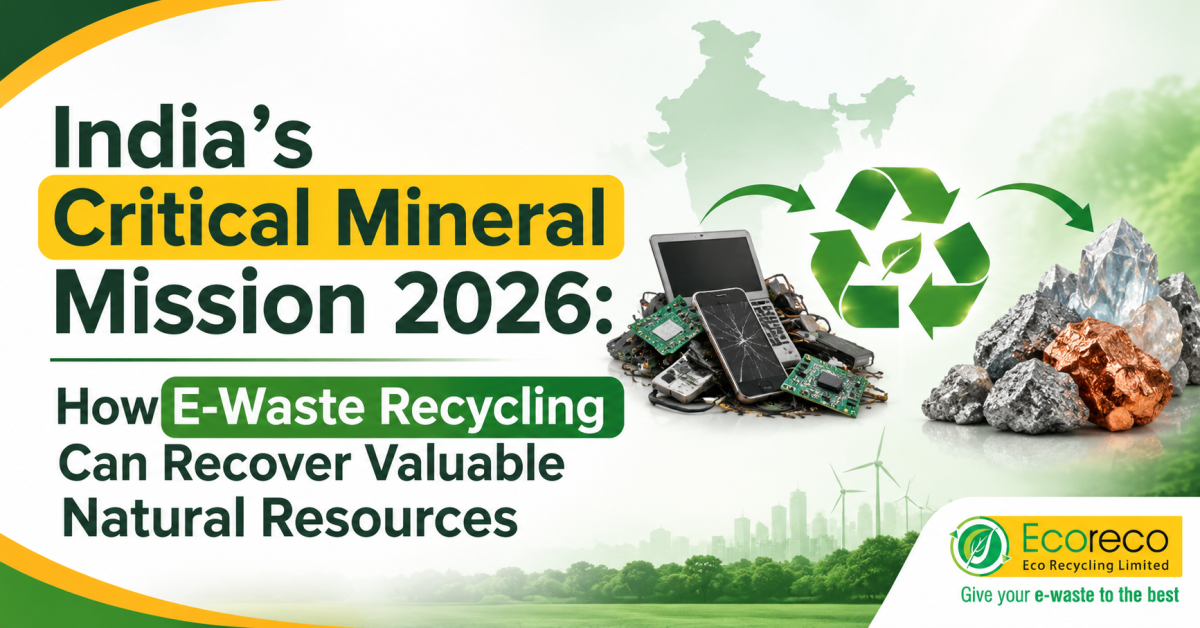
E-waste recycling is the process of collecting discarded electronics, such as phones, laptops, circuit boards and batteries, and recovering the materials inside them for reuse. Those devices contain copper, gold, silver, nickel, cobalt, lithium and other metals that are costly to mine and, for several of them, largely imported by India. That is why e-waste has moved from a waste-management topic to a resource-security topic. This article explains what India’s National Critical Mineral Mission means for recycling, and what to look for in a top e-waste recycling company in India.
What the Mission Is and Why Recycling Is Part of It
The government launched the National Critical Mineral Mission (NCMM) in January 2025, covering exploration, overseas asset acquisition, recycling and skills and research. Recycling matters because mines take years to develop, while discarded electronics are already in circulation. Recovering metals from used products is often called urban mining, and it can shorten the path to domestic supply.
The recycling incentive scheme
The Union Cabinet approved a ₹1,500 crore incentive scheme on 3 September 2025 to support critical mineral recovery from e-waste, used lithium-ion batteries and other scrap such as catalytic converters. Official figures project at least 270 kilo tonnes of annual recycling capacity and about 40 kilo tonnes of annual critical mineral production. The scheme runs from FY 2025-26 to FY 2030-31.
Where Things Stand in 2026
Progress is visible. The Ministry of Mines cleared 58 entities, 20 on 30 March 2026 and 38 on 29 April 2026, with combined capacity of about 850 KTPA and investment near ₹5,000 crore. The approved entities cover battery recycling, e-waste processing and other waste recovery, which suggests recyclers are already building capacity.
The Gap Between Collection and Metal Recovery
Why the formal chain matters
The Ministry of Mines estimates India generates about 1.75 million tonnes of e-waste and 60 kilo tonnes of spent lithium-ion batteries annually. A large share never reaches advanced facilities. One 2026 industry report states that the informal sector handles roughly 78% of India’s e-waste and cannot refine beyond black mass. Treat that figure as an estimate, but the point stands: crude dismantling loses valuable metals and can release hazardous substances.
What the scheme rewards
The scheme incentivises the value chain involved in actual extraction of critical minerals, not only black mass production. Lower-tier recyclers focused on collection, dismantling and shredding are not eligible. In practice, this pushes the industry toward integrated chains in which collectors, dismantlers and refiners work together.
What Gets Recovered From E-Waste
Printed circuit boards yield copper, gold, silver and palladium. Lithium-ion batteries can yield cobalt, nickel, manganese and lithium. Magnets in drives and motors contain rare earth elements, although recovering them is technically harder. Recovery depends on sorting, safe pre-processing and downstream refining, so results vary by material and by facility.
How to Judge an E-Waste Recycler
If you are searching for e waste recycling in India, whether for a company, institution or household, a few checks help.
Authorisation and compliance
Confirm the recycler holds the required registrations under India’s e-waste rules, and ask for current copies. Check whether it works within the Extended Producer Responsibility framework if you are a producer or bulk consumer.
Traceability
Ask how material moves from collection to final processing, and which facilities handle each stage. A trustworthy provider can name downstream partners and provide documentation, not just a collection receipt.
Data security
Businesses should ask for certified data destruction of drives and phones before dismantling, with device-level certificates.
Honest reporting
Ask what share of material is actually recovered and what happens to the rest. Be cautious of vague claims about “100% recycling”.
Eco Recycling Ltd. operates in e-waste recycling and IT asset disposition in India. Whichever provider you consider, request the same documents and compare answers before committing.
What Businesses and Households Can Do Now
Keep an inventory of retiring devices and avoid storing them for years, since older equipment is harder to resell or process. Separate batteries from other items. Hand over e-waste only to authorised collectors, and keep the paperwork. Households can use manufacturer take-back programmes and municipal e-waste collection points.
Conclusion
India’s critical mineral push has put e-waste on the supply-security agenda. A funded recycling scheme, an expanding list of approved recyclers and rising volumes of discarded electronics all point the same way: recovered metals will matter more over time. For anyone disposing of electronics, the practical step is to choose an authorised, traceable recycler and keep the records. Eco Recycling Ltd. can walk you through what documentation and processing options apply to your equipment.





Comments (0)