

How Do AC-DC Converters Meet the Power Needs of Modern Electronic Systems?
Explore how AC-DC Converters transform alternating current into stable direct current for electronic equipment. Learn about converter types, efficiency, voltage regulation, protection features, applications, and key factors to consider when selecting a reliable AC-DC power solution.

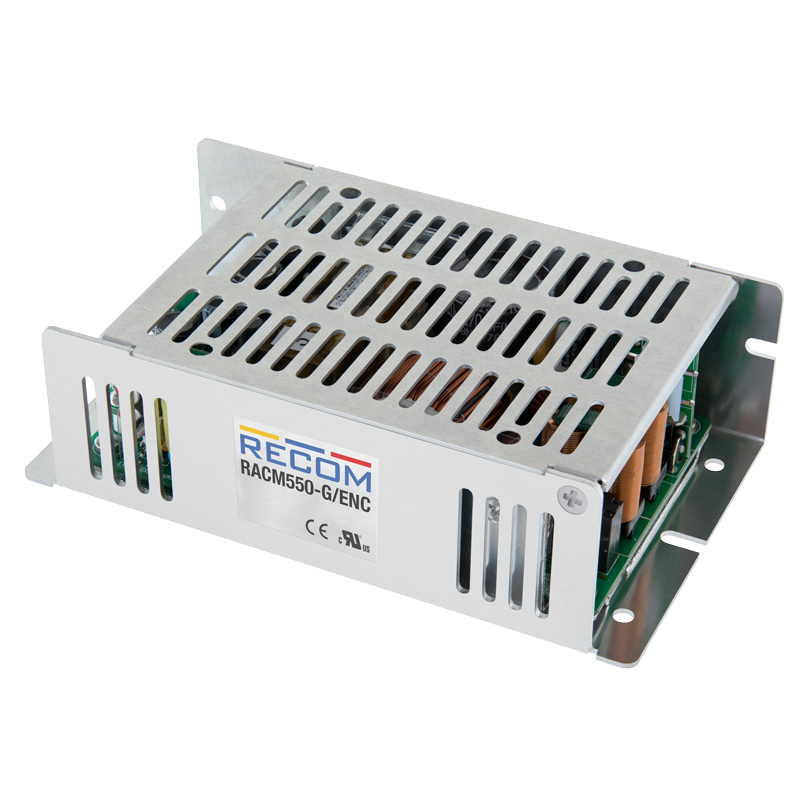
AC-DC Converters are widely used wherever electronic equipment needs to operate from an alternating-current mains supply. Their purpose is to convert incoming AC electricity into the stable DC voltage required by control circuits, processors, sensors, communication modules, displays, embedded systems, and many other electronic loads.
As equipment becomes smaller and more sophisticated, converter design has become increasingly important. Modern systems require power supplies that can combine good efficiency, compact dimensions, controlled output, electrical protection, low noise, and dependable performance. This makes the converter an important part of overall system architecture rather than a simple supporting component.
Why Are AC-DC Converters Important in Power-Supply Design?
AC-DC Converters provide the connection between mains electricity and the low-voltage DC circuits found inside modern equipment. Since electronic components usually operate at carefully defined DC levels, they need a supply that can transform and regulate mains power safely and consistently.
The quality of this conversion can influence the behaviour of the entire system. Poorly matched or unstable power supplies may contribute to unexpected shutdowns, excessive heat, voltage errors, reduced component lifespan, or interference with sensitive electronics. A correctly selected converter can instead support reliable performance across changing load and supply conditions.
What Converter Formats Are Available for Different Applications?
AC-to-DC power supplies are produced in several physical formats, allowing engineers to choose a solution that fits the mechanical and electrical requirements of the installation.
How Do Open-Frame Power Supplies Work?
Open-frame converters are supplied without a fully enclosed external casing. They are commonly installed inside larger equipment where the main enclosure already provides physical protection.
These designs are often used in:
- Industrial control equipment
- Medical devices
- Communication systems
- Test instruments
- Embedded electronics
- Commercial machinery
Open-frame units can provide high power density, but designers must carefully consider airflow, electrical clearances, and user protection.
Why Are Enclosed Power Supplies Used?
Enclosed converters include a protective housing around the internal electronics. This can improve mechanical protection and simplify installation in industrial or commercial equipment.
Depending on the design, the enclosure may also assist with cooling and provide convenient mounting options.
Where Are DIN-Rail Converters Useful?
DIN-rail AC-to-DC power supplies are designed for quick installation inside electrical cabinets and control panels. They are especially common in industrial automation because they can be mounted alongside relays, terminals, controllers, and other control components.
What Is the Difference Between Single-Output and Multi-Output Converters?
Some systems require only one DC voltage, while others need several different voltage rails. A single-output converter supplies one defined DC voltage, such as 5 V, 12 V, 24 V, or 48 V.
Multi-output converters can provide several voltages from one power supply. These may be useful when a system contains different groups of electronics with different power requirements.
For example, one section of equipment may require a lower voltage for logic circuitry while another needs a higher voltage for relays, motors, or communication hardware.
Why Does Input Voltage Range Matter?
The AC input available to a product can vary depending on the region, installation, and electrical network. Some converters are designed for a limited mains range, while others support universal input operation.
A wide input range allows the same power supply to operate across multiple supply conditions without requiring manual configuration.
What Benefits Can a Wide Input Range Provide?
A broad input specification may offer:
- Easier international product design
- Reduced need for regional variants
- Greater tolerance to mains variation
- Simplified inventory management
- More flexible system deployment
Engineers should always confirm that the converter input specification matches the actual mains conditions expected in service.
How Do Output Power and Current Affect Converter Selection?
The required output power depends on the total demand of every connected load. Selecting a converter only by voltage is not enough. The supply must also provide sufficient current under both normal and peak operating conditions.
Some loads temporarily draw much more current when starting. Motors, capacitive circuits, displays, communication systems, and other devices can create short-duration demand that exceeds their normal operating current.
A converter should therefore be evaluated for both continuous and peak requirements.
What Is Inrush Current and Why Should Designers Consider It?
When some AC-to-DC converters are first connected to the mains, their internal capacitors charge rapidly. This can create a brief surge of input current known as inrush current.
Although the surge lasts for a short period, it can affect circuit breakers, switches, relays, and upstream protection devices if several power supplies start at the same time.
Designers may need to consider:
- Maximum specified inrush current
- Number of supplies powered simultaneously
- Circuit breaker characteristics
- Input fuse selection
- Soft-start behaviour
- External inrush limiting where required
Managing startup behaviour is particularly important in industrial installations containing multiple power supplies.
Why Is Hold-Up Time Important in Power Conversion?
Hold-up time describes how long a converter can continue maintaining its output after the AC input is briefly interrupted. Internal energy-storage components allow the supply to keep delivering power for a short period.
This characteristic can help electronic systems tolerate very brief mains disturbances without restarting immediately.
Longer hold-up time may be useful in control, communication, computing, or instrumentation equipment where even short power interruptions could disrupt operation.
How Does Output Ripple Affect Sensitive Electronics?
The DC output from a power supply is not always perfectly smooth. Small variations known as ripple and noise may remain after conversion and filtering.
For many digital applications, moderate ripple may not create major problems. However, precision analogue circuits, measurement systems, audio electronics, communication equipment, and sensors can be more sensitive.
How Can Engineers Reduce Ripple-Related Problems?
Possible approaches include:
- Selecting a converter with low specified ripple
- Adding appropriate output filtering
- Using short and well-routed power connections
- Separating sensitive signal and power paths
- Applying careful grounding practices
- Using local decoupling capacitors near electronic loads
Good power-distribution design can be just as important as the converter specification itself.
What Safety Approvals Should Be Considered?
Power supplies connected to mains electricity must meet appropriate safety requirements for their intended application. The relevant approvals vary according to equipment type, region, industry, and installation environment.
Designers may need to evaluate insulation, creepage distances, clearance distances, leakage current, isolation ratings, flammability, and relevant regulatory certifications.
Using a converter designed for the correct application category can simplify equipment compliance and reduce design risk.
Why Does Mounting Method Influence System Design?
Mechanical installation affects cooling, accessibility, wiring, and available space. Power supplies may be mounted directly to a PCB, attached to a chassis, fitted to a DIN rail, or installed inside a dedicated enclosure.
The chosen mounting arrangement should allow sufficient airflow and should not place heat-sensitive components directly next to the converter.
Physical orientation can also affect thermal performance in some designs, so manufacturer installation guidance should be considered during system layout.
How Can Designers Balance Efficiency, Cost, and Reliability?
The lowest-cost converter is not always the most economical choice over the full life of a system. A more efficient supply may produce less heat, consume less energy, and place less thermal stress on surrounding components.
At the same time, selecting an oversized converter can increase cost and physical size unnecessarily.
A balanced selection process should consider:
- Electrical performance
- Efficiency
- Thermal behaviour
- Safety requirements
- Required lifespan
- Physical dimensions
- Operating environment
- Availability
- Future expansion
- Total system cost
The best choice is usually the converter that meets all important system requirements with suitable operating margin.
How Will AC-DC Converters Support the Next Generation of Electronics?
Future electronic systems will continue demanding more power from smaller spaces while also requiring improved efficiency and smarter energy management. Advances in switching devices, magnetic materials, control circuits, and thermal design are helping power supplies meet these challenges.
AC-DC Converters will remain fundamental as industrial automation, connected devices, intelligent buildings, communication infrastructure, embedded computing, and advanced electronic equipment continue to expand. By combining efficient conversion with controlled output, suitable protection, flexible installation, and dependable electrical performance, modern converters provide the foundation required for stable and increasingly sophisticated power systems.










Comments (0)