

8 Smart Ways Custom Packaging Boxes Can Improve Your Business Growth
This is why many businesses are investing in custom packaging boxes to improve product presentation and create a stronger brand identity. Unlike standard packaging, customised boxes allow businesses to choose specific sizes, materials, printing styles, and designs according to their requirements.

Choosing the right packaging is an important decision for any business. Whether you sell cosmetics, clothing, electronics, food items, or luxury products, your packaging should protect your products and present your brand professionally.
Today, businesses are moving beyond ordinary packaging and choosing custom packaging boxes that match their products, branding, and customer expectations. Customised packaging provides flexibility in box sizes, materials, shapes, printing, and finishing options.
However, with so many packaging styles available, selecting the right option can sometimes be challenging. Understanding your product requirements and packaging goals can help you make a better decision.
In this guide, we will explore the important factors to consider when choosing packaging for your business.
1. Understand Your Product Packaging Requirements
Before selecting a box, consider the type of product you want to package. Every product has different requirements depending on its weight, shape, size, and fragility.
For example, lightweight products may require simple cardboard packaging, while delicate items need stronger materials and additional protection.
Start by considering:
-
Product dimensions and weight.
-
Storage and transportation requirements.
-
Level of protection needed.
-
Packaging presentation.
-
Customer handling experience.
Understanding these details will help you choose custom packaging boxes that are both practical and attractive.
2. Select the Right Box Style
The structure of your packaging can influence how customers interact with your products. Different box styles offer different levels of convenience, protection, and presentation.
Some popular options include:
Mailer Boxes: These boxes are ideal for eCommerce businesses, subscription services, and online retailers. Their practical design makes them suitable for shipping and product presentation.
Tuck Boxes: Commonly used for cosmetics, small retail products, accessories, and lightweight items.
Rigid Boxes: These offer a premium appearance and are frequently selected for luxury products, gift packaging, and high-end retail items.
Corrugated Boxes: Suitable for shipping products that require additional strength and protection during transportation.
Kraft Boxes: A popular choice for businesses that prefer a natural-looking packaging style and want to explore recyclable material options.
Selecting the right structure helps ensure your packaging matches your product and business requirements.
3. Choose Packaging Materials Carefully
Material selection is another important part of the packaging process. The right material can improve product protection, printing quality, and overall appearance.
Common packaging materials include cardboard, corrugated board, kraft paper, and paperboard.
Cardboard works well for many retail products, while corrugated board is useful for shipping applications. Paperboard provides a smooth surface for printing, making it suitable for attractive product packaging.
When selecting materials, consider their strength, thickness, appearance, and suitability for your product.
4. Make Your Packaging Design Unique
Your packaging design should communicate your brand identity and help customers recognise your business.
Custom printed boxes provide an opportunity to include logos, brand colours, product information, and creative graphics.
However, an effective design does not always need complicated artwork. Simple typography, balanced colours, and clean layouts can create a professional appearance.
For example, a luxury skincare brand may prefer minimal packaging with elegant typography, while a children's product brand might choose brighter colours and playful graphics.
The most important thing is to maintain consistency between your packaging and your overall brand identity.
5. Consider Printing and Finishing Options
Printing and finishing can improve the overall appearance of your packaging. Different techniques allow businesses to create packaging that suits their brand personality.
Some popular options include:
-
Digital Printing: Useful for detailed designs and smaller print runs.
-
Offset Printing: Commonly used for high-quality printing in larger quantities.
-
Matte Lamination: Creates a smooth, non-glossy surface.
-
Gloss Lamination: Adds a shiny finish to printed packaging.
-
Embossing: Creates raised design elements.
-
Foil Stamping: Adds metallic details to selected areas.
Not every product needs premium finishing. Choose options that complement your packaging design and fit your budget.
6. Focus on Product Protection and Practicality
Attractive packaging is important, but it should also serve its main purpose: keeping products protected.
A beautiful box will not provide a good customer experience if the product arrives damaged.
Businesses should consider the distance products will travel, transportation conditions, product weight, and possible handling risks.
For fragile products, additional inserts or cushioning may be necessary. For shipping orders, choosing the correct corrugated strength can provide better protection.
The best packaging combines appearance with practical functionality.
7. Explore Sustainable Packaging Choices
Many businesses are paying more attention to the environmental impact of their packaging.
If sustainability is part of your brand strategy, consider recyclable cardboard, kraft paper, and responsibly sourced paperboard.
You can also make simple improvements by:
-
Choosing appropriately sized boxes.
-
Reducing unnecessary packaging materials.
-
Avoiding excessive plastic components.
-
Using recyclable packaging where suitable.
-
Providing clear recycling information when appropriate.
These steps can help businesses make more responsible packaging decisions without compromising product presentation.
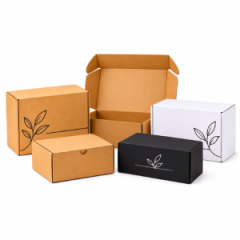
Running a successful business requires more than offering quality products. The way products are presented, protected, and delivered also plays an important role in customer satisfaction. Packaging is often the first physical interaction customers have with a brand, making it an important part of the buying experience.







Comments (0)