

How to Create a Successful Google Ads Campaign for an NDIS Business
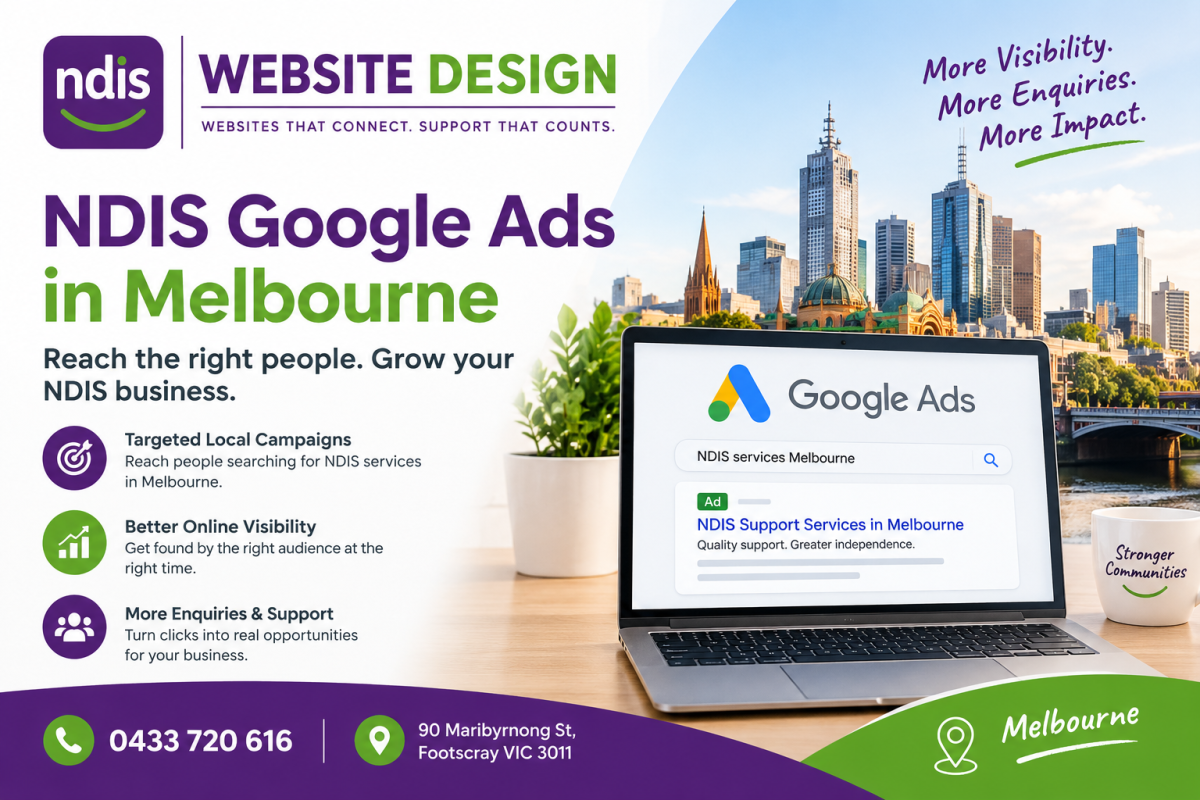
Promoting an NDIS business online requires a marketing strategy that reaches the right people at the right time. While SEO helps websites gain organic visibility over time, Google Ads offers another opportunity to appear when people search for disability support services.
However, creating a successful campaign involves more than choosing keywords and setting a daily budget. Providers need to understand their services, identify their target locations, write relevant advertisements and make sure their website is prepared to convert visitors into enquiries.
Understand Your Business Goals Before Starting
Before launching a Google Ads campaign, determine what you want your advertising to achieve. Different NDIS providers may have different marketing priorities.
For example, your goals might include:
-
Increasing enquiries about disability support services
-
Promoting a new service
-
Reaching participants in specific suburbs
-
Improving awareness of your organisation
-
Encouraging phone calls or website enquiries
Having a clear objective makes it easier to build a campaign and evaluate its performance. Rather than measuring success only through clicks, focus on the actions that can contribute to your business growth.
Step 1: Identify Your Target Audience and Service Areas
Start by identifying the people searching for the services your organisation provides and the locations where you can deliver those services.
An NDIS provider operating in Melbourne may want to focus on selected suburbs or regions rather than advertising across Australia. This can help keep campaigns relevant and reduce advertising spend on locations where the organisation cannot provide support.
Consider your available services, support capacity and locations before setting up targeting. Your advertising should accurately reflect your business.
Step 2: Research and Select Relevant Keywords
Keyword selection is one of the most important parts of a Google Ads campaign. Choose search terms that match your service offerings and reflect the way people search online.
For example, depending on your services, keywords may include:
-
NDIS disability support services
-
NDIS support workers near me
-
Community participation services
-
Disability support Melbourne
-
NDIS personal care services
Use keyword match types carefully and regularly review search terms to understand which searches are triggering your ads.
Avoid targeting too many unrelated keywords in one campaign. Organising campaigns around individual services can make your advertisements more relevant and easier to manage.
Step 3: Write Clear and Relevant Advertisements
Your advertisements should communicate your services quickly. People searching online should be able to understand what your organisation offers without having to guess.
Include relevant service information, locations and a clear next step. Your advertising message should align with the page visitors see after clicking.
For example, if your advertisement promotes community participation, send visitors to a page explaining community participation rather than a general homepage containing dozens of unrelated services.
Relevant advertisements and landing pages create a more consistent user experience.
Step 4: Build a Landing Page That Encourages Enquiries
A landing page is where potential clients arrive after clicking your advertisement. It plays a major role in helping visitors decide whether they want to contact your organisation.
Your page should include:
-
Clear information about the advertised service
-
Service locations
-
Accessible and readable content
-
Contact details
-
A straightforward enquiry form
-
Mobile-friendly navigation
-
Relevant information about your organisation
An NDIS website design agency in Australia can help providers create service-focused landing pages that support their advertising campaigns and make the website easier to navigate.
A well-structured landing page should answer visitors' questions without overwhelming them with unnecessary information.
Step 5: Set a Realistic Budget
You do not need to spend a large amount immediately to start testing Google Ads. Begin with a budget that your business can comfortably manage.
Monitor the number of clicks, search terms, enquiry actions and costs. As you gather performance data, you can make decisions about adjusting your budget.
Remember that advertising costs can vary depending on the keywords, location, competition and campaign settings. There is no guaranteed cost per enquiry.
Step 6: Set Up Conversion Tracking
Conversion tracking helps you measure actions that matter to your business. Depending on your campaign, this may include enquiry form submissions, calls from advertisements or phone calls made through your website.
Tracking these actions can help you understand which keywords, campaigns and advertisements are generating valuable results.
Make sure your tracking is configured correctly. Counting every page visit as a conversion can make campaign results misleading.
Step 7: Optimise Your Campaign After Launch
After your campaign starts running, review its performance regularly.
Look for keywords generating irrelevant traffic, advertisements receiving low engagement, locations producing no useful enquiries and landing pages that need improvement.
You may also test different advertisement messages to see which ones communicate your services more effectively.
Successful campaigns are generally built through ongoing analysis rather than a single setup.
Combining Google Ads and SEO
Google Ads for NDIS providers can help businesses gain paid visibility while their SEO strategy develops. SEO helps build organic traffic, improve website content and establish stronger search visibility over time.
Both strategies can work together. Google Ads may attract immediate search traffic, while SEO helps build a long-term foundation for online growth.
Conclusion
Creating a successful Google Ads campaign for an NDIS business requires planning, relevant keywords, location targeting, clear advertisements, quality landing pages and accurate conversion tracking.
By focusing on the right audience and continuously improving campaign performance, providers can use paid advertising more strategically and create more opportunities for genuine enquiries.
A well-designed website and a carefully managed campaign should work together to help people find your services and understand how your organisation can support them.
We specialise in professional NDIS website design for Australian NDIS providers. Our websites are created to be accessible, user-friendly, mobile-friendly, and easy to navigate, helping providers clearly present their services and build trust with participants, families, and support coordinators.








Comments (0)