

Global Acrylic Resins Market: Emerging Industry Trends
According to Straits Research, the global acrylic resins market size was valued at USD 23.87 billion in 2025 and is projected to grow from USD 25.09 billion in 2026 to USD 37.35 billion by 2034, registering a CAGR of 5.1% during the forecast period (2026–2034). Europe dominated the acrylic resins market with a share of 34% in 2025.

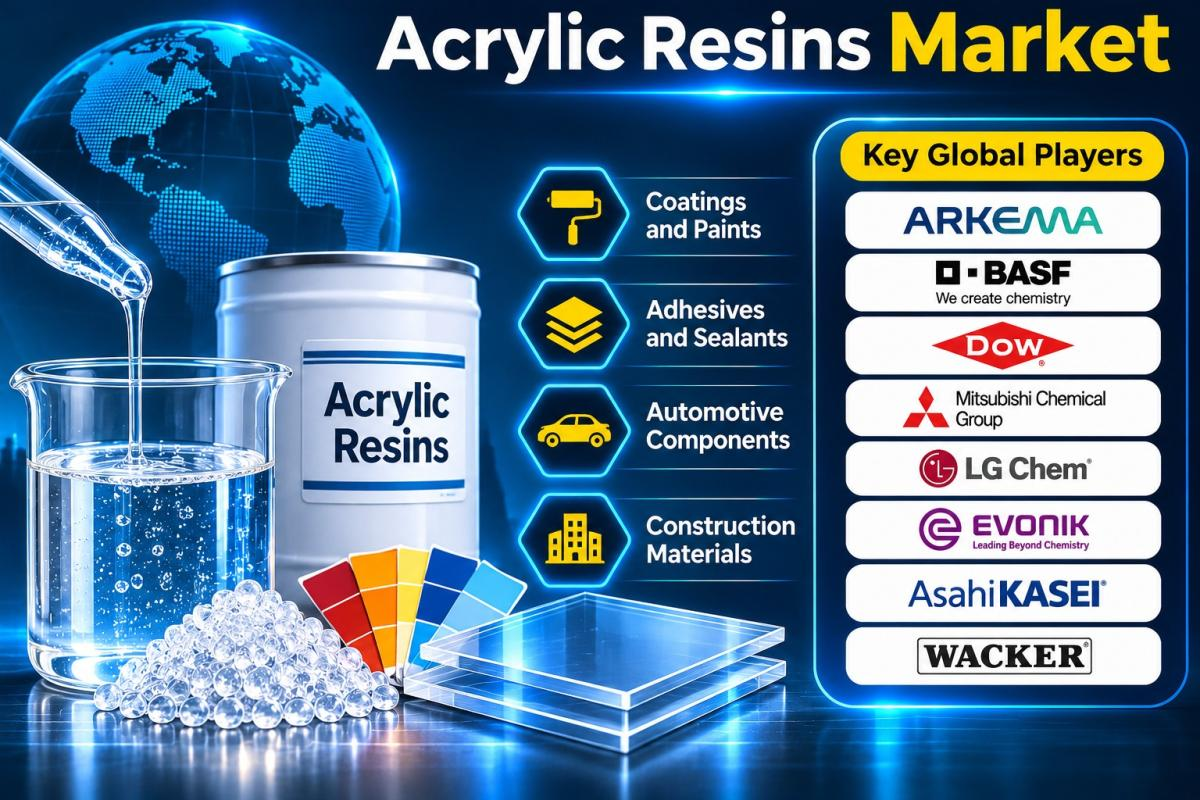
According to Straits Research, the global acrylic resins market size was valued at USD 23.87 billion in 2025 and is projected to grow from USD 25.09 billion in 2026 to USD 37.35 billion by 2034, registering a CAGR of 5.1% during the forecast period (2026–2034). Europe dominated the acrylic resins market with a share of 34% in 2025.
The acrylic resins market includes polymers and resin materials produced from acrylic monomers and used in coatings, adhesives, sealants, plastics, inks, and various industrial applications. Acrylic resins are valued for their durability, weather resistance, adhesion, transparency, chemical resistance, and versatility in formulation. They are widely used in construction, automotive, packaging, furniture, electronics, and consumer goods manufacturing. Increasing infrastructure development, demand for protective coatings, and growing use of high-performance materials are supporting market expansion.
Get Full Report: https://straitsresearch.com/report/acrylic-resins-market
Growth Drivers of the Acrylic Resins Market
Increasing Demand from the Construction Industry
The construction industry is a major consumer of acrylic resins, particularly in architectural coatings, paints, sealants, waterproofing materials, and protective finishes. Residential, commercial, and infrastructure projects require materials that can withstand weather exposure, moisture, and surface wear.
Acrylic-based coatings are widely used on walls, roofs, concrete, and other construction surfaces because of their durability and aesthetic properties. Rising construction activity and renovation projects are increasing demand for acrylic resin-based products.
Growth in Paints and Coatings Applications
Acrylic resins are widely used in paints and coatings because they offer strong adhesion, color retention, durability, and resistance to environmental conditions. These properties make them suitable for decorative and protective coatings across residential, commercial, and industrial applications.
Manufacturers are developing acrylic resin formulations for different surfaces and performance requirements. The growing demand for durable coatings in buildings, machinery, infrastructure, and consumer products is supporting market growth.
Increasing Automotive Production and Refinishing Demand
The automotive industry uses acrylic resins in exterior coatings, interior finishes, protective coatings, and automotive refinishing products. These materials help improve surface appearance, durability, gloss, and resistance to environmental exposure.
Growing vehicle production and demand for repair and refinishing services are creating opportunities for acrylic resin manufacturers. Automotive manufacturers are also focusing on coating technologies that provide longer-lasting finishes and improved surface performance.
Rising Demand for Environmentally Friendly Formulations
Environmental regulations and sustainability goals are encouraging manufacturers to develop coatings and resin formulations with lower volatile organic compound (VOC) emissions. Water-based acrylic resins are gaining attention as alternatives to certain solvent-based formulations.
These products can support reduced solvent emissions while maintaining coating performance for specific applications. The growing adoption of environmentally conscious coating technologies is encouraging innovation in acrylic resin formulations.
Expansion of Packaging and Printing Applications
Acrylic resins are used in printing inks, packaging coatings, surface finishes, and other applications that require adhesion, clarity, and resistance to abrasion. The expansion of packaging production and demand for attractive product presentation are supporting the use of acrylic-based materials.
Flexible packaging, labels, commercial printing, and specialty coatings create opportunities for resin manufacturers. Demand for coatings that protect packaging surfaces while maintaining print quality is also supporting application development.
Growth in Industrial and Protective Coatings
Industrial equipment, machinery, metal structures, and manufacturing facilities require coatings that protect surfaces against corrosion, chemicals, abrasion, and environmental exposure. Acrylic resins are used in various protective coating formulations to improve surface performance and durability.
Increasing industrial investment and maintenance activities are supporting demand for protective coating materials. Acrylic resin-based coatings are also used in applications where appearance and resistance to weathering are important.
Applications of the Acrylic Resins Market
Paints and Coatings
Paints and coatings represent a major application area for acrylic resins. They are used in architectural paints, industrial coatings, automotive coatings, protective finishes, and decorative surface treatments.
Acrylic resins provide properties such as color stability, adhesion, weather resistance, and durability. Their versatility allows formulators to develop products for different surfaces, environmental conditions, and performance requirements.
Construction and Building Materials
The construction industry uses acrylic resins in waterproofing systems, sealants, concrete coatings, flooring materials, adhesives, and surface protection products. These applications help improve the performance and lifespan of building materials.
Acrylic-based formulations are used in both new construction and renovation projects. Demand for durable building materials and improved surface protection is supporting their use across residential and commercial construction.
Automotive and Transportation
Acrylic resins are used in automotive paints, clear coats, interior coatings, plastic component finishes, and refinishing materials. They help improve appearance, gloss, adhesion, and resistance to sunlight and environmental exposure.
Automotive manufacturers and repair businesses use acrylic-based formulations to support durable finishes on vehicles. Demand for vehicle production, maintenance, and refinishing is contributing to this application segment.
Adhesives and Sealants
Acrylic resins are used in adhesive and sealant formulations for construction, packaging, electronics, furniture, and industrial manufacturing. Their bonding characteristics and formulation flexibility make them suitable for different substrates and application requirements.
Acrylic-based adhesives can be formulated for applications requiring flexibility, strength, resistance to environmental exposure, or fast bonding. Their use in manufacturing and construction is supporting demand.
Packaging and Printing Inks
Acrylic resins are used in printing inks, packaging coatings, labels, and surface treatments. They provide adhesion, gloss, abrasion resistance, and other properties needed to protect printed surfaces and maintain product appearance.
The expansion of consumer packaging, commercial printing, and labeling applications is creating demand for acrylic resin-based formulations. Manufacturers are also developing materials for different printing technologies and packaging substrates.
Furniture and Consumer Products
Furniture manufacturers use acrylic resins in coatings, surface finishes, decorative materials, and protective treatments. These materials help improve the appearance and durability of wood, metal, and other surfaces.
Acrylic resin-based finishes are also used in consumer products where transparency, color, gloss, and resistance to surface wear are important. Growing demand for attractive and durable finishes is supporting application development.
Emerging Trends in the Acrylic Resins Market
Shift Toward Water-Based Acrylic Resins
Water-based acrylic resins are gaining attention as manufacturers seek to reduce solvent use and meet environmental requirements. These formulations are used in paints, coatings, adhesives, and other applications where lower emissions are a priority.
Advancements in resin formulation are helping improve film formation, adhesion, durability, and application performance. The shift toward water-based products is encouraging manufacturers to invest in new formulation technologies.
Development of High-Performance Acrylic Formulations
Resin manufacturers are developing acrylic formulations with improved resistance to weathering, ultraviolet exposure, chemicals, abrasion, and moisture. These materials are designed to meet the requirements of demanding industrial and outdoor applications.
High-performance formulations are increasingly important in construction, automotive, infrastructure, and industrial coatings. Product innovation is helping acrylic resins serve applications that require longer service life and improved surface performance.
Increasing Use of UV-Curable Acrylic Resins
UV-curable acrylic resins are gaining importance in applications that require rapid curing and high productivity. These materials are used in coatings, printing inks, adhesives, electronics, and specialty surface finishes.
UV curing can support faster processing and reduced curing time compared with some conventional processes. Continued development of curing technologies is expanding the use of acrylic resin formulations in industrial production.
Bio-Based and Sustainable Resin Development
Manufacturers are exploring bio-based raw materials and alternative feedstocks to reduce dependence on conventional petrochemical inputs. Sustainability initiatives are encouraging research into resin production processes and formulations with lower environmental impact.
Bio-based acrylic materials and improved production technologies are emerging areas of research. The development of sustainable resin solutions is becoming increasingly important for manufacturers seeking to align with environmental objectives.
Advancements in Resin Modification Technologies
Resin modification is enabling manufacturers to adjust acrylic resins for specific application requirements. Modification techniques can improve flexibility, hardness, adhesion, chemical resistance, and compatibility with other materials.
These advancements support customized solutions for coatings, adhesives, construction materials, and industrial applications. Formulation innovation is helping resin producers address the performance needs of different end-use industries.
Growing Demand for Durable and Weather-Resistant Materials
Acrylic resins are increasingly used in applications requiring long-lasting performance under outdoor and demanding environmental conditions. Construction materials, automotive finishes, infrastructure coatings, and industrial surfaces require protection against sunlight, temperature changes, moisture, and surface deterioration.
The demand for longer-lasting materials is encouraging the development of acrylic resin formulations with improved durability and reduced maintenance requirements.









Comments (0)