

Global Homeland Security Market: Emerging Technology Trends
The global homeland security market size was valued at USD 701.04 billion in 2025 and is projected to grow from USD 742.40 billion in 2026 to USD 1174.37 billion by 2034, registering a CAGR of 5.9% during the forecast period (2026–2034). North America dominated the homeland security market with a share of 38.42% in 2025.

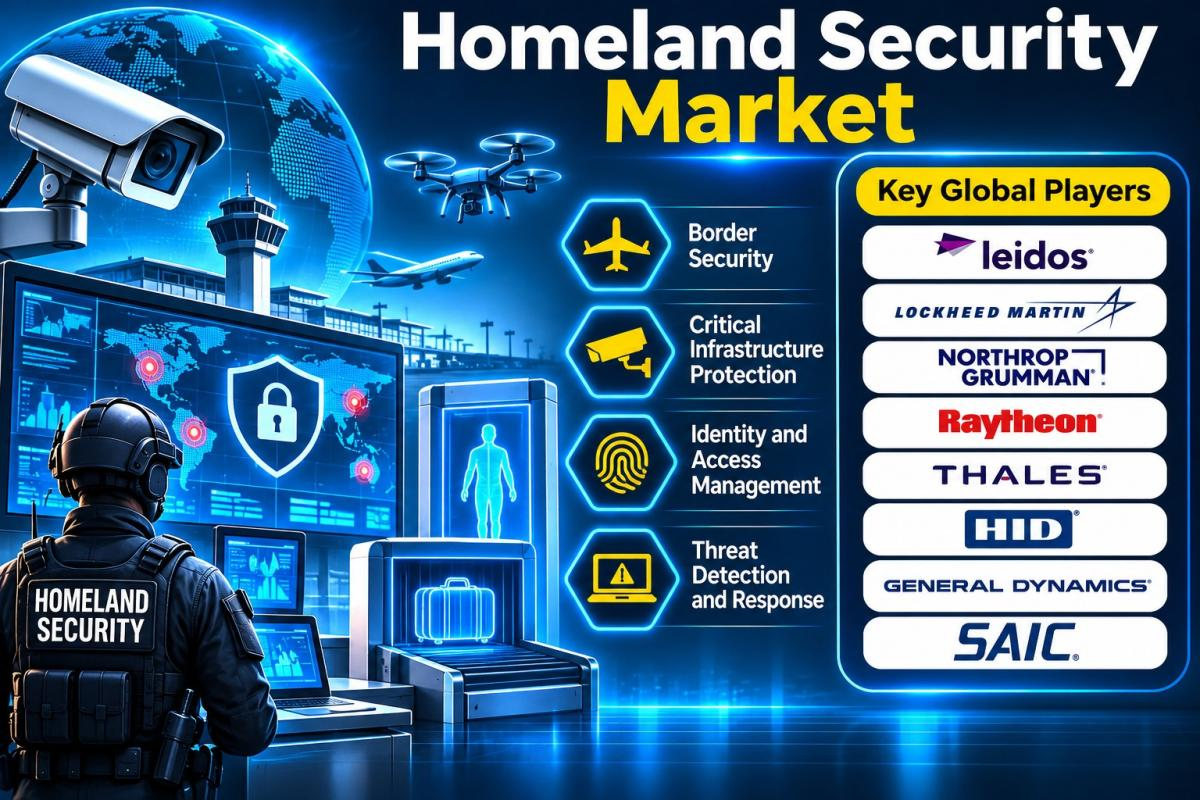
According to Straits Research, the global homeland security market size was valued at USD 701.04 billion in 2025 and is projected to grow from USD 742.40 billion in 2026 to USD 1,174.37 billion by 2034, registering a CAGR of 5.9% during the forecast period (2026–2034). North America dominated the homeland security market with a share of 38.42% in 2025.
The homeland security market includes technologies, equipment, systems, and services used to protect national infrastructure, borders, citizens, public institutions, and critical assets from security threats. It covers areas such as border security, cybersecurity, emergency response, surveillance, transportation security, disaster management, and critical infrastructure protection. Governments and security agencies use advanced technologies to detect threats, improve situational awareness, strengthen preparedness, and coordinate responses to emergencies. Increasing security concerns, infrastructure vulnerabilities, digital threats, and investments in public safety are supporting market growth.
Get Full Report: https://straitsresearch.com/report/homeland-security-market
Growth Drivers of the Homeland Security Market
Rising National Security Concerns
Increasing concerns about terrorism, cross-border threats, organized crime, and geopolitical instability are encouraging governments to strengthen security infrastructure. National security agencies are investing in advanced monitoring systems, detection technologies, communication networks, and emergency response capabilities.
The need to protect citizens, government facilities, public spaces, and strategic assets is increasing demand for integrated security solutions. Governments are upgrading existing systems and expanding security capabilities to respond to evolving threats.
Increasing Cybersecurity Threats
The growing dependence on digital infrastructure is increasing exposure to cyberattacks, data breaches, ransomware, and disruptions to critical systems. Government agencies, utilities, financial institutions, transportation networks, and healthcare organizations are strengthening their cybersecurity capabilities.
Homeland security programs increasingly include cybersecurity monitoring, threat intelligence, network protection, incident response, and digital risk management. The rising complexity of cyber threats is encouraging investment in advanced security technologies.
Modernization of Border Security Infrastructure
Governments are modernizing border security infrastructure to improve monitoring, identity verification, cargo inspection, and immigration management. Investments in advanced detection systems, digital border platforms, and surveillance infrastructure are supporting border protection operations.
The growing movement of people and goods across international borders is creating demand for more efficient security systems. Agencies are adopting technologies that improve visibility and help manage border operations while supporting legitimate travel and trade.
Increasing Investment in Critical Infrastructure Protection
Critical infrastructure such as power grids, water systems, telecommunications networks, transportation facilities, and industrial assets requires protection against physical and digital threats. Disruptions to these systems can affect economic activity, public services, and national security.
Governments and infrastructure operators are investing in monitoring systems, security technologies, emergency preparedness, and cybersecurity solutions. The need to improve resilience and reduce vulnerabilities is supporting homeland security spending.
Growing Demand for Emergency Response and Disaster Management
Natural disasters, industrial incidents, public emergencies, and other crisis situations are increasing the need for effective emergency response capabilities. Governments are investing in communication systems, emergency management platforms, detection technologies, and coordination tools.
These solutions help emergency agencies improve preparedness, communicate with affected communities, and coordinate response activities. Investments in disaster resilience and public safety are supporting market development.
Technological Advancements in Security Systems
Advancements in artificial intelligence, sensor technologies, analytics, communication systems, and automation are improving security operations. Modern systems can help agencies process large volumes of information, detect unusual activity, and improve situational awareness.
The adoption of connected security platforms is enabling organizations to integrate information from multiple systems. Technology upgrades are encouraging agencies to modernize security infrastructure and improve operational efficiency.
Applications of the Homeland Security Market
Border and Immigration Security
Border security agencies use monitoring, identity management, screening, and detection technologies to support border operations. Systems are deployed at airports, seaports, land crossings, and other entry points.
These solutions help authorities manage passenger movement, inspect cargo, verify identity information, and identify potential security risks. Modernization of border infrastructure is increasing demand for integrated security technologies.
Cybersecurity and Information Security
Cybersecurity is an important application area within homeland security. Government agencies and critical infrastructure operators use security software, monitoring platforms, threat intelligence, and incident response solutions to protect digital systems.
These technologies help organizations identify vulnerabilities, monitor network activity, and respond to cyber incidents. The growing importance of digital infrastructure is increasing the role of cybersecurity in national security strategies.
Transportation Security
Transportation security solutions are deployed across airports, railway stations, seaports, road infrastructure, and public transportation systems. These technologies include passenger screening, access control, monitoring systems, cargo inspection, and security communications.
The need to protect transportation infrastructure and maintain passenger safety is encouraging investments in modern screening and security systems.
Critical Infrastructure Protection
Critical infrastructure protection includes security solutions for energy facilities, water utilities, telecommunications networks, industrial systems, and government infrastructure. Organizations use physical security, monitoring technologies, cybersecurity tools, and emergency response systems to improve asset protection.
The increasing interconnectedness of infrastructure systems is creating demand for integrated security and resilience solutions.
Emergency Management and Public Safety
Emergency management agencies use communication systems, incident management software, monitoring tools, and response coordination technologies. These solutions support operations during natural disasters, public emergencies, industrial accidents, and other incidents.
Digital emergency platforms help agencies share information, coordinate resources, and manage response activities across different organizations.
Maritime Security
Maritime security systems are used to protect ports, shipping routes, coastal infrastructure, and offshore facilities. Technologies such as vessel monitoring, port surveillance, communication systems, and maritime information platforms help authorities monitor maritime activities.
Growing international trade and the importance of maritime transportation are supporting demand for security systems across port and coastal operations.
Emerging Trends in the Homeland Security Market
Integration of Artificial Intelligence and Data Analytics
Artificial intelligence and data analytics are increasingly being integrated into homeland security systems. These technologies can help process large volumes of information from sensors, cameras, communication systems, and other sources.
Analytics tools can support anomaly detection, threat assessment, information prioritization, and operational decision-making. Security agencies are exploring AI-enabled systems to improve monitoring and response capabilities while maintaining appropriate human oversight.
Expansion of Autonomous Surveillance Technologies
Autonomous systems, including unmanned aerial vehicles and robotic platforms, are being used for selected surveillance, inspection, and monitoring activities. These technologies can support operations in remote, hazardous, or difficult-to-access locations.
Autonomous surveillance platforms are being explored for border monitoring, infrastructure inspection, disaster assessment, and maritime operations. Their adoption is increasing interest in connected monitoring systems and advanced sensors.
Development of Smart Border Technologies
Smart border technologies combine digital identity systems, automated screening, sensor networks, data analytics, and connected infrastructure. These solutions are being developed to improve border operations and support more efficient processing of travelers and cargo.
The integration of digital systems is helping agencies modernize border infrastructure and improve information sharing. Technology adoption is also supporting efforts to manage increasing cross-border movement.
Increasing Focus on Critical Infrastructure Resilience
Governments and infrastructure operators are focusing on resilience to improve their ability to withstand and recover from security incidents, cyberattacks, and disruptions. This includes investments in backup systems, monitoring technologies, incident response planning, and infrastructure modernization.
Resilience programs are increasingly combining physical security and cybersecurity approaches. The need to maintain essential services during emergencies is supporting investment in integrated protection systems.
Adoption of Integrated Security Platforms
Security organizations are increasingly adopting integrated platforms that combine surveillance, access control, cybersecurity monitoring, communications, and incident management. These systems provide a centralized view of security operations and help coordinate information across departments.
Integration is becoming important as threats involve multiple systems and infrastructure networks. Connected platforms can support faster information sharing and improve coordination between agencies.
Growth in Advanced Detection and Screening Technologies
Advanced detection technologies are being developed for applications involving passenger screening, cargo inspection, hazardous materials detection, and infrastructure protection. Modern systems are increasingly incorporating automated analysis and improved sensing capabilities.
Demand for more efficient screening processes is encouraging investments in upgraded security equipment across airports, ports, government facilities, and transportation networks.












Comments (0)