

How DIEP Flap Breast Reconstruction in Dubai Uses Your Own Tissue
Discover how DIEP Flap Breast Reconstruction in Dubai uses abdominal skin and fat to rebuild the breast while preserving the abdominal muscle. Learn more at Tajmeels Clinic.
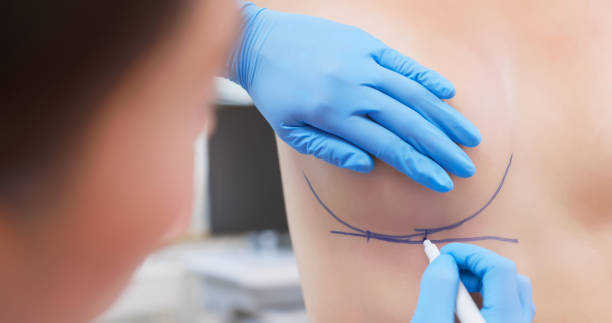
DIEP Flap Breast Reconstruction in Dubai uses a patient's own lower abdominal skin and fatty tissue to create a reconstructed breast, often after mastectomy. The transferred tissue retains its own blood supply through carefully connected blood vessels, allowing it to survive in its new position. Unlike some older abdominal flap techniques, the DIEP approach is designed to preserve the rectus abdominis muscle.
This method is known as autologous breast reconstruction because it uses the patient's own tissue rather than an artificial implant. Understanding how the tissue is transferred and supported helps patients appreciate the surgical planning involved.
Understanding Autologous Breast Reconstruction
Autologous reconstruction uses tissue taken from another area of the patient's body to rebuild the breast.
The lower abdomen is a commonly used donor area because it may contain sufficient skin and fatty tissue for reconstruction. The suitability of this area depends on the patient's body composition, previous abdominal surgery and available blood vessels.
DIEP flap surgery involves transferring the required tissue while carefully preserving the abdominal muscle. The blood vessels supplying the tissue are connected to blood vessels in the chest through microsurgery.
How DIEP Flap Breast Reconstruction in Dubai Uses Abdominal Tissue
The procedure involves several stages, each requiring careful surgical coordination.
Identifying Suitable Abdominal Tissue
Before surgery, the surgeon assesses the lower abdominal area to determine whether sufficient skin and fat are available.
The team may also use imaging to map the perforator blood vessels. These vessels pass through or near the abdominal muscle and supply blood to the skin and fat.
Preoperative planning helps identify suitable vessels and supports the surgical approach.
Separating the Skin and Fat
During surgery, the surgeon carefully separates the selected abdominal skin and fatty tissue from the underlying structures.
The aim is to preserve the rectus abdominis muscle while retaining the blood vessels required to supply the transferred tissue.
This requires detailed knowledge of abdominal anatomy and careful dissection.
Preserving and Preparing the Blood Supply
The tissue depends on an adequate blood supply after transfer. The surgeon identifies and prepares the relevant blood vessels for connection to recipient vessels in the chest.
The blood vessels are small, which is why specialised microsurgical instruments and techniques are required.
Transferring and Shaping the Tissue
Once the tissue is prepared, it is transferred to the chest area.
The surgeon connects the blood vessels under magnification and shapes the transferred tissue to create the reconstructed breast.
The goal is to establish a reliable blood supply and an appropriate breast contour.
Why Preserving the Abdominal Muscle Matters
A defining feature of DIEP flap reconstruction is its muscle-sparing approach.
The rectus abdominis muscles help support the abdominal wall and contribute to core stability and movement. Preserving these muscles may reduce the risk of abdominal weakness compared with procedures that remove part of the muscle.
However, muscle preservation does not mean the abdominal donor site is free from complications. Patients may still experience:
-
Abdominal discomfort and tightness.
-
Changes in sensation.
-
Wound-healing problems.
-
Weakness or bulging.
-
Hernia, although the risk profile differs from muscle-sacrificing procedures.
The surgeon should explain how the donor area will be closed and what recovery may involve.
What Happens to the Abdominal Donor Site
After the tissue has been transferred, the surgeon closes the lower abdominal area.
The resulting scar is generally positioned across the lower abdomen. Its length and appearance depend on the amount of tissue removed, the patient's anatomy and the closure technique.
Patients should also understand that abdominal contour changes are not guaranteed to match the results of a cosmetic tummy tuck. The primary purpose of the operation is breast reconstruction.
How the Transferred Tissue Survives
The transferred tissue needs a functioning blood supply to remain healthy.
During microsurgery, the surgeon connects the flap's blood vessels to suitable vessels in the chest. The surgical team then monitors the reconstructed tissue closely, particularly during the early postoperative period.
Signs of compromised circulation require prompt assessment because blood-flow problems can threaten flap survival.
Who May Benefit From Using Their Own Tissue
DIEP reconstruction may be considered for patients who:
-
Need breast reconstruction after mastectomy.
-
Prefer reconstruction using their own tissue.
-
Have sufficient abdominal skin and fat.
-
Are medically suitable for a lengthy microsurgical operation.
-
Understand the donor-site surgery and recovery requirements.
Patients with previous abdominal surgery, certain health conditions or limited donor tissue may need a different reconstruction option.
Frequently Asked Questions
What tissue is used in DIEP flap reconstruction?
The procedure uses skin and fatty tissue from the lower abdomen, together with the blood vessels that supply it.
Does the procedure use abdominal muscle?
The DIEP technique is designed to preserve the rectus abdominis muscle rather than transfer it with the flap.
Why are blood vessels connected during surgery?
The transferred tissue needs a functioning blood supply. Microsurgical connections allow blood to circulate through the tissue in its new position.
Does the abdominal area become flatter?
Removing lower abdominal skin and fat may change the abdominal contour, but the operation is not primarily a cosmetic tummy tuck.
Can everyone use abdominal tissue for breast reconstruction?
No. Suitability depends on donor-tissue availability, blood-vessel anatomy, previous operations and overall health.
Clinic Note: Using a patient's own tissue requires careful evaluation of both the reconstruction site and the donor area. Patients should understand the benefits of muscle preservation as well as the possibility of abdominal complications and microsurgical risks.
Learn About DIEP Flap Breast Reconstruction in Dubai at Tajmeels Clinic
DIEP flap reconstruction combines abdominal tissue transfer with microsurgery to create a breast using the patient's own tissue. Understanding the process can help patients prepare for a detailed discussion about donor-site suitability, surgical planning and recovery.
Explore DIEP Flap Breast Reconstruction in Dubai at Tajmeels Clinic to learn more about the procedure and discuss individual reconstruction options.

I’m part of Tajmeels Clinic in Dubai, sharing insights on Rhinoplasty Dubai, facial harmony, skincare, hair restoration, and personalized aesthetic care. lear more: https://tajmeels.ae/en/plastic-surgery/closed-rhinoplasty/










Comments (0)