

How to Set Up a Pet-Friendly Home in Qatar: Essentials for Cats, Birds, Fish and Small Pets
How to Set Up a Pet-Friendly Home in Qatar: Essentials for Cats, Birds, Fish and Small Pets

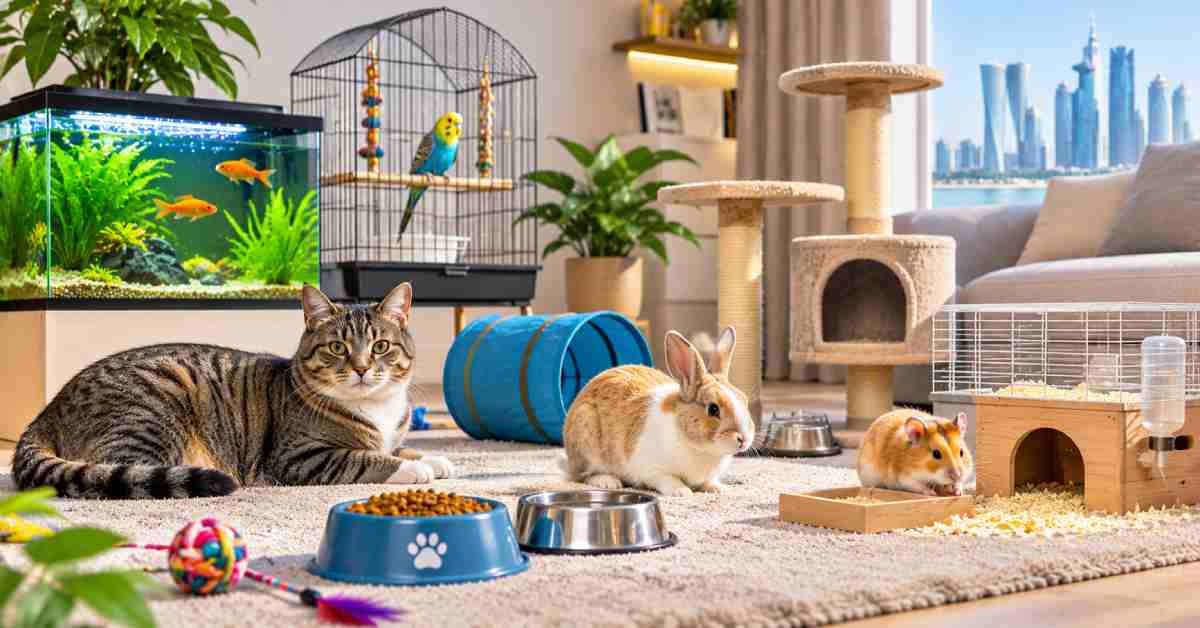
Creating a pet-friendly home involves more than buying food, a cage, or an aquarium.
Cats, birds, fish, rabbits, and other small pets all need different combinations of space, feeding, cleaning, temperature control, enrichment, and safety.
In Qatar, indoor conditions also matter because many pets spend much of their time in air-conditioned homes. A good setup should therefore be comfortable for the animal and practical for the people caring for it.
Planning the environment before bringing a pet home can prevent many common problems later.
Start With a Safe Location
The first step is choosing where the pet will spend most of its time. Cats may move freely throughout the home, while birds, fish, rabbits, and other small pets usually depend on a more defined habitat.
Avoid placing cages or aquariums directly beside doors, busy walkways, strong sunlight, or powerful AC vents.
Direct sunlight can increase the temperature inside an aquarium or cage quickly. Constant cold air from an AC vent can create the opposite problem. A stable location with comfortable temperature, easy cleaning access, and limited disturbance is usually best.
Anyone comparing essentials through a pet shop in Qatar should first decide where the animal will live before purchasing accessories that may not fit the available space.
Cats Need Different Areas for Different Activities
Cats usually need separate areas for eating, drinking, sleeping, playing, scratching, and using the litter tray.
Food and water should be placed somewhere clean and easy to access. Litter trays should be positioned in a quieter area and cleaned frequently.
It is also helpful to provide scratching surfaces, hiding spaces, and places where the cat can rest without being disturbed.
When choosing cat food Qatar options, consider the cat's age, activity level, body condition, and specific nutritional needs rather than selecting food only by flavour or packaging.
Kittens, adults, and senior cats may all have different dietary requirements. Avoid changing food suddenly unless there is a reason to do so.
Keep Feeding Areas Clean
Food bowls can collect residue quickly, especially when wet food is used. Wash bowls regularly and remove uneaten food rather than leaving it out for long periods.
Fresh drinking water should always be available. Some cats prefer wide bowls, while others may drink more comfortably from moving-water systems.
The exact setup matters less than keeping it clean and consistent. If a cat suddenly changes its eating or drinking habits, pay attention. Changes in routine can sometimes be an early sign that something is wrong.
Choose Bird Housing Around the Bird
A bird cage should be selected according to the bird's size and normal movement. The cage should provide enough usable space for perching, feeding, resting, and activity.
Avoid filling the enclosure with so many toys and accessories that the bird has little room to move. Perches should be positioned so they do not block access to food or water.
People comparing bird supplies Qatar should focus first on essentials such as suitable food, perches, feeding containers, and enrichment appropriate for the species.
Keep Bird Cages Away From High-Stress Areas
Birds can be sensitive to constant disturbance. Avoid positioning the cage beside a loud television, frequently opening door, busy kitchen, or strong air-conditioning vent.
Kitchens deserve extra caution because fumes, heat, smoke, and airborne particles can affect birds.The cage should be stable and positioned where the bird can observe household activity without being disturbed continuously.
A calm corner of a living area can often work better than an isolated room or a very busy entrance.
Aquarium Setup Starts With Tank Size
Aquariums should be chosen based on the fish rather than appearance alone. Tank size affects water stability, filtration requirements, stocking capacity, and maintenance.
Smaller tanks may be easier to place but can experience faster changes in temperature and water quality.
Anyone visiting an aquarium shop Qatar should consider the expected fish species, number of fish, filtration system, heater requirements, substrate, and maintenance routine before choosing a tank.
Do not rush to fill a newly installed aquarium with fish immediately. A stable aquarium needs time to establish biological filtration.
Filtration Is Essential
An aquarium filter does more than remove visible dirt. It helps process waste and supports beneficial biological activity.
Different setups may require internal filters, external filters, sponge filters, pumps, or other filtration systems.
The correct choice depends on tank size, fish type, and stocking level. Filters also need maintenance. Reduced water flow can indicate that filter media has become clogged.
Cleaning should be carried out carefully so useful biological filtration is not unnecessarily disrupted.
Avoid Overfeeding Fish
Overfeeding is one of the most common aquarium mistakes. Fish may appear eager whenever food is added, but that does not mean large quantities are necessary.
Uneaten food breaks down and adds waste to the water. Feed according to the species and observe how quickly the food is consumed.
If large amounts regularly remain after feeding, reduce the quantity. Good water quality usually depends as much on feeding habits as on filtration equipment.
Temperature Stability Matters
Qatar's outdoor climate does not mean every indoor aquarium will remain warm. Air-conditioned rooms can stay relatively cool throughout the day.
Some fish therefore require a suitable heater and thermometer. Avoid sudden temperature changes. Stable conditions are generally more important than simply maintaining a high temperature.
The same principle applies to birds and small pets. Housing should not sit directly in front of strong cooling vents or in areas where temperatures change sharply.
Small Pets Need Enough Room to Move
Rabbits, guinea pigs, and other small pets need more than a food bowl and sleeping space. Their enclosure should allow normal movement, resting, feeding, and appropriate activity.
Think about adult size rather than buying housing only for a young animal.
A small enclosure may become unsuitable quickly as the pet grows.
When shopping for pet supplies Qatar, start with housing, food, water equipment, bedding, cleaning essentials, and safe enrichment rather than buying decorative accessories first.
The most useful products are the ones that support everyday care.
Build a Cleaning Routine
Pet habitats should be easy to maintain. Cat litter trays need regular cleaning. Bird cages collect seed husks, feathers, and droppings.
Aquariums require water-quality monitoring and routine maintenance. Small-pet bedding can become wet or soiled.
Do not wait until strong odours appear before cleaning. At the same time, avoid unnecessary disruption. A practical routine usually combines frequent small cleaning tasks with deeper cleaning when needed.
Pet-Proof the Home
Pets often reach areas people do not expect. Electrical cables, cleaning products, unstable furniture, open balconies, small objects, and unsuitable plants can all create risks.
Rabbits may chew wires. Cats may climb shelves or windows. Birds outside the cage may reach ceiling fans, glass doors, or open windows.
Walk through the home from the animal's perspective. Anything the pet can chew, climb, pull, swallow, or knock over deserves attention.
Plan Carefully in Multi-Pet Homes
Different pets may need physical separation. A cat may become very interested in a bird cage or aquarium.
Dogs may repeatedly approach smaller animals. Even without direct contact, constant attention from a larger animal can create stress. Bird cages should be placed where another pet cannot knock them over.
Aquarium lids should remain secure. Small-pet enclosures should also be positioned where larger pets cannot repeatedly paw at them. Every animal should have somewhere it can rest without feeling threatened.
Buy Essentials Before Extras
New pet owners often buy too many accessories at once. A simpler approach is to begin with core needs.
Cats need appropriate food, water, litter, scratching options, and resting areas. Birds need suitable housing, food, water, perches, and enrichment.
Fish need an appropriate tank, filtration, water-conditioning equipment, suitable food, and temperature control where required.
Small pets need secure housing, food, water, bedding, and activity space. Additional products can be added later once the pet's routine becomes clearer.
Watch the Animal, Not Just the Setup
Even a well-equipped home may need adjustment. A cat avoiding its litter tray may dislike its location.
A bird becoming unusually quiet may be stressed. Fish staying near the surface may indicate a water-quality or oxygen issue.
A rabbit repeatedly chewing the enclosure may need more activity or space. The pet's behaviour is one of the best indicators of whether the environment is working.
Build a Setup You Can Maintain
The best pet-friendly home is not necessarily the most complicated one. It is the one that can be maintained consistently.
Food should be easy to store. Water containers should be easy to clean. Cages should allow practical access. Aquarium equipment should be reachable for routine maintenance.
When everyday care is simple, it is more likely to be done properly.
A good pet-friendly home starts with suitable space, stable conditions, appropriate nutrition, clean water, safe housing, and a realistic care routine.
Planning these basics before focusing on extras can make life easier for both the pet and the owner.







Comments (0)