

Spanish Daycare: What Parents Should Consider When Choosing Care

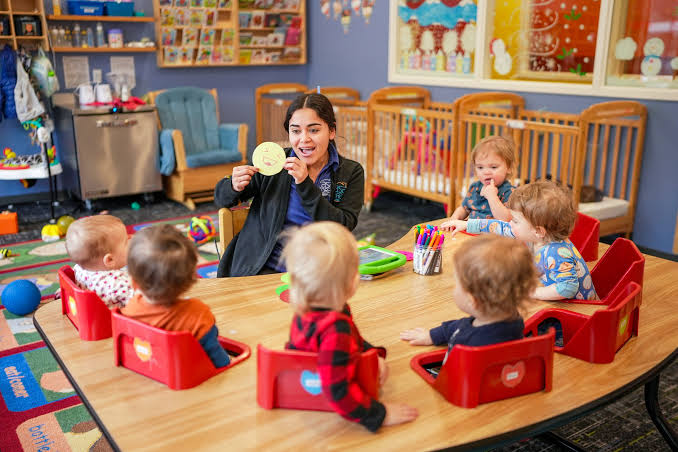
Choosing the right daycare is one of the most important decisions parents make during a child's early years. Families want a safe environment, caring teachers, and activities that support healthy development. For parents interested in raising bilingual children, the decision also involves finding a setting where children can develop Spanish language skills naturally while building confidence, friendships, and independence.
A well-chosen spanish daycare can introduce children to another language through everyday conversations, songs, storytelling, play, and social interaction. However, not every program follows the same approach. Some use Spanish throughout the day, while others introduce it during specific activities. Understanding these differences helps parents choose care that fits their child's needs, family routines, and educational goals.
Before enrolling a child, parents should look beyond attractive classrooms or promising language programs. Staffing, safety procedures, teaching methods, communication practices, and the overall atmosphere all deserve careful consideration. A thoughtful evaluation can help families find a program where children feel secure, engaged, and encouraged to learn.
Understanding What Spanish Daycare Offers
Spanish daycare combines early childhood care with opportunities to hear, understand, and use Spanish in meaningful situations. Depending on the program, Spanish may be the primary language of communication or one component of a broader bilingual curriculum.
The most suitable approach depends on the child's age, language background, and comfort level.
Spanish immersion programs use Spanish for most daily activities. Children hear the language during meals, playtime, transitions, and group lessons. This approach provides frequent exposure and can help children associate Spanish with familiar routines.
Bilingual daycare programs use both English and Spanish. Teachers may switch between languages or organize activities around particular language goals. This option can appeal to families who want their children to develop Spanish skills while maintaining regular exposure to English.
Spanish enrichment programs introduce the language through songs, games, crafts, and short lessons. These programs offer exposure without necessarily making Spanish the main language of instruction.
Parents should ask how much Spanish children actually hear throughout a typical day. A program that advertises bilingual learning may provide only limited language practice, so understanding the daily routine is essential.
How to Choose the Right Spanish Daycare
Selecting a daycare becomes easier when families evaluate each program against clear priorities instead of relying on first impressions alone.
1. Verify Licensing and Safety Standards
Safety should be the first consideration, regardless of the curriculum or language offered. Check whether the facility meets applicable state and local childcare licensing requirements. In the United States, licensing rules vary by state, so parents should consult the relevant childcare licensing agency.
Ask about background checks, staff training, emergency procedures, sanitation, and supervision during indoor and outdoor activities. Parents should also understand how the center handles allergies, medication, illness, and authorized pickup arrangements.
Observe how staff supervise children during transitions. For example, when a group moves from the classroom to the playground, teachers should have a clear process for accounting for every child.
Review the center's policies in writing rather than accepting verbal assurances alone. A welcoming environment is important, but consistent safety procedures are indispensable.
2. Evaluate Teachers' Qualifications and Experience
Teachers influence both a child's emotional well-being and language development. Look for caregivers who understand early childhood development, age-appropriate teaching, and positive behavior management.
For Spanish instruction, ask about teachers' language proficiency and experience working with young children. Speaking Spanish fluently does not automatically mean someone knows how to teach it effectively to preschoolers.
Effective educators use repetition, gestures, pictures, songs, and simple questions to make unfamiliar words understandable. They also recognize that children learn at different rates.
Consider a practical example: a teacher introducing colors might say rojo while pointing to a red block, then invite children to find other red objects. This connects a new word with an observable experience instead of requiring children to memorize vocabulary.
Also observe whether teachers respond patiently when children struggle, become frustrated, or communicate in their stronger language.
3. Understand the Language Learning Approach
A quality program should have a clear explanation of how children encounter Spanish throughout the day.
Ask whether teachers speak Spanish consistently, whether English is used when necessary, and how the program supports children who are completely new to the language. Find out how language activities change as children develop.
For infants and toddlers, learning often involves listening, facial expressions, gestures, familiar phrases, and songs. Preschoolers may participate in storytelling, imaginative play, simple conversations, and group activities.
Parents should not expect immediate fluency. Young children may understand words before they begin speaking them, and some may initially observe quietly rather than participate.
The goal is to build familiarity and confidence through repeated, meaningful interactions rather than pressure children to produce perfect sentences.
4. Examine the Daily Schedule and Activities
A balanced daycare schedule supports language development alongside physical, social, emotional, and cognitive growth.
Request a sample daily timetable. It should show how the program balances structured activities with free play, outdoor time, meals, rest, and creative exploration.
Look for activities that encourage natural language use. Cooking pretend meals, building with blocks, reading picture books, and singing movement songs can introduce vocabulary in enjoyable ways.
For example, children playing grocery store might practice phrases such as ¿Cuánto cuesta? or learn the names of common foods. These interactions connect language with practical situations.
Be cautious if most of the day involves worksheets, repetitive drills, or children sitting quietly for extended periods. Young children generally benefit from active, play-based learning that matches their developmental stage.
5. Assess Communication With Parents
Parents need regular, understandable updates about their child's adjustment, behavior, activities, and progress. Ask how teachers communicate with families and how frequently updates are provided.
Useful communication includes information about meals, naps, social interactions, emerging skills, and any concerns requiring attention. Parents should also know whom to contact when questions arise.
If the daycare communicates primarily in Spanish, confirm that important announcements, safety instructions, and developmental updates are accessible to your family.
Strong partnerships between parents and teachers make it easier to address challenges early. For example, if a child becomes unusually quiet after enrollment, a teacher and parent can compare observations and develop a supportive plan together.
Common Mistakes Parents Should Avoid
Even careful families can overlook important details when comparing childcare options.
Choosing based on language promises alone: Spanish exposure is valuable, but it cannot compensate for inadequate supervision, poor communication, or an unsuitable classroom environment.
Expecting immediate bilingualism: Language development takes time. Children need repeated exposure and opportunities to interact without feeling embarrassed about mistakes.
Ignoring the child's temperament: Some children quickly join group activities, while others need time to feel comfortable. Ask how teachers help children adjust during their first days and weeks.
Overlooking staff turnover: Frequent changes in caregivers can disrupt routines and relationships. Ask about staff retention and how the center supports continuity of care.
Failing to review policies: Understand tuition, operating hours, holidays, sick-child rules, late-pickup fees, and withdrawal procedures before signing an agreement.
Avoid making a decision after a brief tour alone. A classroom may look impressive during a visit, but observing an ordinary day provides a clearer picture of how children are treated and engaged.
Practical Tips for Making the Final Decision
Once you have identified a few suitable centers, use a consistent process to compare them.
First, arrange an in-person visit during normal operating hours, if permitted. Observe whether children appear comfortable, whether teachers interact warmly, and whether the environment feels organized without being unnecessarily rigid.
Second, ask specific questions rather than relying on general statements. Find out how teachers handle conflicts, support children who need extra attention, and respond when a child refuses to participate in an activity.
Third, review the center's emergency, illness, discipline, and pickup policies. Ask how incidents are documented and communicated to families.
Fourth, involve your child when appropriate. Depending on their age, you might visit together, observe a trial session, or talk about the new environment beforehand. Notice whether the child seems curious, overwhelmed, or comfortable, while recognizing that first impressions can change.
Finally, compare the overall value rather than tuition alone. A more expensive program is not automatically better, and a lower-cost option is not necessarily inadequate. Consider staff quality, safety, convenience, curriculum, and the support available to your child.
At home, reinforce Spanish learning through simple routines. Read bilingual picture books, sing familiar songs, label everyday objects, or practice greetings together. Parents do not need to be fluent to encourage curiosity and make language learning enjoyable.
Conclusion
Choosing Spanish daycare requires balancing language opportunities with the fundamentals of high-quality childcare. Parents should evaluate safety, teacher qualifications, daily activities, communication practices, and the center's approach to bilingual development before making a commitment.
The strongest program is one where children feel secure, receive attentive care, and encounter Spanish through meaningful everyday experiences. By visiting classrooms, asking specific questions, and considering their child's individual needs, families can make a confident decision that supports both early learning and long-term language development.











Comments (0)