

How Can Patient-Centric Billing Reduce Out-of-Pocket Costs in 2026?
Learn how patient-centric billing can reduce out-of-pocket costs, improve billing transparency, simplify payments, and create a better patient financial experience in 2026.

Healthcare costs can be difficult for patients to understand, even when the medical care itself goes smoothly. A patient may receive several bills for one visit, struggle to understand insurance adjustments, or discover unexpected charges weeks after treatment. These experiences can create stress and make patients less likely to return for follow-up care.
In 2026, healthcare providers are paying closer attention to this problem. The goal is no longer simply to send accurate invoices. Providers also need to make costs easier to understand, communicate earlier, and give patients practical ways to manage their balances.
Patient-centric medical billing puts the patient at the center of that process. It combines accurate claims, clear communication, convenient payment options, and better financial support. When these pieces work together, providers can improve collections while creating a more positive financial experience for the people they serve.
Why Are Out-of-Pocket Healthcare Costs Becoming a Bigger Concern?
Insurance rarely covers every healthcare expense. Deductibles, copayments, coinsurance, non-covered services, and other charges can leave patients responsible for significant amounts.
The problem becomes worse when patients do not know what they owe until after treatment.
How does financial uncertainty affect patients?
Unexpected medical bills can affect household budgets and cause patients to delay payments. Some may even postpone necessary appointments because they are worried about additional expenses.
This creates a difficult situation for providers. They need to collect legitimate balances, but aggressive or confusing billing can damage trust.
A better approach starts with transparency.
Patients should receive understandable information about expected charges whenever possible. They should also know how insurance affects the balance and what payment choices are available.
Why does timing matter?
A financial conversation is easier before a bill becomes overdue.
Providers can offer estimates, explain insurance requirements, and discuss payment options before or during treatment. Early communication gives patients time to prepare instead of forcing them to react to an unexpected invoice.
How Can Providers Improve Patient Financial Responsibility?
Patients are more likely to pay when they understand why they owe money. That sounds simple, but many billing statements still contain unfamiliar codes, abbreviations, and complex insurance language.
Clear explanations can make a major difference.
What should a patient-friendly bill include?
A useful statement should clearly show:
-
The service provided
-
The original charge
-
Insurance payments or adjustments
-
The remaining balance
-
The patient's responsibility
-
Payment deadlines
-
Available payment methods
-
Contact information for billing questions
The statement should answer the most important question quickly: “Why do I owe this amount?”
If patients need to call several departments to find an answer, the billing experience becomes frustrating.
Can estimates prevent billing surprises?
Yes. Estimates cannot always predict the final amount perfectly because insurance processing can change the balance. However, an informed estimate gives patients a reasonable expectation.
Providers can explain that an estimate is not a guarantee while still giving patients useful information.
This approach supports medical billing transparency without creating unrealistic promises.
What Role Do Patient Billing Solutions Play?
Technology has changed how patients interact with healthcare providers. People are now accustomed to managing banking, shopping, and subscriptions online. They often expect the same convenience from healthcare payments.
Modern patient billing solutions can provide online statements, digital payment options, automated reminders, payment plans, and secure communication.
Why are flexible payment options important?
Not every patient can pay a large balance at once.
A flexible payment arrangement may help patients manage expenses without ignoring the bill. Providers can offer structured plans based on their policies and applicable regulations.
Convenience also matters. Patients may prefer paying through a secure portal rather than mailing a check or calling during business hours.
Should payment reminders feel personal?
They should feel helpful rather than threatening.
A simple reminder can explain the balance, provide a direct payment option, and tell the patient where to ask questions. Clear language reduces confusion and can encourage timely payments.
How Can Healthcare Revenue Cycle Management Support Patients?
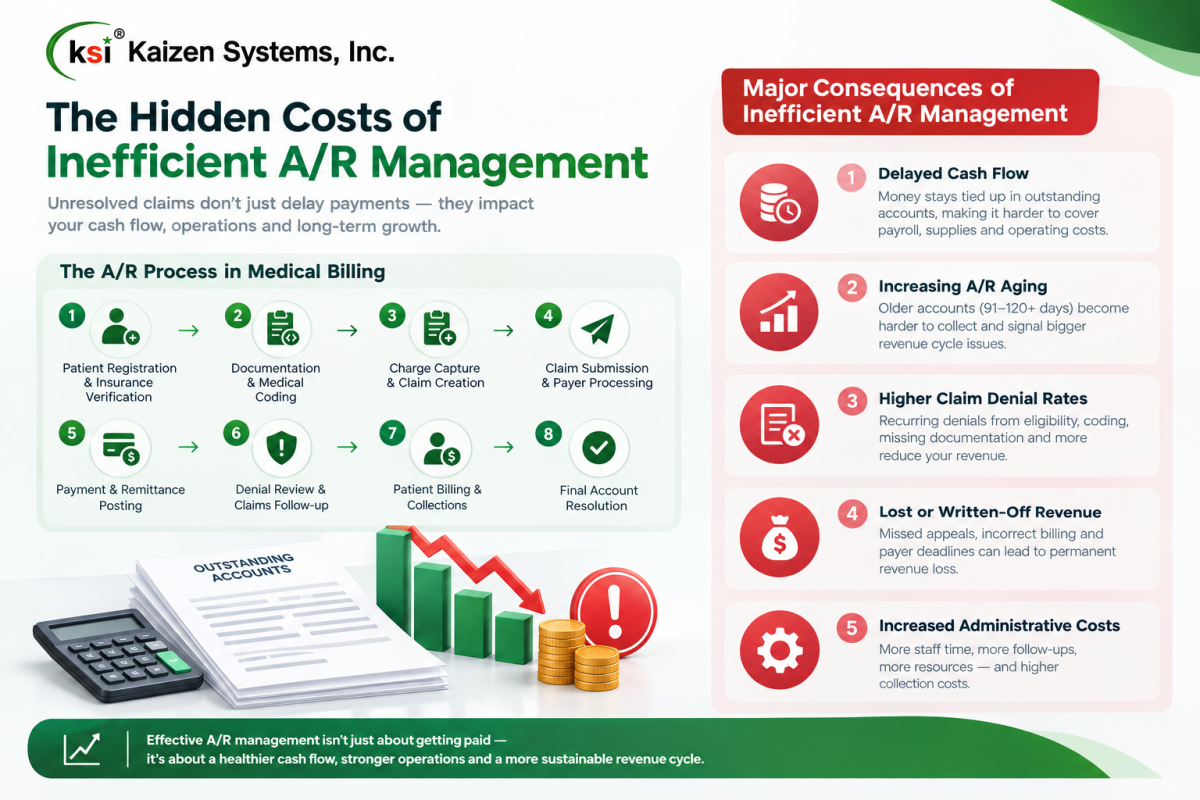
Healthcare revenue cycle management (RCM) covers much more than collecting money. It begins with registration and insurance verification and continues through coding, claims submission, payment posting, and patient billing.
Errors early in the process can eventually become patient problems.
What happens when claims contain errors?
Incorrect demographic information, eligibility issues, coding mistakes, missing documentation, and other problems can lead to claim delays or denials.
When a claim is rejected, the financial burden may eventually reach the patient if the issue is not corrected properly.
Strong processes help reduce these situations.
Why are medical billing and coding services important?
Professional medical billing and coding services help providers submit claims accurately and consistently. Proper coding supports cleaner claims and reduces unnecessary delays.
Accurate documentation also helps billing teams explain charges when patients have questions.
This is where clinical accuracy and patient communication meet. Better back-office processes can create a smoother front-end experience.
How Can Providers Improve the Patient Financial Experience?
A patient's financial experience begins long before the first statement arrives.
It includes registration, insurance verification, cost discussions, estimates, billing communication, payment options, and support after the bill is issued.
Can staff explain costs without using complicated language?
They should.
Patients do not need a lesson in medical coding to understand their financial responsibility. Billing teams can replace technical terms with plain explanations while still providing accurate information.
For example, instead of simply displaying a procedure code, a statement can identify the service in familiar language.
Small improvements like this can make healthcare feel less intimidating.
What if a patient disputes a charge?
A clear dispute process matters.
Patients should have an easy way to ask about charges and receive a timely response. Staff should review the account carefully rather than treating every question as a payment objection.
Sometimes the issue is a genuine billing error. Sometimes insurance processed a claim differently than expected. In either case, respectful communication protects the relationship.
How Can Providers Balance Collections With Compassion?
Healthcare organizations still need sustainable revenue. Patient-friendly billing does not mean ignoring unpaid balances.
Instead, it means creating a process that is fair, consistent, and understandable.
Can better communication improve payment management?
Absolutely.
Patients are more likely to engage with a balance when they know what it represents and what they can do next.
Effective patient payment management may include digital statements, reminders, payment plans, multiple payment methods, and accessible billing support.
The objective is not simply to collect faster. It is to reduce unnecessary friction between the patient and provider.
What role does healthcare cost management play?
Healthcare cost management should consider both operational efficiency and the patient's ability to navigate financial obligations.
Providers can review denial rates, billing errors, collection performance, payment-plan usage, and patient feedback. These measurements can reveal where the financial process is causing unnecessary difficulty.
What Should Healthcare Organizations Prioritize in 2026?
The strongest billing strategies combine accuracy with communication.
Organizations should review their complete financial workflow rather than focusing only on collections.
Important priorities include:
-
Verify insurance information early
-
Provide realistic cost estimates
-
Use clear billing statements
-
Explain patient balances in simple language
-
Offer convenient payment methods
-
Make financial assistance information accessible
-
Resolve billing questions promptly
-
Monitor claim denials and recurring errors
-
Protect patient information throughout the process
-
Collect feedback about the billing experience
These steps can improve operational performance while giving patients greater confidence.
Why Will Patient-Centered Billing Matter Even More?
Healthcare is becoming increasingly consumer-focused. Patients compare providers based not only on clinical care but also on convenience, communication, accessibility, and overall experience.
A confusing bill can overshadow an otherwise positive healthcare encounter.
Patient-centric medical billing gives providers an opportunity to change that experience. Instead of treating the bill as the final administrative step, organizations can view it as another part of patient care.
When patients understand their costs, know their options, and receive respectful communication, they are better positioned to manage their responsibilities.
That can benefit everyone involved.
Conclusion: Can Better Billing Create Better Healthcare Experiences?
Yes. Managing healthcare costs is not only a financial issue. It is also a trust issue.
Patients want to understand what they are paying for and why. Providers want reliable revenue and fewer administrative problems. A thoughtful billing process can support both goals.
Clear estimates, accurate claims, simple statements, flexible payment options, and responsive support can reduce confusion and improve the overall financial experience.
In 2026, successful providers will increasingly treat billing communication as part of the patient journey rather than an afterthought.
For organizations looking to improve billing accuracy, patient communication, and revenue performance, professional support can make the process easier to manage. Explore https://kaizenus.com/ to learn more about available solutions and take the next step toward a smoother healthcare billing experience.
FAQs
What is patient-centric medical billing?
It is an approach that makes healthcare billing easier for patients to understand and manage. It focuses on transparency, accurate charges, convenient payments, and helpful communication.
How can providers reduce unexpected healthcare bills?
Providers can verify insurance early, provide estimates, explain financial responsibility, and communicate potential costs before treatment whenever possible.
Why is medical billing transparency important?
Clear billing helps patients understand their balances and reduces confusion. It can also improve trust between patients and healthcare organizations.
How do payment plans help patients?
Payment plans can give eligible patients a structured way to manage larger balances over time. They may make payments more manageable without ignoring the financial responsibility.
Can better billing improve healthcare revenue?
Yes. Accurate claims, fewer billing errors, timely communication, and convenient payment options can support stronger collections while improving the patient experience.












Comments (0)