

Child Behavior Therapy Miami: Understanding Treatment Options
Looking for Child Behavior Therapy Miami? Contact Behavior Analysis Inc to explore personalized behavioral support for your child.
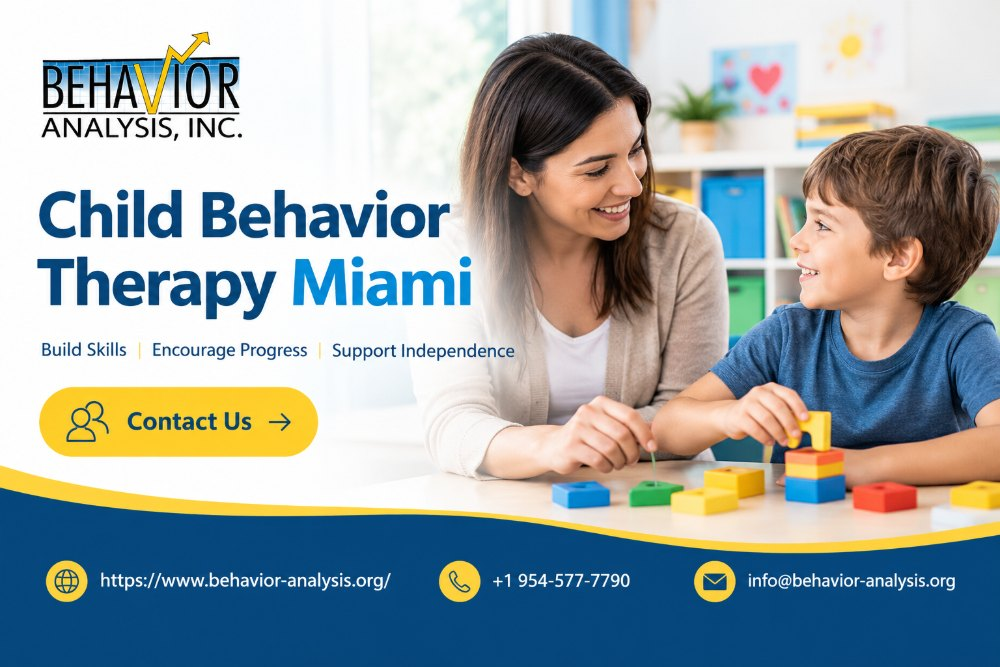
Children develop communication, social, emotional, and daily living skills at different rates. Some children may need additional support to manage challenging behaviors, follow routines, communicate their needs, or interact with others. Child behavior therapy provides structured strategies that help children build these skills while supporting their individual developmental needs.
Families exploring Child Behavior Therapy Miami services can choose from several treatment approaches, depending on their child's age, strengths, challenges, and goals. Understanding these options helps parents make informed decisions and find appropriate support for their children.
Behavior Analysis Inc provides behavioral services that focus on developing practical skills, encouraging positive behaviors, and helping individuals build greater independence.
What Is Child Behavior Therapy?
Child behavior therapy uses evidence-based strategies to understand why behaviors occur and teach children more effective ways to respond to everyday situations. Rather than focusing only on reducing challenging behaviors, therapists identify the skills a child needs to communicate, participate in activities, and manage daily routines.
Treatment often begins with an assessment of the child's abilities, preferences, environment, and areas requiring support. A qualified professional uses this information to develop individualized goals and select appropriate interventions.
Depending on the child's needs, therapy may address communication difficulties, difficulty following instructions, emotional regulation, social interactions, transitions between activities, or daily living skills.
Common Types of Child Behavior Therapy in Miami

Parents may encounter different treatment approaches when researching behavioral services. Each approach serves a specific purpose, and a qualified professional can help determine which methods best match a child's needs.
1. Applied Behavior Analysis (ABA) Therapy
Applied Behavior Analysis (ABA) is a structured, evidence-based approach that examines how environmental factors influence behavior and uses learning principles to develop useful skills.
ABA programs may teach children to communicate their needs, follow routines, develop social skills, complete self-care activities, and respond to everyday situations. Therapists break complex skills into manageable steps and use positive reinforcement to encourage learning.
For children with autism, ABA therapy may support communication, independence, social participation, and adaptive behavior. Providers should tailor goals to each child's abilities and family priorities rather than applying the same program to every child.
2. Early Intervention Services
Early intervention focuses on supporting developmental skills during the early years of childhood. When parents notice delays in communication, social engagement, or everyday activities, seeking professional guidance can help them understand their child's needs.
Depending on the assessment, early intervention may focus on language development, play skills, following simple instructions, and participating in family routines.
Families considering Child Behavior Therapy Miami services for younger children should ask providers how they assess developmental needs, involve caregivers, and monitor progress over time.
3. Social Skills Training
Some children need extra support when interacting with peers, joining group activities, taking turns, or understanding social expectations. Social skills training provides structured opportunities to practice these behaviors.
A therapist may use role-playing, modeling, guided play, and positive feedback to help children learn how to initiate conversations, share materials, recognize social cues, and respond appropriately in different situations.
These skills can help children participate more comfortably at home, in school, and in community settings.
4. Behavior Support for Challenging Behaviors
Children may engage in behaviors such as tantrums, aggression, refusal, or leaving activities when they feel overwhelmed or cannot communicate what they need. These behaviors can have different causes, so understanding their purpose is an important part of treatment.
A behavioral professional may assess what happens before and after a behavior to identify possible triggers and consequences. The therapist can then teach alternative skills, such as requesting a break, asking for help, or communicating frustration.
Effective support emphasizes safety, dignity, and meaningful skill development instead of relying solely on punishment or compliance.
How to Choose the Right Treatment Option
Choosing a provider requires more than comparing available services. Parents should consider several factors before beginning therapy.
-
Individualized assessment: Ask whether the provider evaluates your child's strengths, developmental needs, and family priorities before recommending treatment.
-
Qualified professionals: Confirm the credentials, training, and supervision of the professionals responsible for assessment and treatment.
-
Clear treatment goals: Look for measurable goals that relate to your child's everyday life, such as communicating needs or completing daily routines.
-
Family involvement: Ask how therapists involve parents and caregivers so children can practice skills outside therapy sessions.
-
Progress monitoring: Find out how the team measures progress, reviews results, and adjusts treatment when needed.
-
Respectful practices: Choose a provider that respects your child's preferences, supports autonomy, and prioritizes meaningful outcomes.
When comparing Child Behavior Therapy Miami providers, families should also discuss session frequency, service settings, scheduling, insurance coverage, and expected costs.
The Importance of Parent and Caregiver Participation
Children often benefit when caregivers understand and consistently use strategies that support their learning. Therapists may coach parents on reinforcing communication, establishing predictable routines, encouraging independence, and responding constructively to challenging situations.
For example, a child who struggles with transitions may benefit from visual schedules, advance warnings, and opportunities to request additional time. Caregivers can practice these strategies at home while the therapist evaluates their effectiveness.
Family participation should remain practical and manageable. Providers should explain techniques clearly and adapt recommendations to each household's routines, resources, and priorities.
Measuring Progress in Child Behavior Therapy
Progress looks different for every child. One child may develop more effective communication skills, while another may become more independent with dressing, mealtimes, or classroom activities.
Therapists should track progress using observable goals and review the results with families. Regular discussions help everyone understand which strategies work, where the child needs additional support, and whether treatment goals require adjustment.
Progress may not follow a straight line. Changes in routines, environments, developmental needs, or other circumstances can affect learning. Providers should respond thoughtfully and adjust the treatment plan when necessary.
Exploring Child Behavior Therapy Miami Services
Finding appropriate behavioral support begins with understanding your child's individual needs and identifying treatment options that match those needs. Early assessment, individualized goals, qualified professionals, and consistent caregiver involvement can help families make informed decisions.
Behavior Analysis Inc offers behavioral services designed to support skill development and greater independence. Families exploring treatment can discuss their child's needs, available programs, and potential next steps with the center.
Contact Behavior Analysis Inc to learn more about available services and determine which behavioral support options may suit your child's needs.

Behavior Analysis, Inc. (BAI) is south Florida’s oldest and most respected behavioral agency and is one of the world’s leading behavioral services companies. We have been providing state-of-the-art ABA therapy services throughout south Florida since 1994. We also provide long-distance consulting services anywhere in the English- and Spanish-speaking world. BAI has an international reputation for effectively teaching and treating persons with autism, intellectual disabilities, learning delays, behavioral disorders and other, difficult-to-teach individuals. We serve individuals with and without formal diagnoses of all ages.













Comments (0)