

How Manufacturers Can Identify Operational Bottlenecks Before They Escalate
Understand how AI, real-time analytics, and intelligent monitoring help manufacturers identify production bottlenecks, improve workflow visibility, and strengthen factory safety.
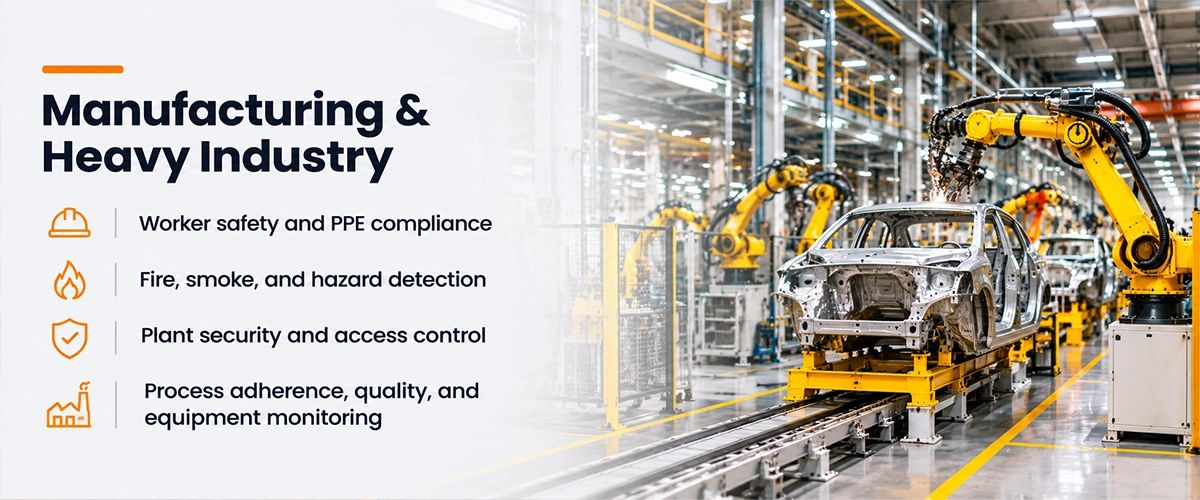
Manufacturing bottlenecks can affect production schedules, workplace safety, equipment utilisation, and overall operational efficiency. Identifying these issues early is essential for maintaining consistent production and avoiding unnecessary delays. With AI in manufacturing and operations, businesses can use visual intelligence, real-time monitoring, and data-driven insights to identify operational gaps before they develop into larger problems.
Modern manufacturing facilities generate large amounts of operational data through machines, sensors, production systems, and camera infrastructure. Analysing this information helps managers understand where processes slow down, identify recurring challenges, and make informed decisions to improve factory performance.
What Causes Operational Bottlenecks in Manufacturing Facilities
Operational bottlenecks occur when one stage of a production process cannot maintain the pace required by other stages. These interruptions can create delays throughout the manufacturing workflow.
Some common causes include:
-
Equipment downtime: Unexpected machine stoppages can interrupt production schedules.
-
Material handling delays: Slow movement of raw materials or components can affect production continuity.
-
Workforce coordination issues: Poor task allocation or communication can create unnecessary waiting periods.
-
Safety-related interruptions: Unsafe conditions or compliance issues may require operations to pause.
-
Process inefficiencies: Repeated manual activities and inconsistent workflows can reduce productivity.
-
Limited operational visibility: Without timely information, managers may struggle to identify the source of recurring delays.
Understanding these challenges is the first step towards building more responsive manufacturing operations.
How AI in Manufacturing Helps Identify Production Inefficiencies
The use of AI in manufacturing is changing how factories monitor production activities and identify operational challenges. Instead of depending entirely on manual inspections and periodic reporting, manufacturers can use AI-powered systems to analyse available operational data and identify patterns that require attention.
Artificial intelligence in manufacturing can support several monitoring applications, including:
-
Analysing production activity to identify unusual patterns.
-
Monitoring selected machine and equipment-related activities.
-
Identifying delays in material movement.
-
Observing workflow interruptions across production areas.
-
Detecting configured safety-related events.
-
Supporting operational decisions through timely notifications and analytics.
These capabilities help managers investigate problems earlier. However, AI analytics should complement equipment sensors, production management systems, and human supervision rather than replace them.
How Smart Manufacturing Solutions Improve Production Visibility
Modern smart manufacturing solutions combine connected technologies, automation, analytics, and monitoring systems to improve visibility across production environments.
Better visibility helps manufacturing teams understand what is happening across different stages of production instead of relying only on end-of-shift reports.
Key areas where smart manufacturing technologies can help include:
-
Production tracking: Monitoring selected production activities and identifying unusual variations.
-
Material movement: Observing the movement of materials between designated operational areas.
-
Equipment utilisation: Supporting the monitoring of equipment-related activities through compatible data sources.
-
Workforce coordination: Identifying workflow interruptions and delays in monitored areas.
-
Operational reporting: Providing relevant information that helps teams review recurring issues.
When these technologies work together, manufacturers can develop a clearer understanding of production performance and identify areas that require improvement.
How an Industrial AI Monitoring System Supports Factory Operations
An industrial AI monitoring system can analyse compatible camera feeds and identify configured activities across manufacturing environments. This is particularly useful in facilities where several processes take place simultaneously and continuous manual observation is difficult.
Depending on the deployment, video analytics can support:
-
Monitoring movement across designated production zones.
-
Identifying restricted-area entry.
-
Observing material loading and unloading activities.
-
Detecting selected unsafe workplace conditions.
-
Monitoring vehicle and pedestrian movement.
-
Identifying unusual activities that require investigation.
For example, if material movement repeatedly slows down in a designated area, video analytics may help highlight the activity pattern for further investigation. Production managers can then examine whether the issue relates to material availability, workflow coordination, or another operational factor.
How Factory Safety Analysis Systems Help Prevent Operational Disruptions
Safety incidents can interrupt production, delay operations, and create risks for employees. A factory safety analysis system can help organisations monitor selected workplace conditions and identify configured safety-related events.
AI-based video monitoring can support safety applications such as:
-
Detecting the absence of required personal protective equipment in designated areas.
-
Identifying unauthorised access to restricted zones.
-
Monitoring unsafe proximity between vehicles and pedestrians.
-
Observing selected workplace safety violations.
-
Identifying potential hazards that require human verification.
A configured AI-powered industrial safety solution can help safety teams receive relevant notifications and investigate potential issues. This supports preventive safety practices while keeping human supervisors involved in assessing incidents and taking corrective action.
Why Real-Time Manufacturing Analytics Matters for Production Decisions
Real-time manufacturing analytics helps organisations access relevant information while production activities are taking place. Rather than waiting for periodic reports, managers can use timely insights to investigate unusual events and respond to operational changes.
For example, when configured analytics identify repeated congestion around a material handling area, managers can investigate the cause and review whether workflow adjustments are required.
Real-time insights can support:
-
Faster identification of production interruptions.
-
Better visibility into selected operational activities.
-
Timely investigation of safety-related events.
-
Improved coordination between monitoring and operations teams.
-
More informed decisions about process improvements.
The effectiveness of analytics depends on data quality, system integration, camera placement, and the specific use cases configured for the facility.
How AI Process Detection in Manufacturing Improves Workflow Monitoring
AI process detection in manufacturing uses AI-based analysis to identify selected activities and process-related patterns. This helps manufacturers monitor workflows that may otherwise require continuous manual observation.
Similarly, process-oriented AI detection in manufacturing focuses on identifying specific operational activities rather than generating alerts for every movement or event.
Potential applications include:
-
Monitoring whether selected process steps are being followed.
-
Identifying unusual activity around production workstations.
-
Observing material movement between designated areas.
-
Detecting deviations from configured workflow conditions.
-
Highlighting recurring process interruptions for further review.
These applications can help manufacturers understand where operational inefficiencies occur and determine which processes may need closer attention.
How AI Safety and Compliance Detection in Manufacturing Supports Better Operations
Maintaining workplace standards requires consistent monitoring and clear procedures. AI safety and compliance detection in manufacturing can help organisations identify configured conditions that may indicate non-compliance with established safety requirements.
For example, a video analytics system may be configured for AI compliance detection in manufacturing, including monitoring PPE usage, restricted-area access, and selected safety practices.
Such systems can help safety teams:
-
Identify potential compliance issues.
-
Review events through recorded video evidence.
-
Monitor selected safety conditions across facilities.
-
Prioritise incidents that require human assessment.
-
Improve visibility into recurring workplace risks.
AI detection does not independently establish regulatory compliance. Organisations must continue following applicable standards, conducting inspections, and maintaining documented safety procedures.
Building More Efficient Manufacturing Operations With Intozi and Ikshana
Identifying operational bottlenecks requires more than understanding when production slows down. Manufacturers also need visibility into the activities, safety conditions, and process-related events that may contribute to interruptions. Intozi addresses these requirements through its Ikshana Vision AI platform, which supports configurable video analytics applications for manufacturing and other industrial environments. By using compatible camera feeds and configured detection capabilities, Ikshana helps organisations monitor selected operational activities, identify relevant events, and strengthen visibility across factory environments.
Intozi is a deep-tech vision AI company specializing in AI-powered video analytics, transforming video into actionable intelligence for real-time insights, improved compliance, and smarter operations across governments, industries, and enterprises worldwide.











Comments (0)