

How Can Networking Skills Strengthen Your Career in Cloud Computing?
Cloud computing is transforming the IT industry by providing businesses with flexible ways to manage applications, store information, and access computing resources.


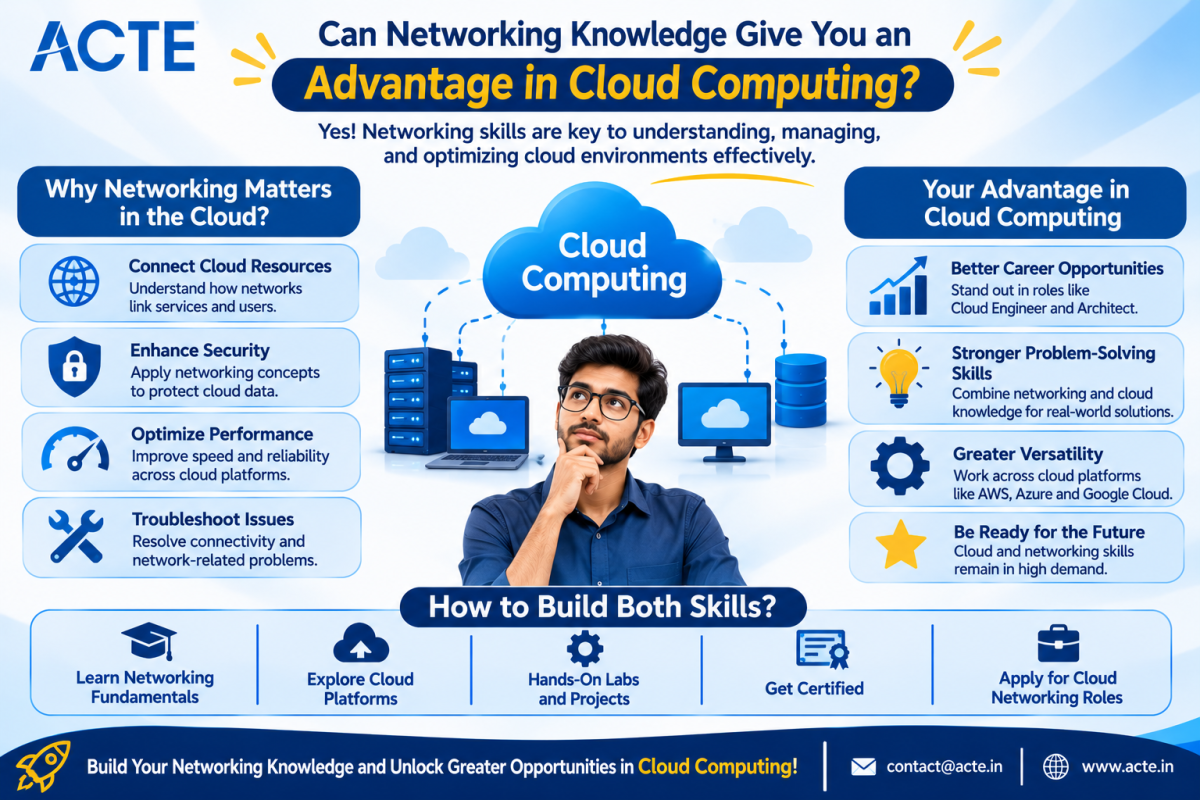
Cloud computing is transforming the IT industry by providing businesses with flexible ways to manage applications, store information, and access computing resources. Organizations increasingly adopt cloud technologies to improve productivity, enhance scalability, and reduce the need for traditional infrastructure. However, cloud platforms rely on networking technologies to establish communication between servers, databases, applications, and users. This makes networking knowledge an important asset for individuals interested in pursuing cloud computing careers. Understanding concepts such as IP addressing, subnetting, routing, DNS, firewalls, and network security helps professionals configure cloud environments and maintain reliable connectivity. Combining networking fundamentals with cloud computing expertise can strengthen technical knowledge and prepare aspiring professionals for various opportunities in the technology sector.
Why Is Networking an Essential Concept for Learning Cloud Computing?
Networking provides the communication foundation required for cloud infrastructure to operate effectively. Cloud platforms use network connections to link virtual machines, databases, storage resources, applications, and external users. Understanding how these components communicate helps professionals configure services, manage connectivity, and resolve infrastructure problems. Beginners who learn network architecture, communication protocols, data transmission, and connectivity management can understand cloud operations more easily. These concepts also support infrastructure monitoring and troubleshooting activities. Enrolling in a Cloud Computing Course in Chennai can help learners develop a clear understanding of cloud technologies and the networking principles that support them.
How Do IP Addressing and Subnetting Support Cloud Network Configuration?
IP addressing and subnetting are important for identifying devices and managing communication within cloud environments. IP addresses allow connected systems and services to exchange information across networks. Cloud platforms use public and private IP addresses to manage communication between internal resources and external systems. Subnetting divides larger networks into smaller sections, helping administrators organize resources, manage traffic, and control network access. Understanding subnet masks, CIDR notation, default gateways, and IP allocation helps professionals configure virtual networks efficiently. These fundamentals are useful when designing cloud network structures and maintaining connectivity between different infrastructure components.
How Do Routing and Switching Technologies Improve Cloud Connectivity?
Routing and switching play an important role in directing information between devices and networks. Routing determines the appropriate path for transferring data, while switching enables communication between devices within a local network. Cloud platforms use routing tables, virtual gateways, and network configurations to manage traffic between subnets, virtual machines, and external systems. Professionals with knowledge of these technologies can identify connectivity failures, understand traffic movement, and maintain efficient network communication. These skills are particularly useful when managing hybrid cloud environments that connect on-premises infrastructure with cloud services. Developing these capabilities through a Cloud Computing Course in Bangalore can help learners gain practical knowledge of cloud networking and infrastructure operations.
Why Should Cloud Computing Professionals Focus on Network Security?
Network security is essential for protecting cloud infrastructure against unauthorized access, cyberattacks, and information theft. Organizations use firewalls, VPNs, security groups, network access control lists, and encryption technologies to secure their cloud resources. Networking knowledge helps professionals understand how these security mechanisms control incoming and outgoing traffic. It also enables them to identify vulnerabilities, configure appropriate access permissions, and establish secure communication between applications. Understanding ports, protocols, network segmentation, and secure connections supports better infrastructure protection. Professionals who combine networking expertise with cloud security knowledge can contribute to maintaining dependable and secure cloud environments.
How Do DNS and Load Balancing Enhance Cloud Application Efficiency?
DNS and load balancing are important technologies that improve the accessibility and performance of cloud applications. The Domain Name System translates domain names into IP addresses, allowing users to access websites and online services conveniently. Load balancing distributes incoming requests across multiple servers to prevent excessive workloads on individual resources. Cloud providers offer managed DNS and load-balancing services to improve application availability, scalability, and reliability. Understanding DNS records, name resolution, traffic distribution, server health checks, and failover configurations helps professionals maintain efficient application connectivity. These technologies are especially valuable for organizations managing enterprise applications, e-commerce websites, and online platforms with high traffic volumes.
How Can Practical Projects Develop Cloud Networking Expertise?
Hands-on practice helps learners understand how networking technologies operate within cloud infrastructure. Beginners can work with virtual networks, subnet configurations, routing tables, firewalls, VPN connections, and network monitoring tools. Creating cloud networks, connecting virtual resources, configuring security policies, and troubleshooting connectivity issues can improve technical confidence. Practical projects involving secure application deployment, hybrid cloud connectivity, and multi-tier infrastructure provide opportunities to solve realistic technical challenges. Learners can also explore networking services available through AWS, Microsoft Azure, and Google Cloud. Pursuing a Cloud Computing Certification Course can support skill development through structured training, practical assignments, and certification preparation.
What Career Options Can You Explore with Networking and Cloud Computing Skills?
A combination of networking and cloud computing knowledge can create opportunities across different IT specializations. Professionals can pursue roles such as cloud engineers, network administrators, cloud infrastructure engineers, cloud support specialists, and cloud security professionals. These positions involve managing network connectivity, monitoring infrastructure, configuring cloud resources, and implementing security measures. Employers also value candidates who understand cloud platforms such as AWS, Microsoft Azure, and Google Cloud. Individuals interested in developing industry-relevant capabilities can explore a Cloud Computing Course in Hyderabad to gain practical exposure to cloud technologies and networking concepts. Developing a portfolio of technical projects and obtaining relevant certifications can further improve career readiness.
Conclusion:
Networking skills can provide a strong advantage for individuals pursuing professional opportunities in cloud computing. Understanding IP addressing, subnetting, routing, switching, DNS, load balancing, and network security helps professionals manage communication across cloud infrastructure. Combining these fundamentals with hands-on experience in cloud platforms can improve troubleshooting capabilities, infrastructure management, and technical confidence. Beginners who continuously strengthen their networking and cloud computing knowledge can prepare for roles in cloud administration, infrastructure engineering, and security management. Regular practice, industry-based projects, and relevant certifications can help establish a solid foundation for long-term success in the cloud computing industry.














Comments (0)