

How to Choose the Right Epoxy Flooring System for Factories
Explore epoxy flooring services, suitable epoxy floors for factories and key factors for choosing a reliable epoxy flooring company for industrial projects.

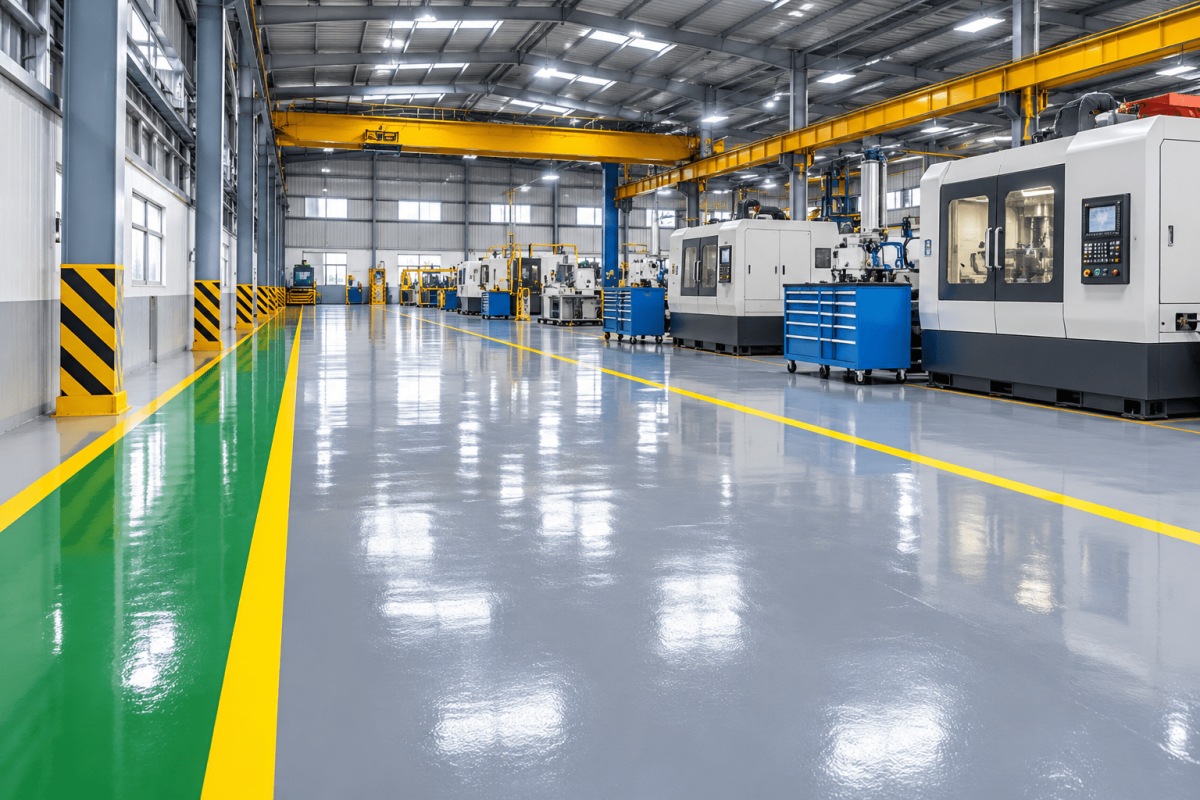
Factory floors are exposed to demanding working conditions, including heavy machinery loads, forklift movement, chemical spills, abrasion and continuous workforce traffic. Conventional concrete floors may deteriorate over time, resulting in dust generation, surface damage and increased maintenance requirements.
Professional Epoxy Flooring Services help industrial businesses protect concrete surfaces and create functional, durable and maintainable workspaces. However, selecting the right flooring system requires careful consideration of production activities, environmental conditions and operational requirements.
This article explains how factory owners can evaluate epoxy flooring systems and select suitable solutions for their industrial facilities.
Why Is Epoxy Flooring Important for Factories?
Epoxy flooring creates a protective surface over properly prepared concrete. It combines epoxy resin and hardener to form a bonded flooring system with application-specific performance characteristics.
Depending on the selected formulation, industrial epoxy flooring offers several benefits:
- Resistance to everyday abrasion and surface wear.
- Reduced concrete dust generation.
- Convenient cleaning and maintenance.
- Resistance to selected chemicals and oils.
- Improved surface appearance.
- Availability of slip-resistant finishes.
- Support for long-term surface protection.
These benefits depend on material compatibility, installation quality and actual working conditions.
What Factors Should Be Considered When Choosing Epoxy Floors for Factories?
Selecting Epoxy Floors for Factories requires evaluating the specific activities performed within each production area.
1. Machinery Loads
Heavy machinery creates concentrated loads that can influence flooring specifications. The concrete substrate must also have adequate structural capacity to support these loads.
2. Forklift and Material Handling Traffic
Frequent forklift movement, sharp turns and loading activities require flooring systems with suitable abrasion and mechanical wear resistance.
3. Chemical and Oil Exposure
Factories handling lubricants, solvents or processing chemicals should select coatings based on documented chemical compatibility.
4. Surface Cleaning Requirements
Pharmaceutical and food processing facilities may require seamless, cleanable surfaces compatible with their cleaning procedures.
5. Slip Resistance
Areas exposed to moisture, oil or process materials may require textured finishes to help reduce slipping hazards.
Which Type of Epoxy Flooring Is Suitable for Industrial Applications?
Different factory areas require different flooring specifications. Selecting the same system throughout an entire facility may lead to unnecessary expenses or inadequate performance.
|
Epoxy Flooring Type |
Suitable Applications |
Key Benefit |
|---|---|---|
|
Thin-Film Epoxy Coating |
Storage rooms and light-duty areas |
Surface sealing and dust control |
|
Self-Levelling Epoxy |
Laboratories and inspection areas |
Smooth and seamless finish |
|
Heavy-Duty Epoxy Screed |
Manufacturing plants and workshops |
Resistance to demanding mechanical wear |
|
Anti-Slip Epoxy Flooring |
Selected wet areas and access routes |
Improved surface traction |
|
Chemical-Resistant Epoxy |
Suitable chemical processing areas |
Protection against specified chemicals |
|
ESD Epoxy Flooring |
Electronics manufacturing units |
Controlled static charge dissipation |
The final system should be selected after evaluating the substrate, expected exposure and required performance.
How Can Factories Select Flooring According to Operational Zones?
Modern manufacturing facilities often contain several operational zones with different flooring requirements.
|
Factory Area |
Recommended Flooring Consideration |
|---|---|
|
Production Area |
Mechanical wear and impact resistance |
|
Assembly Section |
Smoothness and cleanability |
|
Loading and Unloading Area |
Heavy vehicle traffic resistance |
|
Chemical Storage Area |
Chemical compatibility |
|
Quality Testing Laboratory |
Seamless and maintainable finish |
|
Electronics Assembly Area |
Specified static control properties |
|
Pedestrian Walkways |
Suitable traction and visible markings |
Dividing a factory into operational zones helps businesses invest in appropriate flooring specifications without unnecessarily increasing project costs.
How to Choose a Reliable Epoxy Flooring Company
Selecting a professional Epoxy Flooring Company requires more than comparing installation prices. Contractors should demonstrate technical understanding of industrial surface conditions and application requirements.
Factory owners should evaluate the following aspects before hiring a flooring contractor:
- Experience with comparable industrial projects.
- Concrete inspection and moisture assessment.
- Recommended flooring thickness and material specifications.
- Surface preparation and repair techniques.
- Installation planning and quality inspection.
- Expected curing and return-to-service timelines.
- Transparent quotations and written warranty conditions.
Requesting product technical data sheets and a detailed scope of work can help businesses evaluate the suitability of the proposed flooring system.
What Determines the Cost of Epoxy Flooring for Factories?
Industrial flooring expenses depend on project-specific technical and commercial requirements.
Factors influencing installation costs include floor area, existing concrete condition, selected epoxy formulation, required thickness, crack repairs, surface preparation and labour expenses.
Projects involving damaged concrete or demanding operational conditions may require additional preparation and specialised materials.
Factory owners should compare complete project quotations rather than focusing exclusively on the installation rate per square foot.
What Are the Limitations of Epoxy Flooring?
Although epoxy flooring offers several advantages, it is not suitable for every industrial environment.
Rigid epoxy systems may crack when underlying concrete moves. Excessive substrate moisture can compromise adhesion, while prolonged sunlight exposure may cause discolouration.
Facilities experiencing frequent thermal shocks or intensive hot-water cleaning may require alternative flooring systems, such as suitable polyurethane cement formulations.
Understanding these limitations helps businesses avoid inappropriate material selection and premature flooring deterioration.
Choose Coatexx for Professional Epoxy Flooring Solutions
Coatexx Industrial Solutions provides specialised Epoxy Flooring Services for manufacturing facilities, warehouses, workshops and commercial properties.
Its service portfolio includes thin-film coatings, self-levelling systems, heavy-duty epoxy screeds and anti-slip finishes. The company recommends flooring specifications following site assessment and evaluation of operational requirements.
Contact Coatexx Industrial Solutions to arrange a site assessment and request a customised flooring quotation.
Conclusion
Choosing the right epoxy flooring system requires understanding factory operations, machinery loads, traffic conditions and environmental exposure. Proper surface preparation, suitable materials and professional installation contribute to dependable flooring performance.
A project-specific approach can help businesses protect industrial surfaces, manage maintenance expenses and maintain functional production environments.
Frequently Asked Questions
1. Are epoxy floors suitable for factories?
Yes. Appropriately specified epoxy flooring systems can support factory applications involving machinery, personnel movement and material handling activities.
2. Which epoxy flooring is best for heavy-duty factories?
Heavy-duty epoxy screed may be suitable for demanding industrial areas, depending on mechanical loads, concrete condition and chemical exposure.
3. How much does epoxy flooring cost in India?
Costs depend on flooring thickness, material specifications, installation area, surface preparation and labour requirements.
4. How do I choose an epoxy flooring company?
Evaluate industrial project experience, technical expertise, material specifications, installation procedures and quotation transparency.
5. Can epoxy flooring withstand forklift traffic?
Yes, appropriately specified epoxy systems can withstand forklift traffic when installed over suitable concrete and fully cured before operation.











Comments (0)