

Skylight Leaks: Repair or Replace?
A leaking skylight can stain ceilings, damage interior finishes, and introduce moisture into the roof structure. In Northern Virginia, Maryland, and Washington, DC, heavy rain and seasonal weather changes can reveal weaknesses in skylight seals and flashing. The right response starts with identifying where the water enters, not automatically replacing the entire unit.

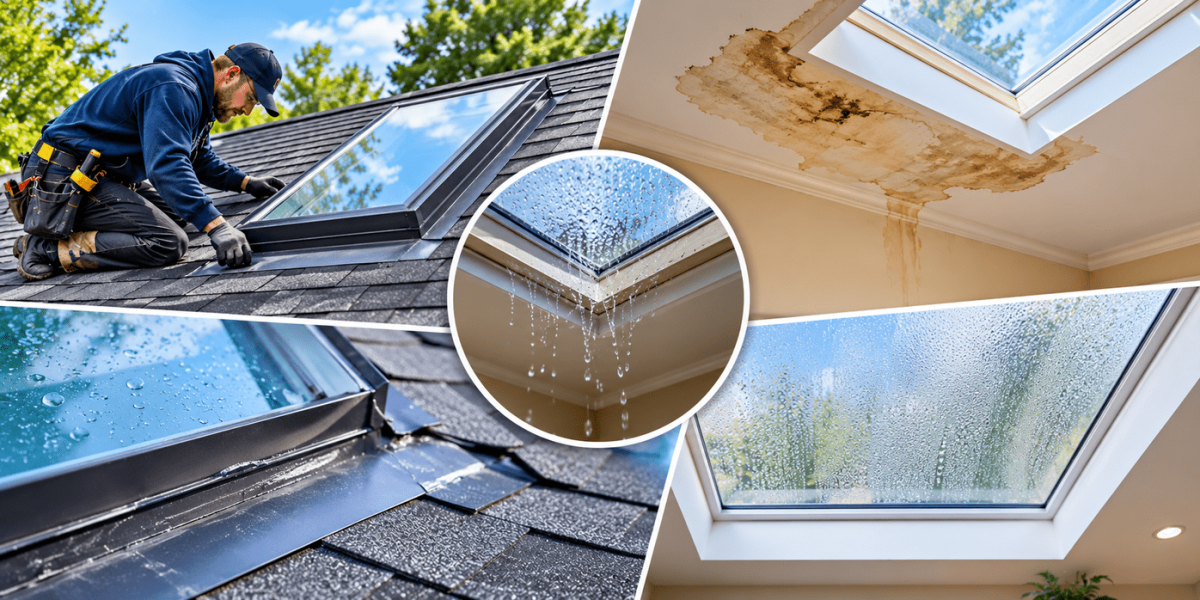
A leaking skylight can stain ceilings, damage interior finishes, and introduce moisture into the roof structure. In Northern Virginia, Maryland, and Washington, DC, heavy rain and seasonal weather changes can reveal weaknesses in skylight seals and flashing. The right response starts with identifying where the water enters, not automatically replacing the entire unit.
Why Do Skylights Leak in Heavy Rain?
To understand why skylights leak during heavy rain, examine both the skylight and the surrounding roof. Because a skylight interrupts the roof's normal water-shedding surface, its flashing, seals, and installation details must direct rainwater away from the opening.
1. Damaged or Improperly Installed Flashing
Flashing creates a weather-resistant connection between the skylight and the roof covering. If it corrodes, separates, or was installed incorrectly, rainwater can enter around the frame. Heavy or wind-driven rain may expose these weaknesses. Correcting the flashing can resolve the problem when the skylight itself remains sound.
2. Worn Seals and Gaskets
Seals around the frame and opening sections can deteriorate with age and weather exposure. Damaged or displaced gaskets can let in water, especially in angled rain. Some seals are replaceable; others need extensive repairs if compatible parts aren’t available.
3. Cracked Glazing or a Damaged Frame
Cracked glass or plastic glazing can provide a direct path for water. Warped frames, failed joints, and damaged operating components can also compromise water resistance. Replacing a seal alone won't fix a cracked pane or a severely deteriorated frame.
4. Roofing Defects Above the Skylight
Water entering the roof higher up may travel beneath roofing materials before appearing around a skylight. Damaged shingles, underlayment problems, or nearby roof penetrations can create misleading signs. A proper inspection should examine the surrounding roof rather than assuming the skylight caused every leak.
Skylight Leak vs Condensation: How to Tell the Difference
Understanding skylight leaks vs. condensation helps narrow the possible cause, though both can occur together.
Signs of a Possible Leak
Water stains around the skylight shaft, peeling paint, damp framing, and recurring moisture during or after rain may indicate water intrusion. Drips near a frame joint or flashing area provide additional clues. However, water can travel along framing before becoming visible, so the stain may not mark the actual entry point.
Signs of Condensation
Condensation often appears as droplets or fogging on the interior glass when indoor humidity meets a cold surface. It may be more noticeable in cold weather, especially in rooms with high humidity or poor ventilation.
Moisture between insulated glass panes is different. It may indicate a failed glazing seal and may require replacing the glass unit or the entire skylight, depending on its design.
What Should You Do?
Note when moisture appears and whether it follows rain, temperature changes, or high indoor humidity. Avoid dismantling the skylight or applying sealant before the source is established. A roofing professional can inspect the frame, flashing, surrounding shingles, and accessible attic structure.
How to Tell If Skylight Needs Replacement
To know whether a skylight needs replacement, assess the entire unit, not just how often it leaks.
1. Repeated Leaks After Previous Repairs
If water continues entering after repairs, the original diagnosis may have missed another defect. Repeated leaks can also indicate widespread deterioration in the frame, glazing, or roof connection. Replacement may be appropriate when several components have failed, or reliable repairs are no longer practical.
2. Cracked Glass or a Deteriorated Frame
Cracked glazing, significant frame corrosion, damaged joints, and persistent seal failure can make replacement the more practical option. The extent of damage and availability of compatible parts should guide the decision.
3. Moisture Between Glass Panes
Persistent fogging between insulated panes usually indicates a failed glazing seal. If the manufacturer supports glass-unit replacement, you may be able to replace the glazing alone. Otherwise, you may need a completely new skylight.
4. Poor Energy Performance
Older skylights may provide less effective insulation, air sealing, and solar heat control than newer models. Drafts, unwanted heat gain, and excessive heat loss may justify replacement when improved comfort and energy performance are priorities.
5. Damage Around the Opening
Rotting roof sheathing, damaged framing, and deteriorated curb components require attention before a skylight can be safely reinstalled. If the existing unit is also compromised, replacement during roof work may be the sensible choice.
Skylight Repair vs. Replacement: What Is the Best Option?
Not all skylight problems require the same solution. The following comparison shows when a targeted repair may be sufficient and when replacement is worth considering.
|
Skylight problem |
Recommended approach |
What to consider |
|
Localized flashing damage |
Repair or replace the affected flashing |
Check whether the skylight and surrounding roof remain in good condition |
|
Worn or displaced seals |
Repair or replace the seal if compatible parts are available |
Confirm that the frame and glazing are still sound |
|
Damaged shingles near the skylight |
Repair the surrounding roofing |
Water may be entering above the skylight rather than through the unit |
|
Cracked glass or failed glazing seal |
Replace the glass unit or the entire skylight |
The right option depends on the frame's condition and the manufacturer's repair options |
|
Severely deteriorated frame |
Consider skylight replacement |
Extensive damage may make reliable repairs impractical |
|
Repeated leaks after proper repairs |
Arrange a detailed inspection and assess replacement |
Check the flashing, surrounding roof, and skylight before deciding |
|
Damaged roof sheathing or framing |
Repair the affected roof structure |
Correct the moisture source and restore structural integrity before reinstalling the skylight |
Age and overall condition also matter. A skylight with one repairable defect may remain serviceable for years, while an older unit with several failing components may be more practical to replace.
Skylight Lifespan and Wear Signs
A skylight’s lifespan and signs of wear depend on its quality, installation, materials, maintenance, and exposure to weather. There’s no single lifespan that applies to every skylight. Look for recurring leaks, brittle seals, cracks, frame deterioration, difficult operation, and persistent condensation between panes. A relatively new skylight with a localized flashing problem may need only repair, while an older unit with multiple defects may be a stronger candidate for replacement.
During roof replacement, assess the skylight and its flashing. Coordinating the work helps ensure the new roofing materials and skylight assembly work together properly.
Fixing Leaking Skylight Seal and Flashing
To fix a leaking skylight seal, first identify which component has failed. Caulking the visible edges may offer only temporary relief if the defect is under the shingles or in the flashing system.
When a Repair May Be Enough
A targeted repair may work if the skylight is structurally sound and the problem is a replaceable gasket, localized flashing defect, or nearby roofing material. The contractor should fix the leak and inspect surrounding materials for damage.
When Replacement Makes More Sense
Replacement may be preferable when the frame is badly deteriorated, glazing is damaged, compatible components are unavailable, or leaks continue despite appropriate repairs. Install the skylight with underlayment and flashing per the manufacturer's instructions.
Damaged sheathing and framing should also be repaired before the new unit is installed. Otherwise, moisture problems may continue after replacement.
Recurring skylight leaks deserve a careful assessment before damage spreads. Impact Exteriors can help identify the source and explain suitable repair options. Ask about skylight leak repair when water enters around your skylight.
FAQs
1. Can a skylight leak only during heavy rain?
Yes. Wind-driven rain or high water volume may expose weaknesses in flashing, seals, or surrounding roofing that remain unnoticed during lighter rainfall. The source should be identified before repairs begin.
2. Should I replace a skylight every time it leaks?
No. Localized flashing defects, worn seals, and nearby roofing damage may be repairable. Replacement is more appropriate when the unit is significantly damaged, repeatedly leaks, or no longer performs adequately.
3. Is condensation around a skylight always a sign of a leak?
No. Moisture on room-facing glass may result from indoor humidity and cold surfaces. Water stains after rainfall or moisture inside insulated glazing require a different assessment.
4. Can I seal a leaking skylight with caulk?
Caulk may suit certain manufacturer-approved repairs, but it isn't a universal solution. Failed flashing, damaged glazing, and concealed roof defects require the appropriate repair.
5. Should a skylight be replaced when the roof is replaced?
Not necessarily. A sound, relatively new skylight may be retained if it can be properly integrated with the new roofing system. Its condition, flashing, seals, and performance should be evaluated first.
Final Thoughts
Skylight leaks can develop because of flashing failures, worn seals, damaged glazing, condensation, or defects elsewhere on the roof. A careful inspection helps distinguish a repairable problem from damage that warrants replacement. Addressing the actual source of moisture protects the surrounding roof structure and helps prevent recurring interior damage.
Impact Exteriors can help you compare repair options with your roof's condition. Request an assessment to support an informed roof repair vs replacement decision.







Comments (0)