

Creating a Winning Marketing Strategy for Hotels and Resorts: A Complete Guide

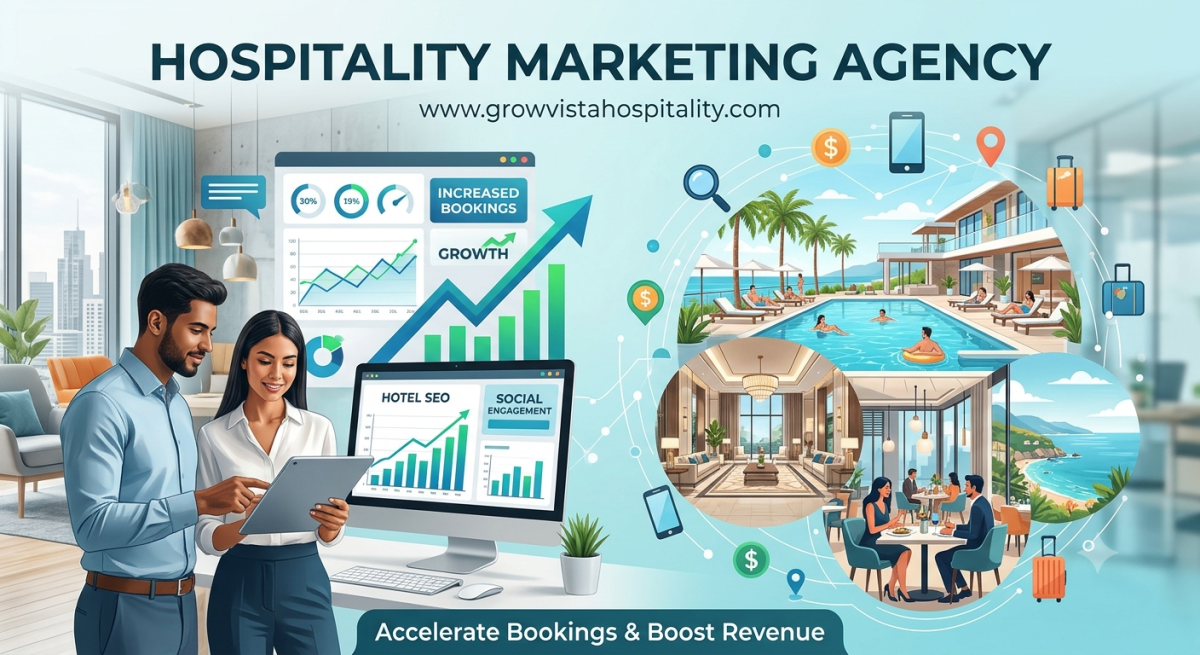
Running a hotel or resort involves much more than providing accommodation. Hospitality businesses must continuously attract new customers, maintain service standards, manage online visibility and communicate their offerings effectively. As competition increases, relying only on traditional promotions or third-party booking platforms may not be enough to maintain consistent business growth.
A well-planned marketing strategy helps hospitality brands identify their target audience, communicate their strengths and select suitable promotional channels. It also allows businesses to understand which marketing activities are generating meaningful results.
Working with a Hospitality Marketing Agency in Gurgaon can help hotels and resorts develop a coordinated approach that combines digital visibility, brand positioning, customer engagement and revenue-focused marketing activities.
Why Do Hotels Need a Structured Marketing Strategy?
Many hospitality businesses promote their services across multiple platforms without having a clear overall plan. They may post on social media, run advertisements, update travel listings and publish blogs, but these activities do not always support the same business objectives.
A structured marketing strategy brings these activities together.
It helps a property understand:
-
Which customer groups it wants to attract.
-
What makes the property different.
-
Which platforms its audience uses.
-
What type of content should be published.
-
How much budget should be allocated.
-
Which performance indicators should be monitored.
For example, a resort targeting leisure travellers may prioritise destination-based SEO, visual content and seasonal packages. A business hotel may focus on corporate accommodation, meeting facilities and weekday demand.
The marketing strategy should reflect the property's business model rather than follow a generic promotional approach.
How Can Hotels Identify Their Target Audience?
Understanding the intended customer is one of the first steps in developing effective marketing campaigns.
Different guests have different expectations when selecting accommodation.
Common hospitality audience segments include:
Leisure travellers: People looking for holidays, weekend breaks and destination experiences.
Business travellers: Professionals who require comfortable accommodation, convenient services and suitable working facilities.
Families: Guests who may prioritise room comfort, dining options, accessibility and recreational facilities.
Wedding and event customers: People searching for suitable venues, accommodation arrangements and event-related services.
Long-stay customers: Guests who need accommodation for extended periods because of work, relocation or other commitments.
Hotels should evaluate their facilities, location, pricing and services before deciding which segments to prioritise.
This makes it easier to develop relevant marketing messages and avoid spending resources on audiences that are unlikely to convert.
Why Is Brand Positioning Important for Hospitality Businesses?
Brand positioning explains how a property wants to be perceived in the market.
A hotel may position itself around business convenience, affordable comfort, luxury experiences, family-friendly accommodation or destination-based relaxation.
Without clear positioning, promotional communication can become inconsistent.
For example, a property promoting itself simultaneously as an ultra-luxury destination and a budget accommodation option may create confusion among potential customers.
Hotels should identify their strongest selling points and communicate them consistently.
Important positioning factors include:
-
Property category and accommodation style.
-
Location and accessibility.
-
Facilities and guest services.
-
Customer experience.
-
Pricing and value proposition.
-
Distinctive property features.
Once the positioning is established, it should guide website content, social media communication, advertising and promotional campaigns.
How Can SEO Support Long-Term Hotel Visibility?
Search engine optimisation helps hospitality businesses reach travellers who are actively looking for accommodation or travel information.
An effective SEO strategy starts with understanding search intent.
A traveller searching for a hotel in a particular destination may have a different requirement from someone searching for a wedding venue or corporate accommodation.
Hotels should create relevant website pages for their important services and customer requirements.
SEO activities may include:
-
Researching relevant search terms.
-
Optimising website titles and descriptions.
-
Developing useful service pages.
-
Publishing informative and original blogs.
-
Improving website loading speed.
-
Optimising photographs and page structure.
-
Strengthening internal links.
-
Maintaining accurate local business information.
SEO should be treated as an ongoing activity. Search visibility develops through consistent improvements rather than a single optimisation exercise.
How Can Google Business Profile Improve Local Discovery?
For hotels, local search visibility can help connect properties with travellers searching for accommodation in specific areas.
Google Business Profile provides an opportunity to display essential business information, photographs, contact details, reviews and website links.
Hotels should regularly review their profiles to ensure that information remains accurate.
They can also use relevant photographs and updates to communicate property features and current offerings.
Customer reviews deserve particular attention. Responding professionally to feedback can demonstrate that the business values guest experiences.
A well-maintained profile supports local discovery and provides another channel through which potential customers can evaluate a property.
How Should Hotels Plan Their Social Media Strategy?
Social media should support the hotel's brand positioning and customer acquisition goals.
Rather than posting random photographs, properties should create a content strategy based on their audience and facilities.
For example, a family resort can highlight recreational activities, room comfort and family experiences. A business hotel can showcase meeting facilities, work-friendly rooms and convenient services.
A monthly content plan can include:
-
Property introduction posts.
-
Room and facility highlights.
-
Short-form videos.
-
Guest experience stories.
-
Seasonal campaigns.
-
Event and celebration content.
-
Destination-related information.
-
Promotional announcements.
The content should be visually consistent and provide useful information to potential guests.
Hotels should also monitor engagement, profile visits, website traffic and enquiries to understand which content categories are performing effectively.
What Is the Importance of OTA Revenue Management?
Online travel agencies play an important role in hotel distribution. They help properties reach travellers who compare accommodation options across multiple platforms.
However, managing these channels requires attention to pricing, availability and property information.
OTA revenue management involves reviewing room rates, maintaining inventory accuracy and understanding the performance of different distribution channels.
Hotels should monitor their availability and ensure that information is updated across platforms.
They should also evaluate the contribution of different channels to overall business performance.
A balanced distribution strategy can help properties benefit from third-party visibility while continuing to develop their direct booking channels.
How Can Paid Advertising Support Seasonal Demand?
Hospitality demand can change according to holidays, weather, local events, business activity and travel seasons.
Paid advertising allows hotels to promote relevant offers during specific periods.
For example, resorts can advertise holiday packages before peak travel periods. Hotels with event facilities can promote wedding and corporate packages to suitable audiences.
Campaigns should have clear objectives and dedicated landing pages.
Before launching an advertisement, businesses should determine the target audience, location, offer, budget and expected customer action.
Performance should be monitored regularly to identify opportunities for optimisation.
Paid advertising works best when it supports a broader marketing strategy instead of functioning as an isolated activity.
Why Should Hotels Track Marketing Performance?
Marketing decisions should be based on meaningful performance indicators rather than assumptions.
Hotels can monitor different metrics depending on their business objectives.
Some useful indicators include:
-
Organic website traffic.
-
Search engine visibility.
-
Website enquiry volume.
-
Direct booking performance.
-
Social media engagement.
-
Advertising cost per enquiry.
-
Conversion rates.
-
OTA channel contribution.
It is important to understand the difference between marketing activity and business results.
A campaign may generate substantial website traffic but very few enquiries. This could indicate that the audience is not relevant or that the landing page needs improvement.
Regular performance reviews help hotels identify such gaps and make better marketing decisions.
How Does Grow Vista Hospitality Help Hotels Build Better Marketing Strategies?
Hospitality businesses benefit from working with marketing professionals who understand the industry's specific requirements.
Grow Vista Hospitality offers specialised services for hotels, resorts and other hospitality brands. Its solutions include search engine optimisation, website development, social media management, Google Business Profile optimisation and OTA revenue management.
By bringing different marketing activities together, Grow Vista Hospitality helps properties strengthen their online presence and communicate their offerings more effectively.
A strategic approach allows businesses to focus on relevant audiences, maintain consistent brand communication and identify opportunities for improvement.
For hotels looking to develop a stronger marketing foundation, working with an industry-focused agency can be a valuable step.
Frequently Asked Questions
1. What should a hotel marketing strategy include?
A hotel marketing strategy should include audience research, brand positioning, SEO, social media, website optimisation, paid advertising, distribution management and performance tracking.
2. How can small hotels compete with larger hotel brands?
Small hotels can focus on their unique experiences, local visibility, personalised communication, relevant content and well-defined customer segments.
3. Why is brand positioning important for resorts?
Brand positioning helps resorts communicate their distinctive experiences, facilities and value, making it easier for travellers to understand what sets them apart.
4. How does OTA revenue management help hotels?
It helps hotels manage pricing, room availability and distribution across online travel agencies to support better channel performance.
5. Why should hotels hire a hospitality marketing agency?
A specialised agency understands hospitality marketing requirements and can coordinate SEO, content, social media, website development and other promotional activities.
Conclusion
Successful hospitality marketing requires a clear understanding of customers, consistent brand communication and the right combination of digital channels. Hotels and resorts that approach marketing strategically can improve their visibility, reach relevant audiences and create stronger opportunities for business growth.
Grow Vista Hospitality helps hospitality brands develop their digital marketing presence through specialised industry solutions. Explore its services to discover how a structured marketing approach can support your hotel's long-term growth.







Comments (0)