

How to Choose a Reliable Porcelain Tiles Manufacturer in India
Explore key factors for selecting a porcelain tiles manufacturer in India, including quality standards, design options, pricing, certifications, and delivery.

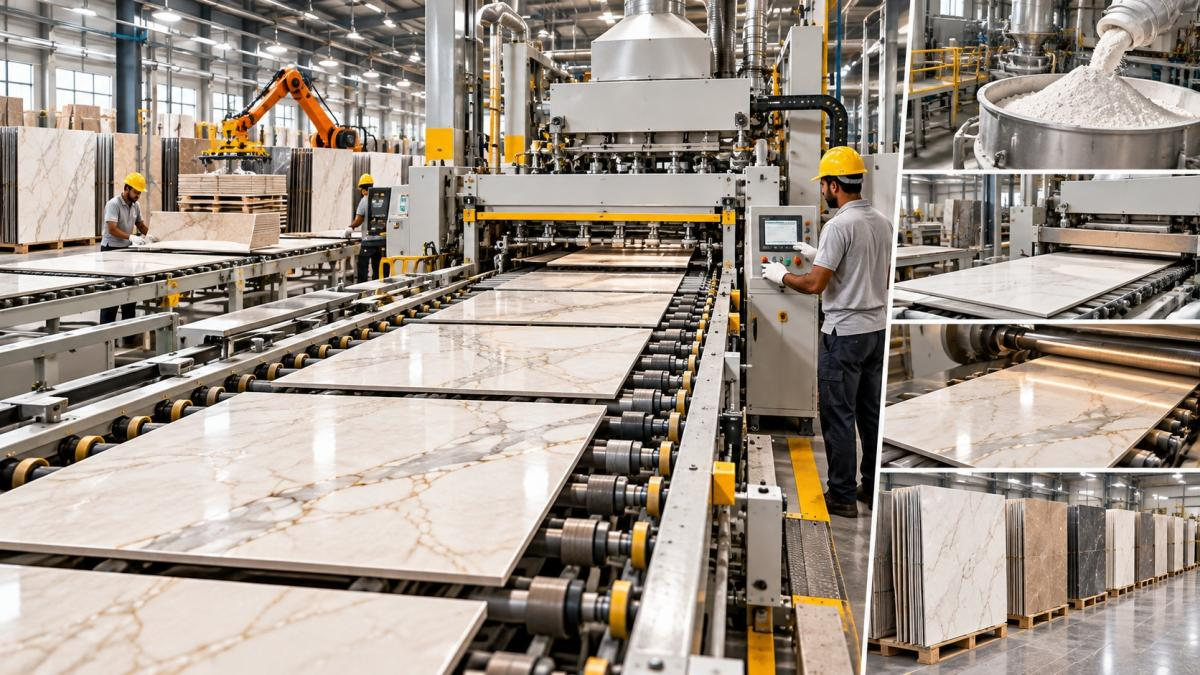
Choosing a reliable porcelain tiles manufacturer in India is an important step when planning a residential, commercial, or large-scale architectural project. The right manufacturer can provide consistent product quality, a suitable range of designs, dependable supply, transparent specifications, and support throughout the purchasing process. By evaluating manufacturing capabilities, product standards, available collections, pricing, and delivery commitments, buyers can make informed decisions and select porcelain tiles that meet their project requirements.
India has a well-established ceramic and porcelain tile industry, with manufacturers serving domestic and international markets. However, not every supplier offers the same production capabilities, product range, quality controls, or service standards. Understanding what to evaluate before placing an order helps homeowners, builders, architects, distributors, and importers reduce purchasing risks.
Why Is Choosing the Right Porcelain Tiles Manufacturer Important?
A tile manufacturer influences several aspects of a construction or renovation project, from surface appearance to product availability and installation outcomes. Selecting a suitable manufacturer can help buyers maintain consistency across different areas and avoid unnecessary delays.
Consider these important factors:
-
Product quality: Consistent dimensions, surface finishes, and product specifications help support a reliable installation.
-
Design selection: A diverse collection allows buyers to coordinate tiles with different interior and architectural styles.
-
Supply capacity: Manufacturers with suitable production capabilities may be better positioned to fulfil large orders.
-
Technical information: Clear specifications help buyers determine whether a tile suits a particular application.
-
Long-term availability: Access to matching products or replacement stock can be valuable for future maintenance and extensions.
The best manufacturer is not necessarily the one offering the lowest price. Buyers should assess the complete value of the product, including its suitability, consistency, availability, and associated service.
Key Factors to Consider When Choosing a Porcelain Tiles Manufacturer in India
1. Evaluate Manufacturing Capabilities and Experience
Start by understanding the manufacturer's background, production capabilities, and experience in the tile industry. A well-established operation may have defined quality procedures, specialised production equipment, and experience serving different customer segments.
Ask potential manufacturers about their production facilities, product categories, manufacturing processes, and experience with projects similar to yours. If you are purchasing for a large development, confirm whether the manufacturer can meet the required volume within your project timeline.
Where possible, review factory information, product catalogues, technical documentation, and references from previous customers. These details can help you distinguish a manufacturer with suitable capabilities from a supplier that primarily resells products.
2. Check Product Quality and Technical Specifications
Quality should remain a priority when comparing porcelain tile manufacturers. Attractive patterns alone do not guarantee that a product will perform well in its intended environment.
Review the manufacturer's technical specifications and applicable test reports. Depending on the intended use, relevant factors may include:
-
Water absorption.
-
Dimensional accuracy and thickness.
-
Surface finish and appearance consistency.
-
Breaking strength and resistance to mechanical stress.
-
Abrasion performance for applicable floor tiles.
-
Slip resistance for areas where people may encounter wet surfaces.
-
Resistance to staining and commonly used cleaning products.
Ask for documentation that supports the manufacturer's claims. Where relevant, check whether the products meet applicable Indian Standards or recognised international standards. Do not assume that every product in a manufacturer's collection has identical performance characteristics.
3. Explore the Available Designs, Sizes, and Finishes
The right porcelain tiles should complement your architectural concept and practical requirements. Manufacturers may offer different formats, patterns, colours, and finishes for residential and commercial applications.
Common options include:
-
Marble-inspired designs for sophisticated interiors.
-
Stone-inspired surfaces for contemporary spaces.
-
Concrete-inspired patterns for minimalist designs.
-
Neutral colours for versatile interior coordination.
-
Polished finishes for a reflective appearance.
-
Matte or textured finishes for specific aesthetic and functional needs.
Large-format porcelain slabs may also suit feature walls, kitchen countertops, and other applications when the product specifications support the intended use.
Before selecting a manufacturer, request physical samples or inspect the products in person. Digital images may not accurately represent colour, surface texture, gloss level, or pattern variation. For larger projects, review samples from the actual production batch whenever possible.
4. Confirm Production Capacity and Order Fulfilment
Production capacity becomes particularly important for builders, developers, distributors, and international buyers who require large quantities of tiles.
A manufacturer may offer an attractive collection but still struggle to fulfil an order within your required timeframe. Discuss expected quantities, production schedules, packaging, dispatch dates, and delivery arrangements before confirming the purchase.
Ask the manufacturer to clarify:
-
Whether the required design is currently available.
-
The quantity that can be supplied in the requested timeframe.
-
The expected production lead time for customised or made-to-order products.
-
How the manufacturer handles delays or changes in availability.
-
Whether repeat orders can maintain a suitable visual and technical match.
For major projects, obtain written confirmation of the agreed quantity, product specifications, and delivery schedule. This makes it easier to coordinate tile procurement with other construction activities.
5. Compare Pricing and Overall Value
Price matters, but the cheapest quotation does not always represent the best value. Differences in dimensions, thickness, finish, technical performance, packaging, and service can affect the total project cost.
Request detailed quotations from multiple manufacturers and confirm that each quotation covers comparable products. Check whether the quoted amount includes packaging, transportation, taxes, loading, or other applicable charges.
Also consider the cost of wastage, installation materials, handling, and potential replacement requirements. A tile with a lower purchase price may not deliver the best overall value if it does not meet the project's technical requirements.
6. Review Quality Control and Certifications
Reliable manufacturers should be able to explain how they monitor product quality during production. Ask about their inspection procedures, testing arrangements, batch identification, and process for handling defective products.
Where applicable, request valid certificates, test reports, and quality management documentation. Verify that these documents relate to the manufacturer, product category, and standard being claimed.
Do not rely solely on marketing statements such as “premium quality” or “international standard.” Supporting documentation provides a more useful basis for comparison.
7. Assess Customer Service and After-Sales Support
Communication can make a significant difference throughout the purchasing process. A dependable manufacturer should provide clear product information, respond to technical questions, and explain the process for resolving delivery or quality concerns.
Before placing an order, ask how the company handles damaged material, shortages, product discrepancies, and complaints. Clarify the conditions for returns, replacements, and warranty coverage, if offered.
Keep quotations, purchase orders, approved samples, technical specifications, and delivery records together. This documentation helps resolve disagreements and confirms what both parties agreed to supply.
How to Verify a Porcelain Tiles Manufacturer Before Ordering
A structured verification process can help buyers make a more confident decision.
Step 1: Research the Manufacturer
Review the company's official website, product catalogue, factory information, business details, and available customer references. Check whether the manufacturer offers the type of porcelain tiles required for your project.
Step 2: Request Product Samples
Examine the tile's colour, finish, dimensions, edges, and visual consistency. For large orders, ask about sample availability from the intended production batch.
Step 3: Check Technical Documents
Review the product data sheet, relevant test reports, and installation guidance. Confirm that the tile suits the planned environment rather than relying on appearance alone.
Step 4: Compare Written Quotations
Request itemised quotations from shortlisted manufacturers. Compare product specifications, minimum order quantities, lead times, delivery terms, and payment conditions.
Step 5: Confirm the Order Details
Before making payment, confirm the product code, dimensions, finish, quantity, batch requirements, packaging, delivery schedule, and agreed procedures for shortages or damaged goods.
Following these steps can reduce misunderstandings and help buyers select a manufacturer that aligns with their budget, quality expectations, and project timeline.
Why Consider Lioli Ceramica for Porcelain Surface Solutions?
Lioli Ceramica offers porcelain surface collections for contemporary residential and commercial interiors. As a porcelain tile manufacturer, the brand provides surface designs for various interior applications, allowing homeowners, architects, builders, and interior designers to explore options that align with their project requirements.
When selecting porcelain surfaces, consider the available dimensions, finishes, technical specifications, and suitability for the intended application. Evaluating these factors alongside design preferences and installation requirements can help you make informed decisions and create stylish, coordinated interiors.
Frequently Asked Questions
1. How do I choose a reliable porcelain tiles manufacturer in India?
Evaluate the manufacturer's production capabilities, product specifications, quality documentation, design range, order fulfilment capacity, pricing, and after-sales support. Request samples and written quotations before placing a large order.
2. What should I check before buying porcelain tiles?
Check the tile's dimensions, thickness, finish, water absorption, suitability for the intended application, relevant test reports, and installation requirements. For floors, also consider abrasion performance and slip resistance where applicable.
3. Are all porcelain tiles suitable for every room?
No. Different products have different technical properties and recommended applications. Select tiles according to the room's conditions, expected traffic, moisture exposure, and installation requirements.
4. Is it better to buy directly from a manufacturer?
Buying directly may provide clearer communication about product specifications, availability, and production schedules. However, the best purchasing channel depends on order size, location, logistics, and the services offered by the manufacturer or distributor.
5. How can I compare quotations from different manufacturers?
Compare products with equivalent dimensions, thicknesses, finishes, and performance specifications. Include packaging, transportation, taxes, wastage, and other applicable expenses when evaluating overall cost.
6. What quantity of porcelain tiles should I order?
Calculate the installation area, divide it by the coverage of one tile, and add an allowance for cutting and wastage. The final quantity depends on the layout, tile format, installation pattern, and project conditions.
7. Why are technical documents important when choosing a manufacturer?
Technical documents help buyers verify product characteristics and determine whether a tile suits the intended application. They also provide a clearer basis for comparing products from different manufacturers.
Conclusion
Choosing a reliable porcelain tiles manufacturer in India requires careful evaluation of product quality, manufacturing capabilities, technical specifications, design options, pricing, and delivery commitments. By requesting samples, reviewing documentation, comparing written quotations, and confirming order details, buyers can reduce purchasing risks and select porcelain tiles that suit their construction or renovation requirements.
Lioli Ceramica provides porcelain surface collections for a variety of contemporary interior applications. By evaluating available designs and checking product specifications against project needs, homeowners, architects, builders, and interior designers can make informed choices and create spaces that balance visual appeal with practical performance.













Comments (0)