

How Can General Purpose ADCs Improve Modern Electronic Design?
General Purpose ADCs are essential components that convert analogue signals into accurate digital data for processing, monitoring, and control. This article explores how ADCs improve electronic design, support sensors and industrial systems, enhance measurement accuracy, and help engineers select the right converter for modern applications.

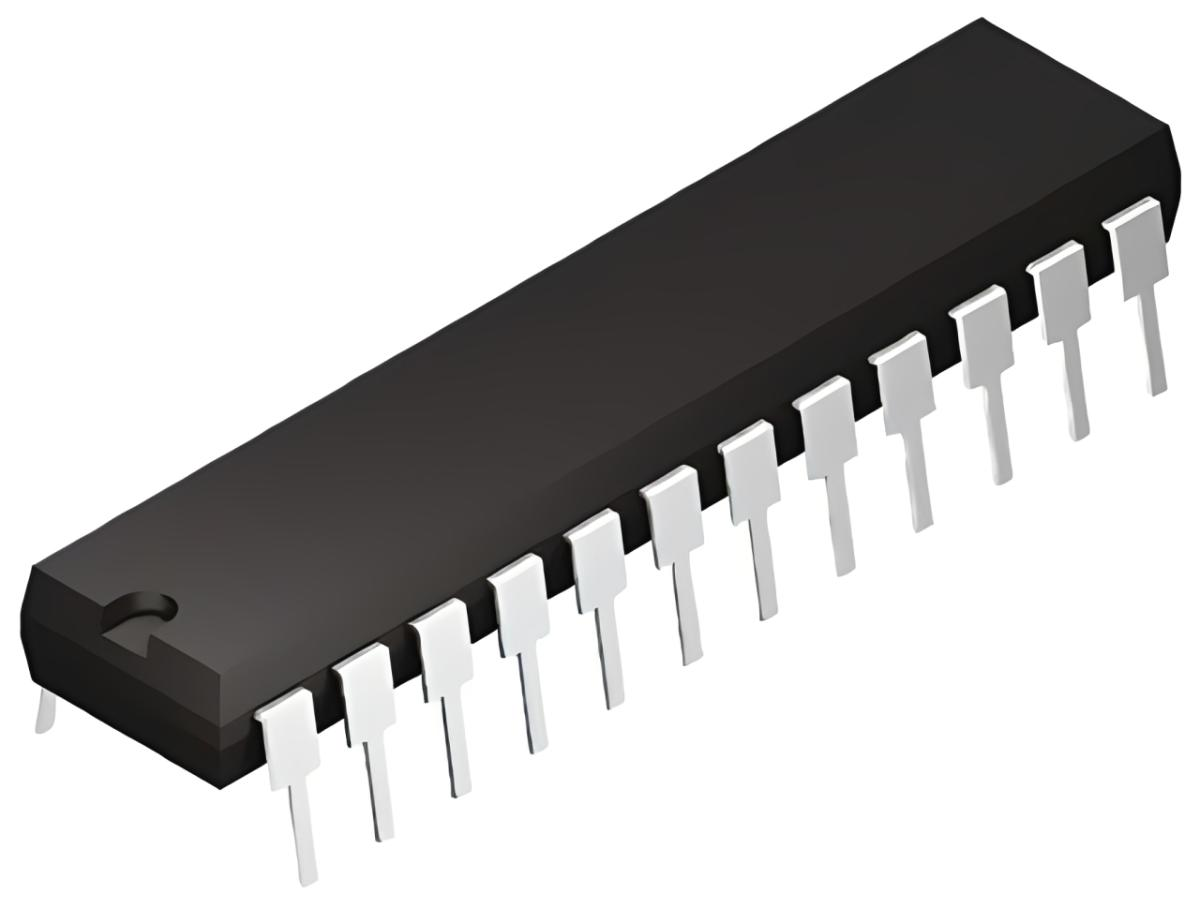
General Purpose ADCs are widely used in electronic systems because they provide a practical way to convert analogue signals into digital information. Whenever a circuit needs to measure a real-world condition, such as temperature, pressure, light, voltage, or current, an analogue-to-digital converter helps translate that signal into a form that a processor can understand.
Their versatility makes General Purpose ADCs suitable for many different industries. They are used in embedded electronics, automation, test equipment, power systems, instrumentation, portable devices, and sensor-based applications. Their main advantage is flexibility, allowing designers to select the right combination of resolution, speed, channel count, and interface without relying on highly specialised conversion technology.
Why Are General Purpose ADCs Important in Electronic Systems?
Digital systems cannot directly interpret continuously changing analogue signals. A microcontroller or processor works with digital values, while most sensors and electrical measurements produce analogue outputs.
General Purpose ADCs create the connection between these two signal types.
Once the analogue signal has been converted, the system can use the resulting digital value to:
- Monitor equipment conditions
- Detect changes in sensor outputs
- Control motors or actuators
- Trigger warnings
- Record measurements
- Analyse electrical signals
- Transmit data to another device
- Support automated decision-making
This makes the ADC an important part of many electronic measurement and control systems.
How Does ADC Accuracy Influence System Performance?
Accuracy affects how closely the digital result represents the actual analogue input.
Several characteristics contribute to ADC accuracy, including offset error, gain error, linearity, noise, and reference stability. Even when two devices have the same resolution, their real measurement performance can be different.
For example, a 16-bit ADC may theoretically offer very fine measurement steps, but electrical noise can reduce the number of meaningful values that the system can actually use.
Designers therefore need to consider real-world performance rather than relying only on the advertised number of bits.
Important specifications may include:
- Integral non-linearity
- Differential non-linearity
- Signal-to-noise ratio
- Offset error
- Gain error
- Effective number of bits
Understanding these parameters helps engineers determine whether an ADC is suitable for precision measurement or basic monitoring.
What Is the Relationship Between Speed and Resolution?
ADC design often involves a trade-off between conversion speed and resolution.
Higher-speed converters can capture rapidly changing signals, but they may require more power, more complex circuitry, or greater processing capability. Higher-resolution devices can detect smaller signal changes, but they may operate more slowly.
A temperature monitoring system may prioritise resolution because the measured signal changes gradually. A vibration monitoring system may need a much higher sampling rate because the signal changes quickly.
Selecting the correct balance helps prevent unnecessary cost and complexity.
Why Is Input Signal Quality Important?
The ADC can only convert the signal it receives.
If the incoming analogue signal contains excessive noise, distortion, or interference, the digital output will also be affected. For this reason, designers often prepare the signal before it reaches the converter.
Signal preparation may include:
- Filtering high-frequency noise
- Amplifying weak signals
- Reducing excessive voltage
- Removing unwanted offsets
- Buffering high-impedance sources
- Protecting the input from voltage spikes
This stage is commonly known as signal conditioning.
Good signal conditioning can improve measurement stability and allow the converter to use more of its available resolution.
How Do General Purpose ADCs Work with Microcontrollers?
Many microcontrollers include internal ADCs, but external General Purpose ADCs are often used when additional capability is required.
An external converter may provide:
- Higher resolution
- Better accuracy
- More input channels
- Lower noise
- Differential measurement
- Wider voltage ranges
- Faster conversion
- Improved reference options
The ADC usually communicates with the microcontroller through a digital interface such as SPI or I²C.
The microcontroller can then process the converted data, apply calibration, perform calculations, store measurements, or send the information to another system.
Why Are Multiple ADC Channels Useful?
Many electronic systems need to measure several signals at once.
A machine-monitoring system, for example, might measure temperature, current, vibration, and supply voltage. Instead of using a separate ADC for every signal, a multi-channel converter can monitor several inputs.
Advantages of multi-channel ADCs include:
- Reduced component count
- Smaller PCB size
- Lower system cost
- Simplified processor connections
- Easier integration
Some converters use an internal multiplexer to select one channel at a time, while others can sample multiple inputs simultaneously.
The best approach depends on whether the application requires measurements at exactly the same moment.
Where Are General Purpose ADCs Used in Industrial Electronics?
Industrial environments rely heavily on measurement and automation.
ADCs allow control systems to understand the condition of machinery and processes by converting analogue sensor outputs into digital values.
Typical industrial measurements include:
- Motor current
- Hydraulic pressure
- Temperature
- Flow rate
- Position
- Supply voltage
- Mechanical load
- Fluid level
The converted data can be used for monitoring, process optimisation, predictive maintenance, and safety control.
Reliable analogue-to-digital conversion is therefore a key requirement in many industrial systems.
How Do ADCs Support Power Management Applications?
Modern power systems require continuous monitoring to maintain efficiency and safety.
General Purpose ADCs can measure electrical parameters such as voltage and current, allowing controllers to evaluate system performance.
They are commonly used in:
- Battery monitoring
- Power supplies
- Renewable energy systems
- Energy meters
- Charging equipment
- DC power distribution
- Power management circuits
The resulting digital measurements can help detect abnormal conditions, estimate power consumption, and improve control accuracy.
Why Does Power Consumption Matter?
Power consumption may be a major concern in portable or battery-operated products.
Some General Purpose ADCs include energy-saving features that allow them to operate only when a measurement is required.
Useful low-power features can include:
- Sleep modes
- Standby modes
- Automatic shutdown
- Reduced sampling frequency
- Low-voltage operation
These features can extend battery life in wireless sensors, portable instruments, and remote monitoring equipment.
In mains-powered equipment, lower power consumption can also reduce heat generation.
How Does Operating Environment Affect ADC Selection?
Electronic components may be exposed to a wide range of environmental conditions.
Industrial and automotive systems can experience high temperatures, vibration, electrical interference, and changing supply voltages.
An ADC intended for these environments should support an appropriate operating temperature range and maintain reliable performance under expected conditions.
Designers may also need to consider:
- Electromagnetic interference
- Humidity
- Mechanical vibration
- Power supply variation
- Electrical transients
- Long-term stability
Selecting a converter with suitable environmental ratings can improve system reliability.
What Design Mistakes Can Reduce ADC Performance?
Poor implementation can prevent an ADC from achieving its expected performance.
Common problems include:
- Using an unstable reference voltage
- Routing analogue traces beside high-speed digital signals
- Ignoring source impedance
- Using insufficient decoupling
- Choosing the wrong input range
- Sampling signals too quickly
- Poor grounding
- Allowing noisy power supplies to feed analogue circuitry
These issues may introduce measurement errors even when the ADC itself is technically suitable.
Careful PCB design, filtering, grounding, and power management are therefore just as important as component selection.
What Makes General Purpose ADCs a Flexible Design Choice?
The main strength of General Purpose ADCs is their ability to fit many different electronic applications.
Manufacturers offer devices with a wide range of specifications, allowing designers to choose according to the needs of their system rather than relying on one fixed configuration.
Available options can differ in:
- Resolution
- Sampling speed
- Input channel count
- Communication interface
- Supply voltage
- Package size
- Power consumption
- Input configuration
- Reference support
This variety makes General Purpose ADCs suitable for both basic measurements and more demanding data acquisition tasks.
How Will General Purpose ADCs Support Future Technologies?
Electronic systems are becoming increasingly dependent on sensors and real-time information.
Smart factories, robotics, energy management, IoT platforms, portable instruments, automation, and intelligent infrastructure all require accurate ways to interpret physical signals.
General Purpose ADCs will continue to support this development by providing a dependable interface between analogue measurements and digital processing.
Their ability to combine flexibility, accuracy, manageable power consumption, and simple integration makes them valuable across many areas of electronic design.
As more products depend on sensor data and automated decision-making, General Purpose ADCs will remain a key technology for capturing reliable information from the physical world and turning it into usable digital data.












Comments (0)