

Best Curtains for Living Room in Dubai: 7 Styles That Look Good and Last
Find the best curtains for your living room in Dubai. Compare 7 styles, learn how to pick colour, length and rails, and avoid common mistakes.


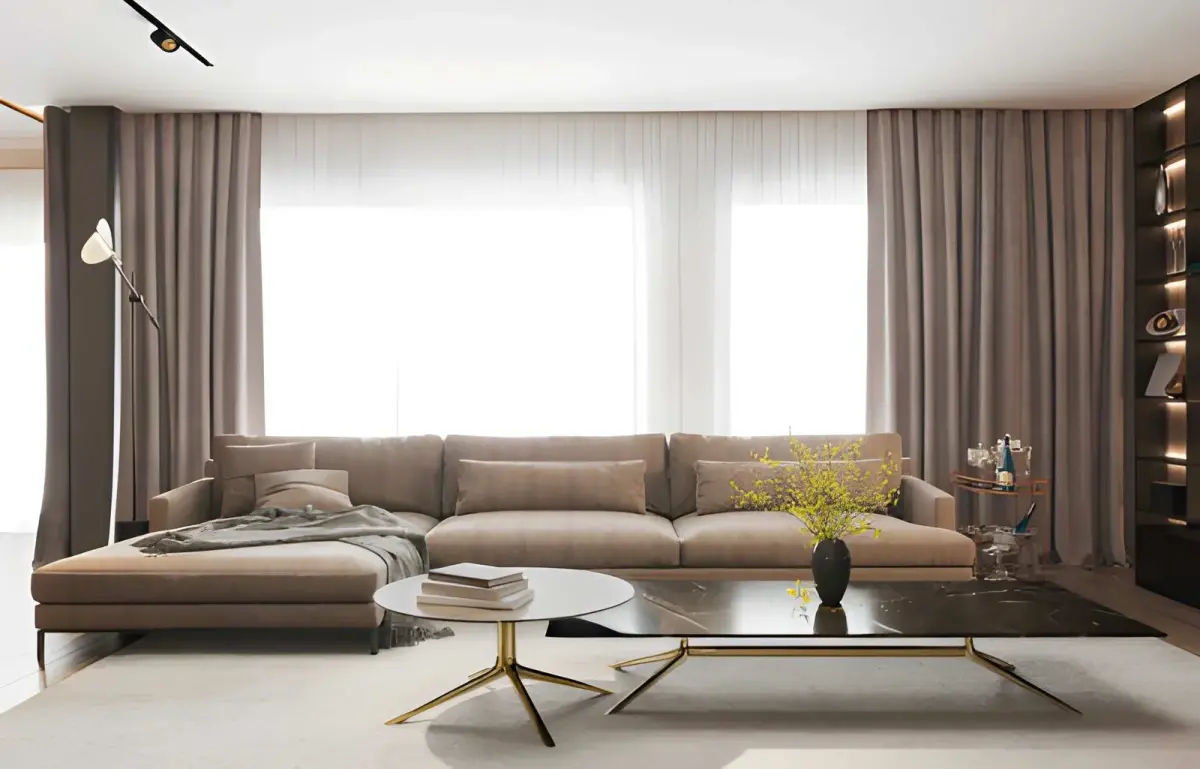
The living room is where your home gets judged. Guests sit there, the family relaxes there, and the windows often take up most of one wall. So the curtains do a lot of work. They frame the view, soften the light, protect your privacy and set the mood for the whole room.
Choosing the best curtains for a living room in Dubai isn’t only about colour. Strong sun, tall windows, neighbouring towers and cold air conditioning all affect which fabric and style make sense. A beautiful curtain that fades in a season, or hangs badly because of the wrong rail, wastes money.
This guide walks through seven styles that work well here, then covers colour, size, rails, mistakes and care. By the end you’ll know what to ask for and what to avoid.
What Living Room Curtains Need to Do in Dubai
Before picking a style, get clear on the job. Most living rooms need curtains to do four things at once.
First, control light. Bright midday sun can make a room hot and wash out your TV screen. Second, give privacy, especially in apartments where other buildings look straight in. Third, protect furniture and floors from fading. Fourth, look good, because the living room is the room people see.
One curtain rarely does all four. That’s why many Dubai homes use two layers: a light sheer for daytime and a heavier fabric for evening and heat control.
7 Best Curtain Styles for a Living Room
1. Sheer curtains
Sheers are thin, airy fabrics that let daylight in while hiding the view from outside. They make a room feel bright and larger. They’re ideal if your living room faces a pleasant view and you want softness, not darkness.
Watch out for transparency at night. With the lights on, people outside can see in, so sheers work best as one layer of a pair.
2. Double-layer curtains
This is a sheer curtain plus a heavier curtain on a double rail or track. Open the heavy layer for daylight, close it for movie nights or hot afternoons. It’s the most flexible setup and a very common choice for villas and larger apartments.
3. Velvet curtains
Velvet has a rich, deep look and hangs in heavy folds. It also blocks light and adds a little sound dampening, which helps in echoing rooms with tile floors. It suits formal or classic living rooms and Arabic majlis styling.
The trade-off is care. Velvet attracts dust and usually needs dry cleaning, and dark colours can fade in direct sun without a lining.
4. Linen and linen-look curtains
Linen gives a relaxed, natural texture that fits modern and Scandinavian homes. It filters light softly and falls in casual folds. Pure linen creases easily, so many people choose a linen blend that keeps the look with less ironing.
5. Pinch pleat curtains
Pinch pleats are the tailored, classic choice. The fabric is gathered into neat folds at the top, which gives a structured look and a full, even drape. They work well on both rails and tracks, and they suit most decor styles from traditional to modern.
6. Wave fold curtains
Wave fold, also called ripple fold, creates smooth, continuous curves across the window. It looks clean and modern and slides easily on a track. It’s popular in contemporary apartments and long glass walls because the folds stay even without any fuss.
7. Motorized curtains
Motorized curtains open and close with a remote, an app or a voice assistant. They’re practical for very wide windows, tall ceilings and hard-to-reach tracks, and they can be set on a schedule to block the afternoon sun. They cost more up front and need a power source near the window, so plan this early.
How to Choose the Right Colour
Start with your walls and your biggest piece of furniture, usually the sofa. Then pick from three simple approaches.
The safest option is to stay close to your wall colour, one shade lighter or darker. This makes the window feel larger and the room calmer. The second approach is to match the curtains to a colour already in the room, such as a cushion or rug. The third is to use curtains as the accent, with a bolder colour against neutral walls. This works best when the rest of the room is quiet.
Light neutrals like cream, sand and soft grey reflect sun and keep a room feeling open. Deep shades like navy, green or charcoal add drama but show dust more and can fade faster under strong light. Always check a fabric sample at home, since showroom lighting can change how a colour looks.
Getting the Size Right
Size makes the difference between curtains that look expensive and ones that look off. Three measurements matter.
Length
The usual choice is floor-length, either just touching the floor or hanging a centimetre or so above it. Avoid curtains that stop halfway down the window unless there is furniture or a radiator in the way.
Width and fullness
Curtains should look generous when closed. As a common guide, the fabric is about two to two and a half times the width of the rail. Sheer fabrics often look best with even more fullness. Flat, stretched curtains look cheap, even in good fabric.
Height
Mount the rail or track higher than the window frame, close to the ceiling if possible. This draws the eye up and makes windows and rooms feel taller. Extend the rail wider than the window on each side so the curtains can sit beside the glass when open and let in full daylight.
Rail, Track or Pole: Which One?
The hardware matters as much as the fabric. A pole or rod with rings shows off the hardware and suits traditional or decorative looks. A rail with hooks hides behind the fabric for a cleaner line. A ceiling track is the slimmest option and the best for long windows, heavy fabric and motorized curtains.
Whatever you pick, make sure it’s rated for the weight of your fabric. Heavy velvet on a light rod will bend and sag.
Lining and Light Control
Lining is an extra layer sewn behind the main fabric. It improves the way curtains hang, protects the fabric from sun damage and blocks more light. In a living room, a blackout or dim-out lining is good for a TV room. A standard lining is enough where you only want better drape and some sun protection.
If your living room faces west and gets harsh afternoon sun, a lined curtain over a sheer layer is usually a smart setup.
Common Mistakes to Avoid
Buying from a photo is the first one. Colours and textures look different in your home. The second is skipping the measuring step and guessing sizes, which leads to curtains that are too short or too narrow. The third is choosing a fabric that doesn’t suit sun exposure. The fourth is hanging the rail too low. The fifth is using hardware that can’t carry the weight. Lastly, many people forget to plan for the stack space, which is the width the curtains take up when they’re open.
Caring for Your Curtains
Dust curtains lightly every week or two, and run a brush attachment over heavier fabrics. Dubai’s fine dust settles quickly. Always check the care label before washing, since velvet and lined curtains usually need dry cleaning. Pull sheers back when the sun is strongest, and rotate the hang if you can, so the same panel isn’t always in direct light. If a panel starts to sag, have the hooks or rail checked before the fabric tears.
Final Thoughts
The best curtains for your living room come from matching style to how you actually live. Choose sheers for light, heavier fabric for heat and privacy, and a pleat or fold style that suits your decor. Measure carefully, plan the hardware first and always look at samples in your own room. If you’d like to compare fabrics and styles in person, custom curtains made to your window sizes are worth considering. For some background on how curtains have developed over time, see this Wikipedia overview of curtains.
Frequently Asked Questions
What are the best curtains for a living room?
Double-layer curtains, a sheer plus a heavier fabric, are the most flexible. They give daylight and privacy during the day and light control at night. Pinch pleat and wave fold are the most popular styles.
Should living room curtains touch the floor?
Floor-length curtains look best. They can just touch the floor or stop about a centimetre above it. Avoid hanging them too short, as that can make the room look unfinished.
What colour curtains make a living room look bigger?
Light neutral shades close to your wall colour, such as cream, soft grey or beige. Hanging them high and wide also adds a sense of height and space.
How much fabric do I need for curtains?
A common guide is two to two and a half times the width of the rail for a full look. Sheer fabrics often look better with more fullness.
Are sheer curtains enough for privacy?
Only in daytime. At night, with lights on indoors, people outside can often see in. Pair sheers with a heavier layer for evening privacy.
Are motorized curtains worth it?
They suit wide windows, high ceilings and anyone who wants scheduled control of sun. They cost more than manual curtains, so plan power supply and track type before ordering.
How often should I clean living room curtains?
Dust them every week or two and have them professionally cleaned about once a year, or as the care label advises. Homes near construction may need it more often.
Can I use different curtains in the same room?
Yes, but keep the colour family and style consistent. A common pairing is sheers on one window and the same sheers plus drapes on the main one. Matching hardware helps the room look unified.








Comments (0)