

Shock Chlorination: Disinfecting a Well After Flooding or Bacteria Detection
Floods and positive bacteria tests can leave a well unsafe to drink. Shock chlorination disinfects the well with a measured dose of unscented bleach, followed by a long contact time and a thorough flush. Safe power handling, correct dosing, and follow-up lab tests confirm the water is safe again. Licensed contractors help when damage is serious.

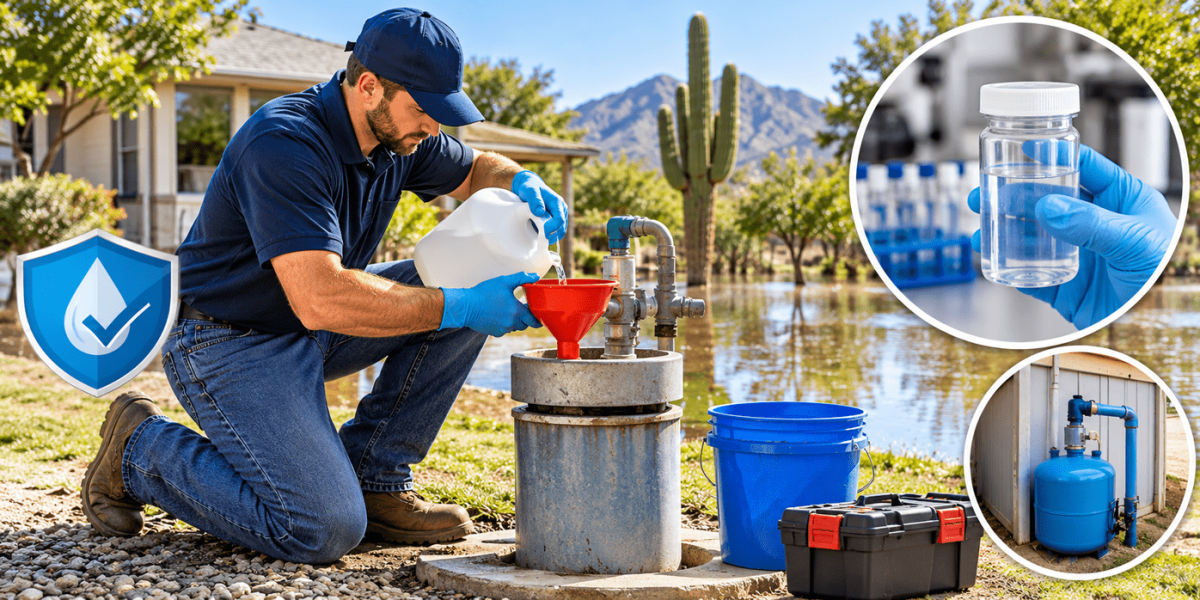
Floodwater is an uninvited guest, and it never leaves without making a mess. It can carry sewage, soil, and E. coli into a well. After it recedes, a well can look fine while bacteria hide deep inside the casing. Shock chlorination clears those germs with a strong, short dose of bleach.
Learning how to shock chlorinate a well takes a few minutes of reading and can protect your family from unsafe water. You will see the safety checks, dosing math, waiting time, and lab retest. Each step stays short and simple, so you can act with confidence and know when your water is ready to drink again.
What Is Shock Chlorination?
Shock chlorination is a one-time treatment that kills bacteria and germs inside a water well. A dose of unscented bleach mixes with the well water and moves through the casing, the pump, and the plumbing. The strong chlorine reaches every hidden corner of the system.
Health agencies may also recommend it after flooding, positive coliform or E. coli results, new well installation, or pump work. Floodwater and damaged caps can introduce germs; chlorination may address bacteria but not chemical contaminants. Always use fresh, unscented bleach, since scented types add chemicals.
What to Do After Well Flooding
Safety comes first, so slow down before you touch the well.
Stay Away From the Water Supply
Do not drink, cook with, or brush your teeth using the well water until a lab test proves it safe. Use bottled water or another safe source in the meantime, since floodwater can carry germs that cause stomach illness.
Keep the Power Off
Turn off all electricity to the well before you go near it, because wet wiring can cause deadly shocks. Have a qualified electrician inspect the pump and wiring before restarting it.
Inspect the Wellhead Closely
Walk carefully around the well and look for cracks, damaged caps, and loose seals. Clear away any debris near the casing. If floodwater covers the wellhead, contact local health officials and a qualified well contractor for inspection afterward.
How to Shock Chlorinate a Well
A calm, steady process protects both you and your well, so gather your supplies first.
Gather Unscented Bleach and Tools
Buy fresh, unscented household bleach containing 5-9 percent sodium hypochlorite. You'll also need a clean bucket, a funnel, a garden hose, and a wrench to safely complete the disinfection process.
Work Out the Dose
Start by calculating chlorine for well disinfection: find the water depth, which is the total well depth minus the depth to water. A smaller casing needs less bleach per foot of water, and a wider casing needs more.
Mix and Pour the Bleach
Mix the measured bleach with water in a clean bucket, then carefully pour the solution into the well through a funnel. Next, attach a hose and run water back into the well until you smell bleach, which coats the casing walls.
Flush the Plumbing Lines
Run each indoor faucet until you smell chlorine, following the recommended well-disinfection procedure for the entire system. Then shut the tap and move on, so the strong solution reaches every pipe and fixture in the house.
Wait at Least 12 Hours
Leave the chlorinated water in the system for at least 12 hours. Do not use the water while it sits. Afterward, flush outdoors until the chlorine odor fades, then use safe water until testing confirms the supply is safe.
Chemical dosing and long waiting times leave little room for error. 77 Water Well offers expert emergency well disinfection that keeps your household safe and your water supply dependable. Contact us today and turn a risky well into a safe one!
Testing Well Water After Shock Treatment
A clean smell doesn't prove clean water, so a lab test must confirm the results. Collect a sample at least 7 to 10 days after treatment, once you've flushed all chlorine from the system, and send it to a certified lab. Use the sterile bottle the lab provides.
If the lab finds bacteria, repeat the treatment and test. Do not drink the water until you receive a new clean result. Persistent bacteria can indicate a damaged casing or a nearby contamination source, so have a licensed well contractor inspect the well.
Disinfecting Water Well With Bleach Steps: A Quick Overview
Follow these steps to disinfect your well and confirm your water is safe.
|
Step |
What to Do |
Timing |
|
1 |
Turn off power and inspect the wellhead |
Before starting |
|
2 |
Calculate the bleach dose from water depth |
Before mixing |
|
3 |
Pour the bleach mix and circulate it with a hose |
Day 1 |
|
4 |
Flush indoor and outdoor lines until bleach smell appears |
Day 1 |
|
5 |
Hold the chlorinated water in the system |
Minimum 12 hours |
|
6 |
Flush outdoors until the smell fades |
Day 2 |
|
7 |
Retest at a certified lab |
7 to 10 days later |
Frequently Asked Questions
Can I chlorinate my well myself?
Yes, but consult a qualified contractor first; get professional help if floodwater submerges the wellhead or you see visible damage.
How much bleach does a well need?
The amount depends on casing size and water depth. Wider casings require more bleach per foot of water.
Can I drink the water right after treatment?
No. Wait for lab results that confirm the water is safe.
How long should chlorinated water sit in the system?
Leave the chlorinated water in the system for at least 12 hours before flushing it thoroughly.
When should I test again?
Test 7 to 10 days after treatment, and repeat the process if bacteria remain.
Conclusion
Floodwater and positive tests are stressful, but a clear plan keeps you in control. After well flooding, know what to do: stay safe, calculate your dose, let the chlorine work, and test again before you drink. Each step protects your family and your well.
Steady, reliable water is the goal, and good information keeps you on track. 77 Water Well offers a well water quality testing guide that explains how and when to test your well. Choose us today for clear answers and peace of mind!









Comments (0)