

How Long Does a Whole-Home Remodel Take In Grass Valley?
A whole-home remodel touches every room at some point. Ask your contractor which areas will be unusable and for how long .


A whole-home remodel can transform how a house looks and functions, but living through the process often means adjusting daily routines, sharing limited space, and waiting for essential rooms to become usable again. For Grass Valley homeowners, knowing the likely timeline makes those disruptions easier to manage.
The schedule depends on several moving parts, including design decisions, permit reviews, material availability, construction, and finishing work. Each stage needs time, and delays in one area can affect the next. Understanding how the remodeling process unfolds helps homeowners set realistic expectations and prepare for the work ahead.
A Whole House Remodel Timeline Breakdown for Grass Valley Homeowners
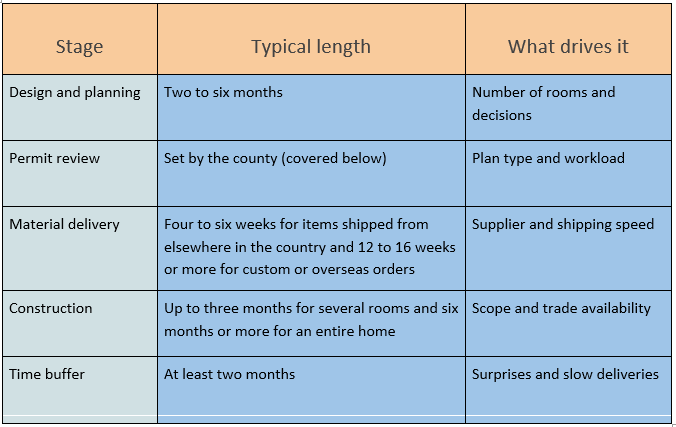
The table below summarizes the planning ranges suggested by Houzz. Some stages can overlap, while others depend on materials or approvals being completed, so use the figures as a planning guide rather than adding every range together .
Design Time Sets the Pace
Design takes longer than most owners expect. Houzz suggests two months for a single room and four to six months for a project that covers several rooms, because every room brings its own choices about layout, materials, and finishes. A whole-home remodel generally falls into the multi-room category, so plan for the longer range.
Construction and Buffer Months
Once construction begins, Houzz expects up to three months for several rooms and six months or more for an entire home. Then comes the buffer. It recommends at least two months for surprises, so a firm deadline should sit two months after your earliest finish estimate. For a multi-room project, the low ends of the design, construction, and buffer ranges already add up to about a year, before permit review is counted.
Factors That Cause Remodeling Delays in Foothill Communities
Even a careful schedule runs into obstacles. Most delays come from a short list of causes, and you can plan around each one.
Material Orders and Trade Schedules
Material lead times and trade availability are two common factors affecting start dates. Both are easier to manage when you know about them early.
● Material Orders
Items you need may not be in stock nearby, so special orders take extra time to arrive. Ordering long-lead items early keeps those waits from interrupting construction.
● Trade Availability
Skilled tradespeople may have limited availability. When tilers, plumbers or painters are busy on other jobs, your start date slips even if the design is finished.
How Delays Spread Across the Phases of Major Home Renovation
Remodeling stages depend on each other. A damaged base cabinet, for example, can hold up the counter, sink and backsplash until a replacement arrives. A delay in one stage can affect subsequent stages, so ask which stage each date depends on.
Hidden Conditions and Fire-Safe Rules
Walls that stayed closed for years can hide problems that only appear after demolition, and each discovery needs time to fix. Fire-safe rules can matter too. CAL FIRE's defensible space guidance tells property owners to check local ordinances because defensible space requirements can be stricter than state rules, so confirm early what applies to your lot.
Plan each renovation phase with R&R General Contracting, experienced custom home remodel contractors serving Grass Valley. Arrange a project assessment to plan renovation milestones, prepare for unexpected structural issues, and address local fire-safety requirements early.
Managing Home Remodel Expectations Before Work Starts
A clear plan removes most of the stress. When you know what each stage requires, periods of limited visible activity may reflect material lead times or coordination between trades.
Architectural Planning Timeline for Remodel Approvals
Drawings come first, followed by county review. Nevada County's Building Department says plan review for remodels and other simple projects is completed within two weeks, while new residential construction is completed within four weeks. Those clocks start only after plans are submitted, so the design stage still controls when building can begin. Ask your contractor which category your project falls under.
Questions worth Asking Your Contractor
Discuss the schedule before signing the contract to prevent misunderstandings. Bring these questions along:
- Which stage will take the longest on my project?
- Which materials have long delivery times?
- How will the schedule change if hidden damage turns up?
- Who handles permit paperwork and inspection scheduling?
Decisions That Keep Work Moving
Choose layouts, fixtures and finishes before demolition whenever you can. Houzz reports that remodeling decisions about layouts, finishes, and materials can make the planning stage lengthy. Taking time to evaluate options can also help homeowners avoid rushed choices they may later regret. Finalizing selections early gives your contractor more time to order materials and coordinate the project schedule.
Planning for Disruption at Home
A whole-home remodel touches every room at some point. Ask your contractor which areas will be unusable and for how long, so you can plan meals, workspace and sleeping areas around the schedule.
Frequently Asked Questions
1. How long does a whole-home remodel usually take?
It usually takes many months, and the total is longer than the construction stage alone. Design, permit review, material ordering, building, and a time buffer all add to the timeline. A contractor can give a firmer estimate after reviewing your plans.
2. Does the design stage count toward the timeline?
Yes, construction cannot begin until plans are finished and approved, so design time belongs in your schedule from the start. Settling layouts and finishes early reduces interruptions later.
3. Do permits slow down a remodel?
Permits add review time, and the length depends on the project type and the county's workload. Complete drawings help the review move along. Ask your contractor how permit steps fit into your schedule.
4. How can I reduce delays?
Make decisions early, order long-lead materials sooner and ask for a written schedule. Keep a time buffer for any firm deadline. Quick answers to your contractor's questions also keep work moving.
5. Why do remodel schedules change after work begins?
Hidden conditions behind walls, late deliveries and busy trades are common reasons. Each one can shift the stages that follow. A contractor who explains these risks upfront helps you adjust calmly.
Final Thoughts
A whole-home remodel rewards patience and preparation. Crews are only one part of the schedule, because design, permits, deliveries and a time buffer all shape the finish date. Ask for a written plan, decide early, and expect a few surprises, and the process will feel much calmer.
Your schedule starts with a conversation. R&R General Contracting can review your project, explain local code steps and answer your questions about wildfire defensible space building in foothill communities. Request your free estimate today to plan your project with confidence.








Comments (0)