

What Makes MOSFET Drivers Essential for Efficient Power Switching?
MOSFET Drivers provide the high-current gate control needed to switch power MOSFETs quickly and efficiently. They help reduce switching losses, improve thermal performance, enhance timing accuracy, and support reliable operation in power supplies, motor drives, converters, battery systems, industrial electronics, and other high-speed switching applications.

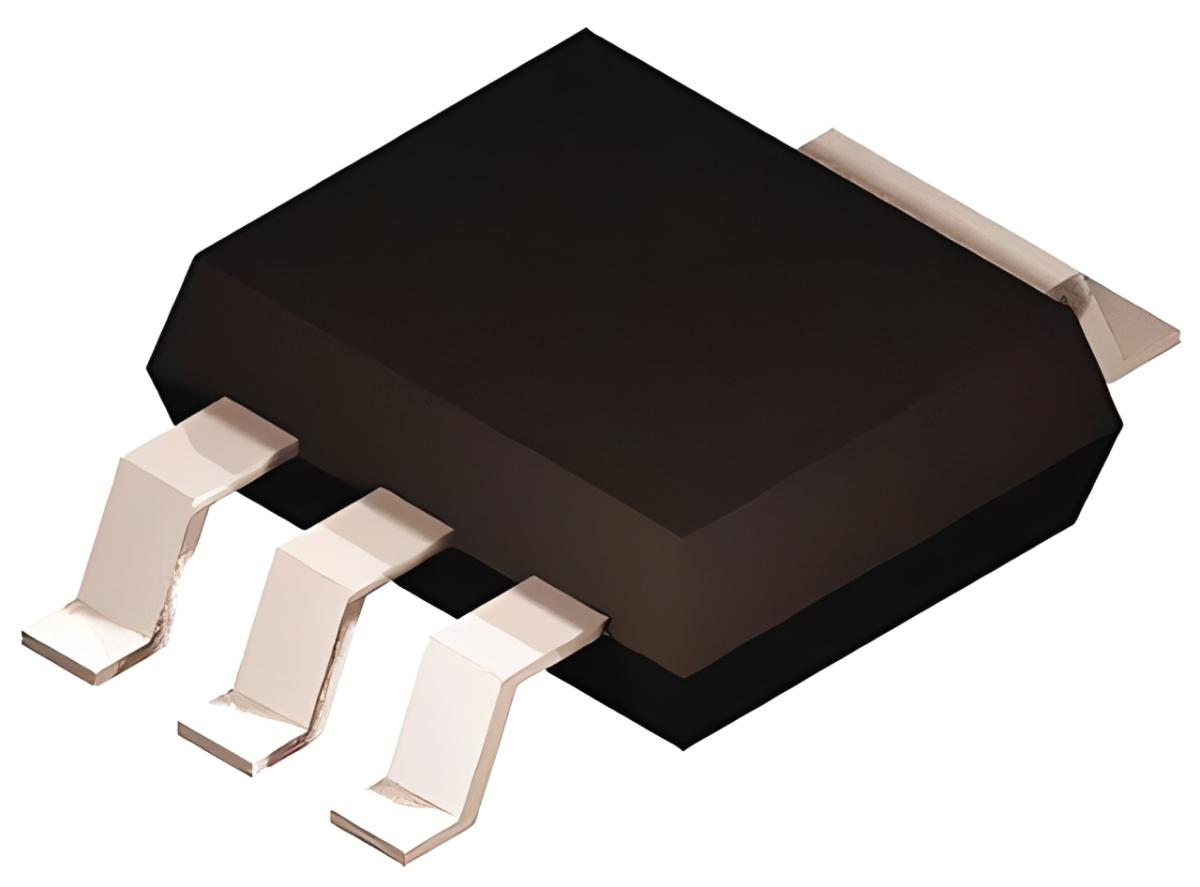
Efficient power switching is at the centre of many modern electronic systems, from compact power converters to industrial motor controls. MOSFET Drivers play a vital role in this process by ensuring that power MOSFETs receive the correct gate signal at the right speed and voltage. Without proper gate control, even a high-quality MOSFET may operate inefficiently, generate excessive heat, or switch unpredictably.
A MOSFET driver acts as an interface between a low-power control source and a high-power switching transistor. It strengthens the control signal so the MOSFET can move rapidly between on and off states. This reduces unnecessary energy loss and improves the overall performance of the power stage.
Why Is a MOSFET Driver Better Than Direct Logic Control?
Microcontrollers and logic circuits are designed primarily for signal processing rather than driving power devices. Their output current is often limited, which can make them unsuitable for charging and discharging a MOSFET gate quickly.
Although a MOSFET gate does not draw continuous current in the same way as a resistive load, it requires current during switching transitions. A dedicated driver provides the short bursts of current needed to complete these transitions efficiently.
This allows the control circuit to remain protected while the power stage receives a strong and reliable switching signal.
What Problems Can Weak Gate Drive Cause?
Weak gate drive can result in slow turn-on and turn-off times.
When a MOSFET switches slowly, it spends more time in a region where both voltage and current are present across the device. This causes additional power dissipation.
The consequences may include:
- Increased switching loss
- Higher operating temperature
- Reduced conversion efficiency
- Greater stress on the MOSFET
- Poor switching accuracy
A properly selected driver helps minimise these issues.
How Does a MOSFET Driver Reduce Heat Generation?
Heat in a switching transistor comes from both conduction losses and switching losses.
Conduction losses occur when the MOSFET is fully on, while switching losses happen during transitions between states.
A gate driver primarily helps reduce switching losses by moving the MOSFET through its transition region more quickly.
Faster transitions mean less time is spent dissipating significant power. This can improve thermal performance and may reduce the burden on heatsinks, airflow, and other cooling measures.
Why Does Thermal Performance Matter in Compact Electronics?
Modern electronic devices are becoming smaller while handling more power.
Higher power density makes thermal management increasingly difficult. Excessive heat can reduce component lifespan, affect reliability, and limit system performance.
Efficient MOSFET driving helps control heat at its source by reducing unnecessary switching loss.
This makes gate drivers especially valuable in compact converters, embedded systems, chargers, and dense industrial equipment.
How Do MOSFET Drivers Improve Power Supply Performance?
Switch-mode power supplies rely on rapid semiconductor switching to regulate voltage efficiently.
MOSFET drivers help power supplies operate by controlling the timing and speed of these switching events.
In buck, boost, flyback, and synchronous converter designs, accurate gate control can improve voltage regulation and overall energy efficiency.
The driver also helps maintain predictable switching behaviour when load conditions change.
Why Are MOSFET Drivers Important in Synchronous Rectification?
Synchronous rectification replaces conventional diodes with MOSFETs to reduce power loss.
Because multiple MOSFETs may need to switch in a carefully coordinated sequence, timing becomes critical.
A suitable driver ensures that each MOSFET turns on and off at the correct moment.
Incorrect timing may create current overlap or unwanted reverse current, reducing efficiency and potentially stressing the circuit.
What Is the Role of MOSFET Drivers in Battery-Powered Systems?
Battery-powered electronics benefit greatly from efficient switching because every energy loss reduces available operating time.
MOSFET drivers are used in battery chargers, battery management systems, portable power converters, electric mobility systems, and energy storage applications.
By reducing switching loss, they help the power electronics use stored energy more efficiently.
This can support longer battery runtime, reduced heat generation, and improved power management.
How Do Drivers Support Battery Charging Circuits?
Battery chargers often use switching regulators to control charging voltage and current.
The MOSFET driver allows the switching stage to operate quickly and accurately according to the charger's control signals.
This supports efficient power transfer between the source and battery while helping maintain stable charging conditions.
In high-power charging systems, the quality of gate control becomes even more important.
Why Are Isolated MOSFET Drivers Used in High-Voltage Systems?
Some electronic systems require electrical separation between control electronics and power circuitry.
An isolated MOSFET driver transfers the control signal across an isolation barrier while maintaining separate electrical grounds.
This can protect sensitive electronics and allow switching devices to operate at significantly different voltage potentials.
Isolated drivers are commonly found in industrial power equipment, solar inverters, charging systems, and high-voltage converters.
What Benefits Does Electrical Isolation Provide?
Electrical isolation can improve both safety and system performance.
It helps prevent unwanted current from flowing between different circuit sections and can reduce problems caused by ground potential differences.
Isolation can also improve noise immunity in electrically demanding environments.
For systems handling higher voltages, these advantages can be essential for reliable operation.
How Do MOSFET Drivers Help Control Electromagnetic Interference?
Fast switching improves efficiency, but it can also create unwanted electrical noise.
Very rapid voltage and current changes may produce electromagnetic interference, commonly known as EMI.
A MOSFET driver allows designers to control switching behaviour using gate resistors, current settings, or programmable slew-rate functions.
This helps balance efficiency with electromagnetic compatibility.
The objective is not always to switch as fast as possible, but to switch fast enough while maintaining stable and controlled circuit behaviour.
What Specifications Should Be Checked Before Selecting a MOSFET Driver?
Choosing the right driver requires careful consideration of the complete switching system.
Important specifications include driver supply voltage, peak source current, peak sink current, propagation delay, switching frequency, and operating temperature.
Engineers should also check the MOSFET's gate charge and required gate voltage.
Other considerations may include isolation, number of channels, package size, undervoltage protection, and fault monitoring.
Why Should Source and Sink Current Be Evaluated Separately?
Some applications require different turn-on and turn-off speeds.
A driver may therefore provide different current capabilities when sourcing and sinking gate current.
Strong sink current can be particularly useful when the MOSFET must turn off rapidly under changing circuit conditions.
Evaluating both specifications helps ensure that the driver matches the required switching behaviour.
Where Are MOSFET Drivers Used in Industrial Electronics?
Industrial systems rely on MOSFET drivers in many areas, including automation, robotics, power conversion, actuator control, and motor drives.
They are also found in welding equipment, industrial power supplies, control panels, communication systems, and energy management hardware.
Reliable gate driving is important in these applications because equipment may operate continuously under demanding electrical and thermal conditions.
Accurate switching can therefore contribute directly to reduced downtime and improved system reliability.
How Will MOSFET Drivers Support Next-Generation Power Electronics?
Power electronics is moving towards higher efficiency, faster switching, greater automation, and smaller system size.
MOSFET Drivers support these trends by giving power transistors the controlled gate signals required for efficient operation.
Their ability to improve switching speed, reduce heat, support isolation, protect control electronics, and maintain accurate timing makes them essential in many advanced designs.
As renewable energy, electric mobility, industrial automation, energy storage, and high-efficiency computing continue to grow, MOSFET drivers will remain a key part of modern power architecture. Selecting the right driver can help designers create systems that are more efficient, reliable, compact, and capable of meeting increasingly demanding performance requirements.










Comments (0)