

Organic SEO vs Paid Search Marketing: Comparing Long-Term Business Value
SEO is a process that generates long-term benefits through content, authority, and technical optimization.

Organic SEO vs Paid Search Marketing: Comparing Long-Term Business Value
SEO is a process that generates long-term benefits through content, authority, and technical optimization. Pay-per-click advertising is an instant visibility tool, but once the budget is exhausted, the campaign stops. For companies looking for long-term solutions, SEO will always generate better results in terms of cost per acquisition and brand trust.
Why This Comparison Matters for SMEs and Startups in Singapore
Marketing is always tough when you’re trying to scale up. Every buck counts. Be it a startup based out of Jurong or an SME located in the CBD, choosing between SEO and paid advertising will define your path to success online.
Working with a reputable Singapore SEO Company can help you chart which route makes the most sense for you.
What Is Organic SEO?
What is SEO? Organic SEO refers to the method of increasing the visibility of your webpages on search engines without buying ad spots. This entails improving your site's technical performance, optimising your site's content, building backlinks, and even enhancing the user experience.
It takes time, with results being seen within three to six months at the bare minimum. However, after getting your pages to rank, traffic will keep coming without any need for continued payments.
What Is Paid Search Marketing?
Pay-per-click, more popularly called PPC, is an online marketing tool that makes use of bidding to get your business listed at the top of the list in search engine results.
Google Ads is one of the most popular tools used in Singapore, where companies bid on the keywords relevant to their product or service.
The moment you stop paying, your business is no longer visible.
Side-by-Side Comparison: Organic SEO vs Paid Search
|
Factor |
Organic SEO |
Paid Search (PPC)
|
|---|---|---|
|
Time to Results |
3–6 months |
Immediate |
|
Cost Structure |
Upfront investment, lower long-term cost |
Ongoing spend per click |
|
Traffic Sustainability |
Continues after investment stops |
Stops when budget runs out |
|
Click-Through Rate |
Higher trust, higher CTR for top positions |
Lower CTR; users skip ads |
|
Brand Credibility |
Strongly builds authority over time |
Minimal brand equity built |
|
Scalability |
Scales with content and authority |
Scales with budget only |
|
Best For |
Long-term growth, sustained visibility |
Launches, promotions, rapid testing |
The Long-Term Value Case for Organic SEO
Compounding Returns Over Time
In contrast to paid advertisements, an optimized page generates traffic every single month. A blog post ranking on page one today will continue generating leads two years from now without any additional cost. This compounding nature is not easy to ignore for resource-limited SMEs in Singapore.
Trust and Credibility with Singapore Consumers
Organic listing results have been found to be more credible by users than sponsored listings. For Singapore, an intensely competitive market environment where consumers are tech-savvy, organic listing indicates credibility. This is because businesses that rank organically are regarded as credible, especially within B2B markets.
Lower Cost Per Acquisition at Scale
Based on information from Search Engine Journal, organic search generates over 53% of total traffic worldwide for websites, and the lead cost is considerably cheaper compared to paid marketing channels after the ranking process has been achieved. For SMEs in Singapore operating under tight budgets each month, organic SEO yields higher ROI within 12-24 months.
When Paid Search Makes More Sense
Paid search isn't without merit — it serves specific business scenarios very well:
-
Product or service launches where immediate visibility is critical
-
Seasonal promotions with a defined campaign window
-
Highly competitive keywords where organic ranking takes too long
-
Retargeting campaigns to re-engage website visitors
-
A/B testing messaging before committing to organic content strategy
For startups that need fast market entry or are testing product-market fit, PPC provides the speed that organic simply cannot match in early stages.
The Smartest Strategy: Using Both in Sequence
It is not a case of opting for one or the other but rather using both in the right sequence. Paid search is used in the initial months to ensure that you have instant traffic from leads, and this is done even as you build up the organic traffic levels. You can then taper off PPC expenses for keywords you have ranked in organically.
How AI-Powered SEO Is Changing the Equation
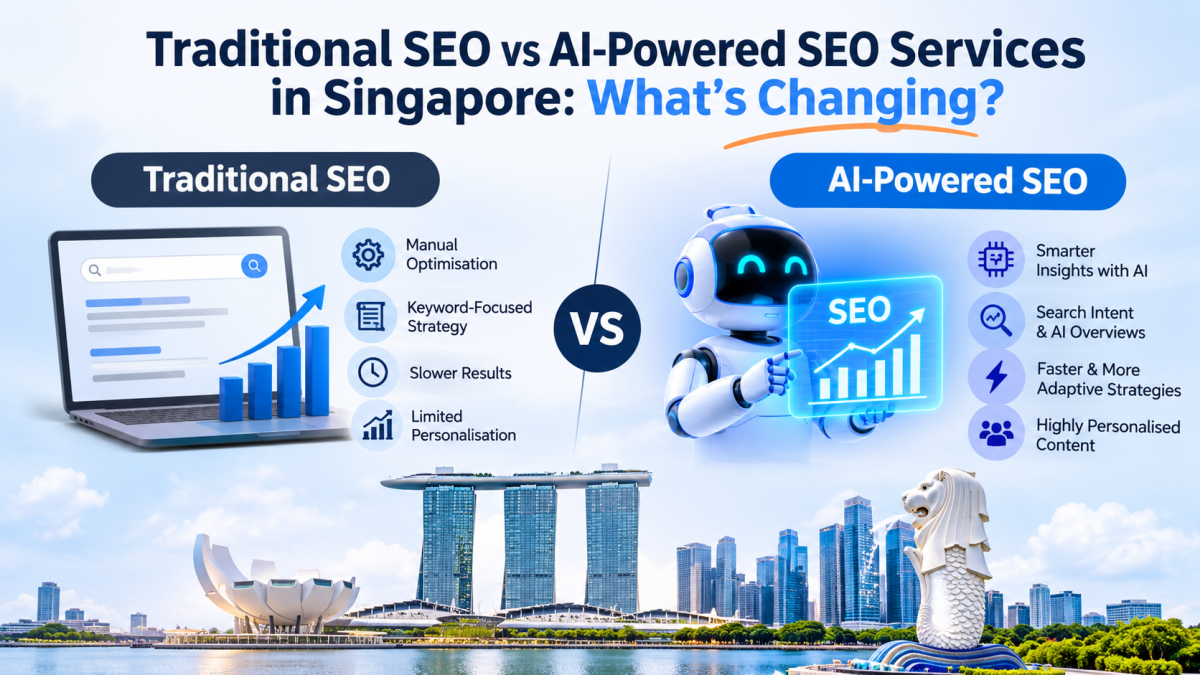
The environment has changed. With advanced AI powered SEO tools in the modern day, firms can spot content gaps, automate audits, and make more accurate predictions about keywords than ever before using manual processes. This has resulted in a more efficient process for organic SEO, reducing the time lag between SEO and its effects.
In the case of SMEs utilizing an experienced SEO firm, this results in better use of resources and quick wins, without the need for trial and error.
What to Look for in an SEO Company in Singapore
Choosing the right partner determines whether your SEO investment pays off. When evaluating any SEO company in Singapore, look for these qualities:
-
Transparent reporting and measurable KPIs
-
Proven case studies from Singapore-based clients
-
A clear content and link-building strategy — not just technical fixes
-
Integration of AI and data-led tools in their workflow
-
Understanding of local search behaviour and Singapore market nuances
A credible SEO company will never promise overnight rankings. They'll show you a realistic roadmap backed by data.
Organic SEO vs Paid Search: Which Delivers More Value for Singapore Businesses?
For any SME or startup in Singapore that has at least 12 months or even more time ahead, SEO will be able to create far greater long-term value than paid search can. SEO is creating a valuable asset for you – your online visibility in the search engines, which keeps appreciating over time.
However, the correct answer depends largely on where you are currently at, on your budget and objectives. The correct approach is the hybrid – use paid until you gain ground, but let organic do its magic and compound your efforts.
BTthrust is a reliable SEO agency in Singapore that helps SMEs and startups build such a compounding digital footprint. Through technical SEO, content marketing, and cutting-edge AI technology, we provide tangible, long-lasting results. If you would like to break away from ad dependency and have a working search presence 24/7, it’s worth talking about.
Frequently Asked Questions
How long does organic SEO take to show results in Singapore?
It is said that organic SEO generally takes three to six months before one begins to see results in Singapore. For businesses operating in highly competitive fields, it can take up to nine to twelve months to get consistent first-page listings.
Is paid search better than SEO for a new Singapore startup?
Although paid search is more advantageous for increasing visibility at startup, it should not replace SEO. The majority of startups based in Singapore can use paid search and SEO at the same time because this will give them the opportunity to develop a traffic resource for the future.
What does an SEO company in Singapore typically charge?
The cost of SEO in Singapore usually ranges between SGD 800 and SGD 5,000 depending on the nature of work, competition, and expertise of the company. There are project-based engagements as well as retainers, and for most small and medium enterprises, the mid-range packages are the ones adopted.
Can AI-powered SEO tools replace a professional SEO agency?
AI-driven SEO software aids in making processes more efficient but does not take away the need for strategic skills. It helps in conducting audits, finding keyword gaps, and accelerating content planning – however, the human brain is still necessary for analyzing data and link building.
How do I measure the ROI of organic SEO versus paid search?
Calculate the return on investment of organic SEO based on parameters such as increased organic traffic, improved keyword rankings, and cost per lead over time. In the case of paid search, monitor cost per click, conversion rate, and return on ad spend. Analyzing both over a 12-month period will help determine the winner.







Comments (0)