

How to Match Rings and Bracelets Without Overdoing It
Learn how to match rings and bracelets: pick one hero piece, line up metal tones, balance both hands, and avoid common styling mistakes in everyday outfits.

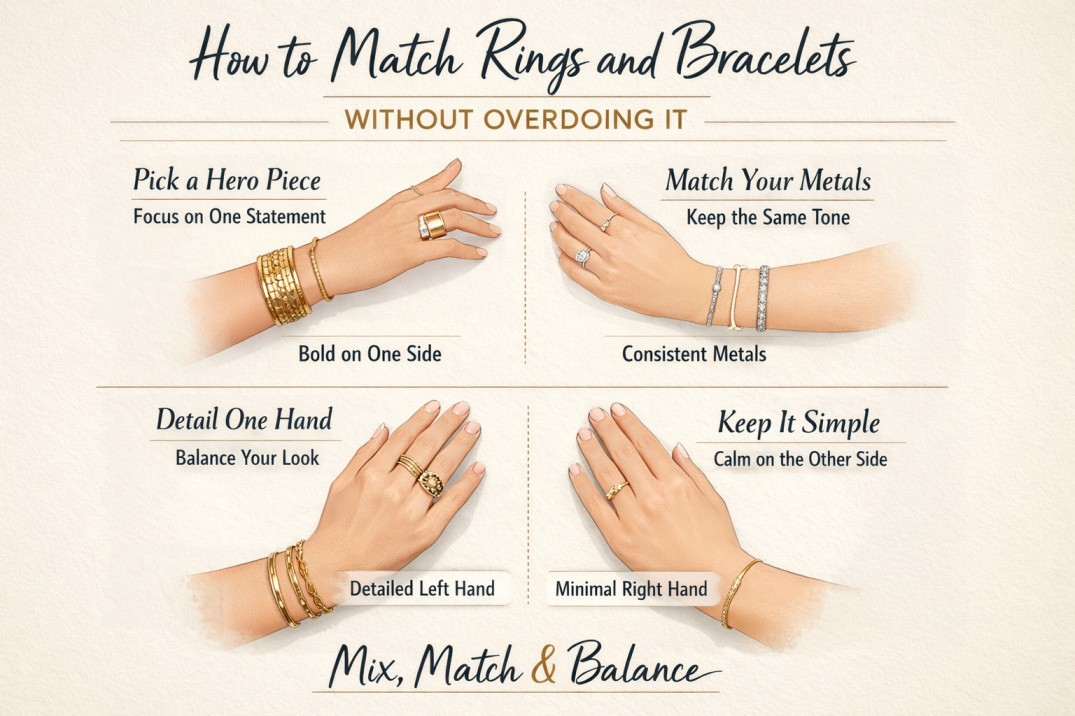
Rings and bracelets sit close together, so people see them as a pair. That makes matching them feel tricky. Too alike, and the look turns flat. Too different, and it looks random. The good news is that a few simple habits solve most of the problem.
Here is the quick answer. Choose one hero piece, match your metal tones, and give each hand a different job. Let one wrist or hand carry the detail and keep the other calm. You do not need a matching set to look put together.
Start With One Hero Piece
Every hand-and-wrist look needs a focal point. This is the piece your eye lands on first. It can be a pearl bracelet, a dome ring, or a sparkling tennis-style bracelet. Everything else supports it.
Think of it as one hero and two helpers. If your bracelet is detailed, wear a slim, plain ring. If your ring has a bold shape, choose a fine chain for your wrist. Two loud pieces next to each other fight for attention, and the details get lost.
Match Your Metal Tones
Metal colour is the easiest thing to line up. If your bracelet is gold tone, choose a gold-tone ring. If it is silver tone, keep the ring silver tone. The result looks calm and planned.
Mixing metals can look great too, but it works best with a plan. These tips help:
-
Use at least two pieces of each metal, so the mix looks deliberate.
-
Let one piece link the two tones, such as a ring with both silver and gold details.
-
Keep the shapes simple. Mixed metals and busy designs together feel crowded.
If you are unsure, start with one metal. You can mix later, once you know what you like.
Balance Your Hands and Wrists
A common mistake is to load one side and leave the other bare. The look feels heavy on one side. You can fix this in two easy ways.
Cross the pieces. Wear a bracelet on your left wrist and the statement ring on your right hand. Each side gets one eye-catching piece, so the balance feels natural.
Keep one side minimal. If you wear a watch on one wrist, keep that hand simple. A thin band on one finger is enough. Put the bracelet on the other wrist, where it can shine.
Daily habits matter too. If you type all day, a chunky bracelet can bump your desk and click against the keys. A slim chain bracelet is more comfortable. Hand-heavy jobs also suit lower-profile rings, because tall settings can catch on sleeves and bags.
Pair Rings and Bracelets by Style
Different bracelet styles ask for different rings. Here are three easy pairings.
Pearl Bracelets With Plain Bands
A pearl strand bracelet already has soft, rounded shapes. Pair it with a smooth band so the pearls stay in charge. A plain ring also keeps the look light and fresh. This pairing suits work, brunch, and family events.
Chain Bracelets With Dome Rings
Chain bracelets have clean lines and a little shine. A dome ring has a rounded, solid shape, so the two look good as a contrast. The chain gives movement, while the ring gives weight. Keep the other fingers bare so the contrast stays clear.
Sparkle With Simplicity
A tennis-style bracelet is the most sparkly of the group. Treat it as your hero and keep your rings slim. A simple band or a small heart ring is plenty. Too many stones across the hand and wrist can feel like a lot.
If you want ideas for the ring side, browse slim bands and dome rings and see which shapes feel right for your hands. For the wrist, chain and pearl bracelets give you easy starting points for the pairings above.
Build Looks for Different Days
A few sample outfits show how this works in real life.
Workday. Wear a thin chain bracelet and one slim ring. Keep both in the same metal tone. The look is quiet and neat, and it will not distract in meetings.
Weekend. Try a pearl bracelet on one wrist and a dome ring on the opposite hand. Add one more slim ring if you like. The look feels relaxed but still planned.
Evening out. Choose a sparkling bracelet as your hero and wear a plain band. Leave your other fingers bare. The sparkle gets all the attention it needs.
Gift giving. If you buy for someone else, think about the pieces she already wears. A bracelet in the same metal tone as her favourite ring is a safe choice. Slim, simple designs are easier to match than bold ones.
Check Fit and Comfort
Even the prettiest pair feels bad if the fit is wrong. A bracelet should slide over your hand without squeezing, then sit on your wrist without spinning around. Many people like to leave room for about one finger, though this comes down to taste. Measure your wrist with a soft tape before you buy if the size is not listed.
Rings need the same care. Fingers can swell a little in warm weather, so try a ring on at different times of day if you can. A ring that feels tight in the afternoon may feel loose in the morning. If you plan to wear rings and a bracelet on the same hand, check that they do not rub against each other when you move.
Care for Your Pieces
Daily wear needs simple care. Take off your rings and bracelets before you swim, clean, or exercise hard. Water, soap, and sweat can dull metal over time. Wipe each piece with a soft cloth at the end of the day, and store pieces separately so they do not scratch each other.
Material also affects how long a piece lasts. Brands such as Cherub Stories use materials like stainless steel and 14k gold in their bracelets, which suits everyday wear. Whatever brand you choose, read the care notes before you buy.
Common Mistakes to Avoid
-
Wearing two hero pieces. A big ring and a big bracelet compete. Choose one star.
-
Ignoring metal tone. A random mix of gold and silver can look accidental.
-
Stacking too much on one side. Spread the pieces across both hands.
-
Choosing size over comfort. Pieces that pinch or slide around get left in a drawer.
-
Forgetting the outfit. Plain tops and soft knits show fine jewellery well. A busy print can hide small pieces.
Frequently Asked Questions
1. Should my rings and bracelets match exactly?
No. They should feel related, not identical. Matching the metal tone is usually enough. Adding a similar mood, such as soft pearls with slim bands, completes the look.
2. Which hand should I wear a bracelet on?
Either hand works. Many people wear the bracelet on the wrist opposite their watch, so the two do not crowd each other. Choose the side that feels comfortable for your daily tasks.
3. Can I wear a ring and a bracelet on the same hand?
Yes. Keep one of them simple, and make sure they do not rub together. A slim ring with a delicate chain bracelet is an easy, comfortable combination.
4. Is it okay to mix gold and silver tones?
Yes, if you do it on purpose. Use at least two pieces of each tone and keep the shapes simple. If you feel unsure, stay with one metal for a cleaner look.
5. How many rings and bracelets are too many?
There is no fixed number, but one to three rings per hand and one to three bracelets per wrist is a comfortable range. If the pieces hide each other, remove one.











Comments (0)