

What a Solar Battery Price in Pakistan Is Actually Made Of And Why Multan Buyers Pay More Over Time
A breakdown of what drives solar battery pricing in Pakistan, how to calculate cost per usable kWh, and why Multan's heat changes the maths over time.
Battery pricing is the least transparent part of the solar buying process in Pakistan. Panels are quoted per watt, inverters per kilowatt, and both can be compared fairly easily. Batteries are quoted as a single figure attached to a capacity number — 5kWh, 10kWh, 100Ah — and buyers are left to assume that a bigger number means a better battery at a fair price.
That assumption costs people money. The solar panel battery is the component that determines whether a system survives a long outage, and it is also the component whose price is most often misleading. Two quotes for the same nominal capacity can differ by a factor of three, and the cheaper one is frequently the more expensive purchase over five years.
This guide breaks down what you are actually paying for, how to compare properly, and why buyers in hotter parts of the country — Multan being the obvious example — face a different calculation.
What You Are Actually Paying For
A battery's price is made up of four components, and only one of them is the energy storage itself.
1. Cell chemistry and quality. Lithium iron phosphate (LiFePO4) cells cost more than older lithium formulations and considerably more than lead-acid plates. Within LiFePO4, cell grade varies — automotive-grade cells cost more and last longer than lower-tier cells of the same nominal capacity.
2. The battery management system. The BMS is the electronics package that protects the cells from overcharge, over-discharge, overheating, and short circuits. A good BMS costs real money. Cheap batteries often have minimal protection, which is why they fail early.
3. Enclosure and thermal design. A battery built for a hot climate needs proper enclosure design and, in some cases, active thermal management. A basic plastic case around the same cells costs less and performs worse in Punjab summers.
4. Warranty and local support. A brand with a Pakistani service presence and a genuine cycle warranty carries a higher price than a grey import with neither. That difference is not markup — it is the cost of having someone to call in year four.
When you compare two batteries on price alone, you are comparing four variables rolled into one number.
The Only Comparison That Works: Cost Per Usable Kilowatt-Hour
Rated capacity is close to meaningless on its own, because batteries differ in how much of that capacity you can actually access.
A lead-acid battery should not be discharged below 50% without shortening its life. So a 5kWh lead-acid bank gives you roughly 2.5kWh of usable energy. A lithium battery can be discharged to 80–90%, so a 5kWh lithium unit gives you about 4.5kWh.
Now add cycle life. Lead-acid in Pakistani heat typically manages 500–1,200 cycles. Lithium manages 4,000–6,000.
Multiply usable capacity by cycles and you get lifetime delivered energy. Divide the purchase price by that figure and you get cost per usable kilowatt-hour — the only number that allows a fair comparison.
Run that calculation and the pattern is consistent: lithium costs more upfront and considerably less over its life. The gap is usually a factor of three or more, not a marginal difference.
Why Two Quotes for the Same Capacity Differ So Much
Buyers often receive quotes that all say "5kWh lithium" and differ by forty percent. The explanations are usually mundane.
Cell grade. Automotive-grade cells versus lower-tier cells of the same capacity.
BMS quality. A full protection board versus a minimal one.
Warranty terms. A documented 4,000-cycle warranty versus a verbal assurance.
Sourcing channel. Authorised distributor stock versus parallel import, with the warranty path disappearing accordingly.
Bundled accessories. Some quotes include mounting, cabling, and commissioning; others are battery-only.
Force every quote onto the same template — chemistry, rated capacity, usable capacity, cycle warranty, BMS specification, warranty holder, and what is included — and the comparison becomes meaningful.
Why Multan Buyers Face a Different Calculation
Heat is the single largest factor in battery longevity, and Multan's summers are among the most punishing in the country. Temperatures regularly exceed 47°C, and batteries installed on exposed walls or in unventilated rooms experience conditions well above ambient.
The practical effect is that every battery type degrades faster in Multan than in a milder city. Lead-acid suffers most — a bank that might last three years elsewhere can fail in eighteen months here. Lithium degrades too, but a properly specified unit with good thermal management handles the conditions far better.
This is why choosing solar companies in multan carefully matters more than it might in a cooler city. The right installer will do three things a careless one will not: place the battery in the coolest viable location rather than the most convenient one, confirm the BMS temperature operating range rather than assuming it, and size the bank for the actual outage duration in your area rather than a generic rule of thumb.
Ask directly where the battery will be installed and why. If the answer is "on the wall outside, same as always," ask what the summer temperature at that wall reaches and whether the unit's BMS is rated for it.
Sizing: The Expensive Mistake in Both Directions
Oversizing wastes money. Undersizing defeats the purpose. The right size depends on two things: what you want to run during an outage, and how long your outages typically last.
Essential loads — fans, lights, refrigerator, internet — draw roughly 400–700W in a typical household. A four-hour outage therefore needs about 2–3kWh of usable capacity, which means a 3–4kWh lithium unit. A longer outage, or a household running an air conditioner, changes the figure substantially.
Ask the installer to show the calculation. A number without a calculation is a guess.
Questions Worth Asking Before You Buy
-
What chemistry, and specifically what cell grade?
-
What is the rated capacity and the usable capacity?
-
What cycle life is warranted, at what depth of discharge?
-
Who honours the warranty in Pakistan, and where?
-
What is the BMS temperature operating range?
-
Where will the unit be installed, and what temperature does that location reach in June?
-
What is included in the quote — mounting, cabling, commissioning?
-
What is the estimated cost per usable kilowatt-hour over the warranty period?
The Bottom Line
Battery pricing in Pakistan is opaque because four different things are bundled into one number, and buyers are rarely shown the breakdown. The fix is straightforward: compare on cost per usable kilowatt-hour, verify the cycle warranty and the BMS specification, and confirm who is actually responsible for the warranty.
In Multan specifically, heat means every battery will underperform its brochure figures unless it is specified and sited properly. That makes the installer's competence as important as the product choice. A good battery badly placed will cost more over five years than a good battery correctly installed.

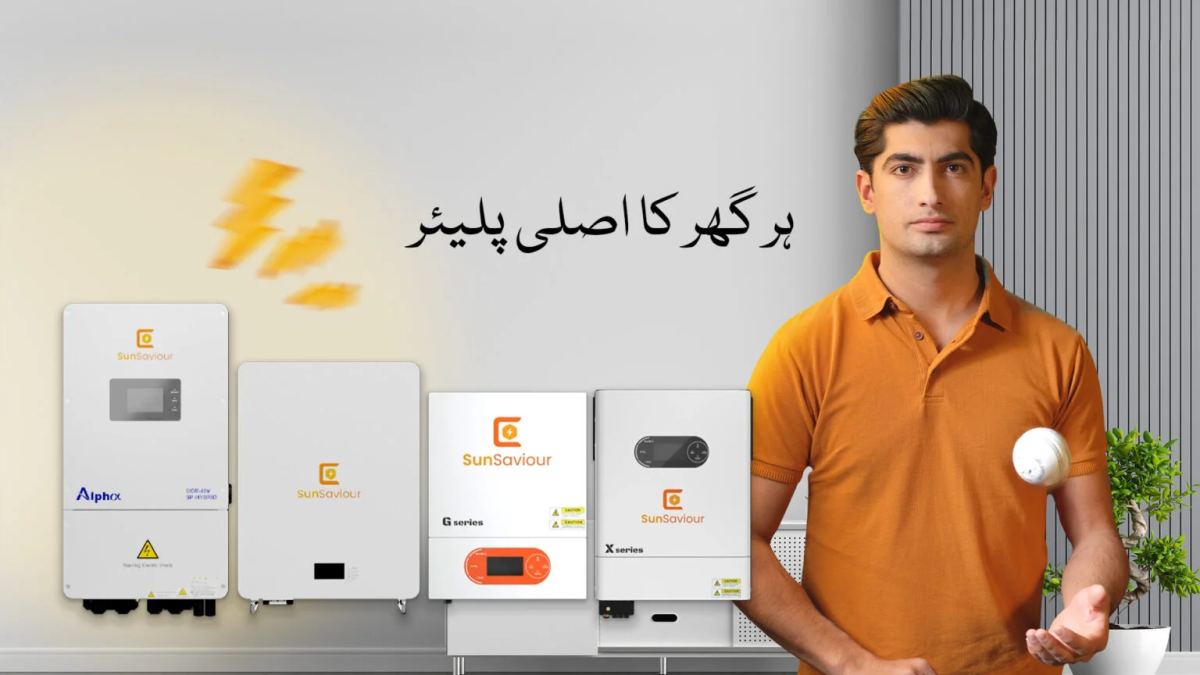
Bring greater efficiency and control to your energy needs with SunSaviour’s innovative solar solutions. Our product range features advanced hybrid solar inverters, lithium batteries, solar panels, and intelligent energy storage systems designed for residential and commercial applications. Combining modern technology with reliable performance, our solutions help optimize electricity usage, make better use of renewable energy, and support long-term energy savings. Whether you're planning a new solar installation or upgrading your existing power system, SunSaviour offers dependable solutions to help you move toward greater energy independence and a cleaner, more sustainable future.









Comments (0)