

Yoga Nidra: Understanding The Practice Of Yogic Sleep And Deep Relaxation
Learn what Yoga Nidra is, explore its traditional stages, understand how to practise yogic sleep, and discover its role in relaxation and awareness.
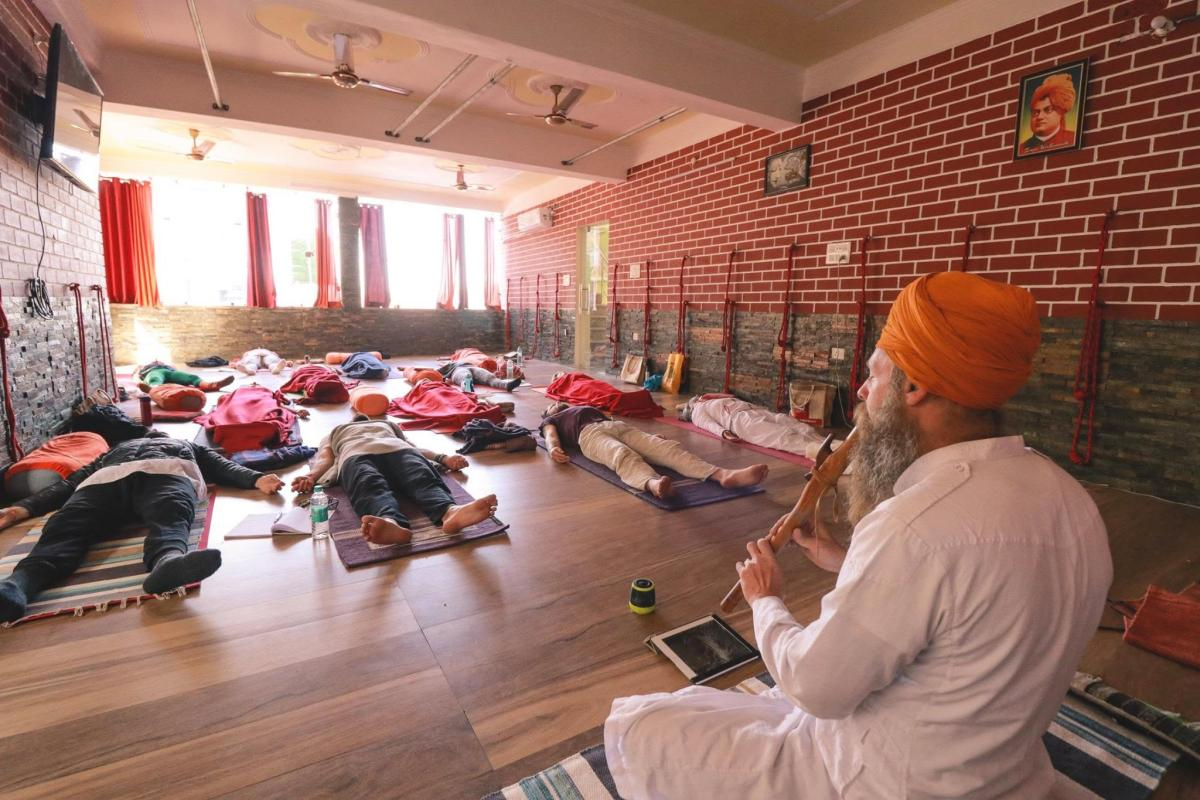
Modern life often keeps people busy with work, responsibilities, technology, and constant information. Even when the body is resting, the mind may continue thinking about daily activities and future plans. This can make it difficult to relax completely. Yoga offers different practices that encourage awareness and relaxation, and one of these is Yoga Nidra.
Yoga Nidra is a guided relaxation practice traditionally performed while lying comfortably in Shavasana. It encourages practitioners to move their attention through different parts of the body, observe their breathing, and develop awareness of their inner experiences.
The practice is sometimes called yogic sleep, but it is not simply an ordinary nap. The intention is to remain aware while the body rests. Yoga Nidra is suitable for beginners when guided appropriately and can be introduced as part of a broader yoga and meditation routine.
What Is Yoga Nidra?
Yoga Nidra is a traditional yogic practice of guided relaxation and inner awareness. The Sanskrit word Yoga is commonly associated with union, while Nidra means sleep.
During the practice, the participant lies in a comfortable position and follows the teacher's verbal instructions. Attention may be directed towards different body parts, breathing, sensations, and mental images.
For people exploring a 200 hour yoga teacher training bali, understanding Yoga Nidra can be useful because relaxation and meditation are important areas of traditional yoga education.
Although the practice is sometimes described as yogic sleep, the aim is not necessarily to fall asleep. Instead, the practitioner is encouraged to remain aware while experiencing a state of deep physical relaxation.
How Is Yoga Nidra Different From Ordinary Sleep?
Ordinary sleep is a natural biological process in which awareness of the external environment becomes reduced. Yoga Nidra, on the other hand, is a guided practice in which a person consciously follows instructions while resting.
The main differences include:
-
Awareness: Yoga Nidra encourages awareness of the body and mind, while ordinary sleep involves a natural reduction in conscious awareness.
-
Position: Yoga Nidra is generally practised lying down in a comfortable position.
-
Guidance: It commonly involves verbal instructions from a teacher or recorded session.
-
Attention: Practitioners are encouraged to observe sensations, breathing, and thoughts without actively engaging with them.
-
Purpose: It is used as a relaxation and meditation practice rather than simply as a way to sleep.
Some people may fall asleep during Yoga Nidra, especially when tired. This is common, particularly among beginners.
What Is The Purpose Of Yoga Nidra?
Yoga Nidra aims to encourage deep relaxation while maintaining a degree of awareness.
The practice gives people an opportunity to pause from everyday activities and direct attention towards their internal experiences.
Some common reasons people practise Yoga Nidra include:
-
To develop awareness of the body.
-
To experience guided physical relaxation.
-
To practise observing thoughts without reacting to them.
-
To create a quiet period within a busy daily routine.
-
To develop concentration and mindful awareness.
-
To complement an existing yoga or meditation practice.
Yoga Nidra should not be presented as a cure for insomnia, anxiety, or other health conditions. People experiencing ongoing sleep or mental health difficulties should seek appropriate professional support.
The Main Stages Of A Traditional Yoga Nidra Practice
Different Yoga Nidra traditions and teachers may use different sequences. A commonly taught structured approach includes several stages.
1. Preparation And Settling Down
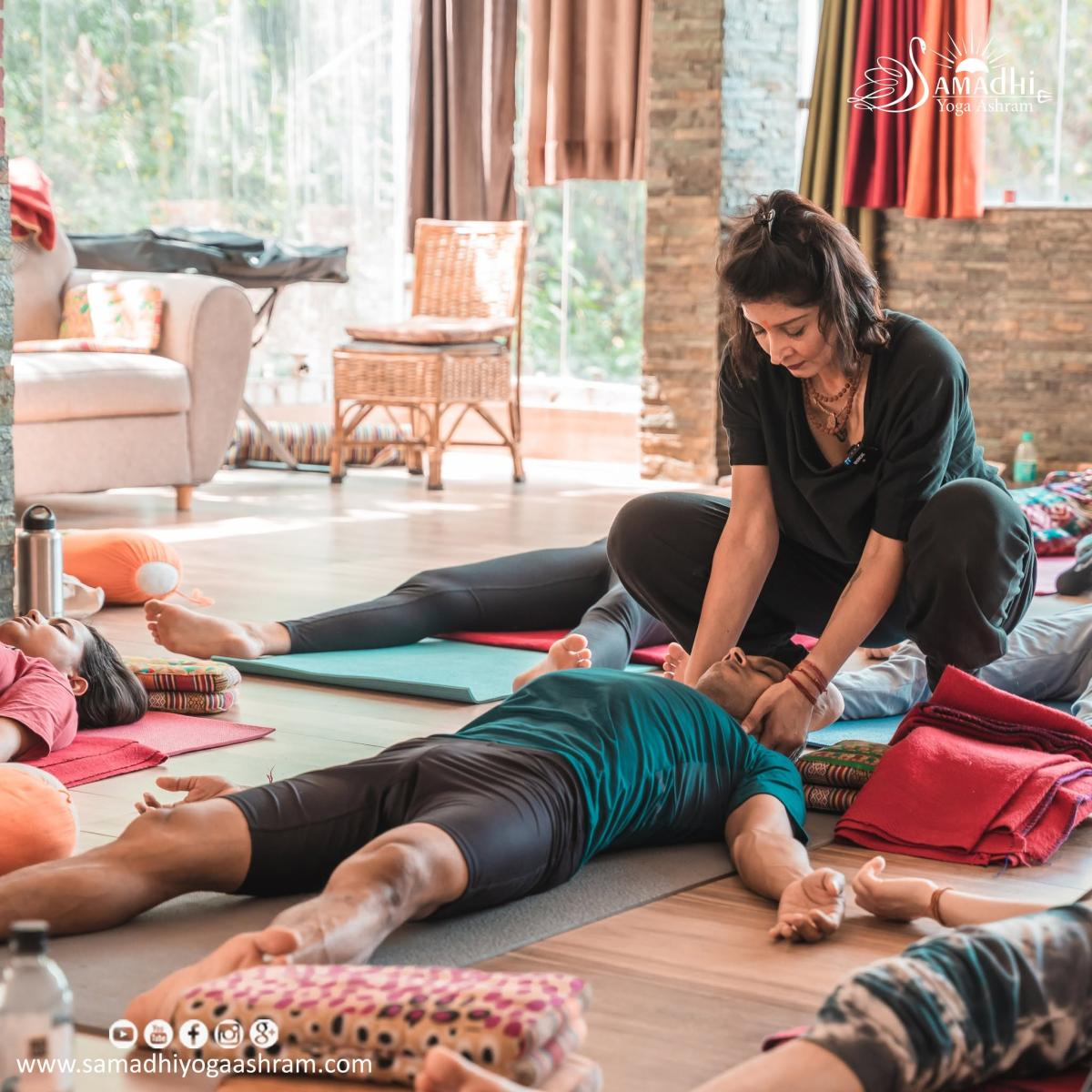
The practice usually begins with the participant lying on their back in Shavasana.
The arms rest comfortably beside the body, with the palms facing upward if comfortable. The legs can be slightly apart, allowing the body to relax.
A folded blanket or cushion may be placed under the head or knees if needed.
The teacher asks participants to become still and gradually bring attention to the present moment.
2. Setting An Intention Or Sankalpa
Some Yoga Nidra traditions include a Sankalpa, which is a short and meaningful personal resolve.
It is generally expressed in simple, positive language. For example:
-
I will develop patience and awareness.
-
I will approach life with greater calmness.
-
I will practise self-discipline.
The intention should be realistic and personally meaningful. It is not a magical statement or a guarantee that a particular outcome will occur.
3. Rotation Of Consciousness
In this stage, the teacher guides attention through different parts of the body.
The instructions may begin with the right hand, move through the fingers and arm, and continue towards the shoulder and other body parts. The same process may then be followed on the left side.
Attention may also be directed towards the legs, back, abdomen, chest, face, and other areas.
The purpose is to develop systematic body awareness without physically moving each part.
4. Awareness Of Breathing
After the body rotation, attention is often brought towards natural breathing.
Practitioners may observe the movement of the abdomen or notice the air entering and leaving the nostrils.
There is usually no need to force or change the breathing pattern.
The goal is simply to notice the breath as it is.
5. Awareness Of Opposite Sensations
Some structured Yoga Nidra practices include observing contrasting sensations.
For example, the teacher may invite participants to imagine heaviness and then lightness, warmth and then coolness, or comfort and then discomfort.
These instructions are followed mentally. There is no need to create physical discomfort or strain.
6. Visualisation
Visualisation involves mentally observing images, symbols, or scenes described by the teacher.
Some traditional sessions use natural images such as a peaceful river, a mountain, a garden, or a quiet sky.
The practitioner does not need to create perfect mental pictures. Simply following the instructions is enough.
7. Returning To The Sankalpa
In traditions that include a Sankalpa, participants may repeat their chosen intention again.
This provides an opportunity to reconnect with the intention set at the beginning of the practice.
8. Gradual Return To Awareness
The final stage involves bringing attention back towards the room and the physical body.
The teacher may ask participants to notice sounds, become aware of their breathing, move their fingers and toes, and slowly turn to one side.
When ready, they can sit up gradually.
How To Practise Yoga Nidra For Beginners
Beginners can start with a short guided session of approximately 10 to 15 minutes.
Follow these basic steps:
-
Find a quiet and comfortable place.
-
Lie down in Shavasana.
-
Support your head or knees with cushions if required.
-
Close your eyes gently.
-
Listen to the teacher's instructions.
-
Move your attention through the body as guided.
-
Observe your natural breathing.
-
Allow thoughts to come and go without trying to control them.
-
Return to the room slowly when the session ends.
The practice should feel comfortable. If lying down causes discomfort, an appropriate alternative position may be used.
What Are The Benefits Of Yoga Nidra?
Yoga Nidra is commonly used as a relaxation and awareness practice. Its potential effects may differ from person to person.
1. Encourages Physical Relaxation
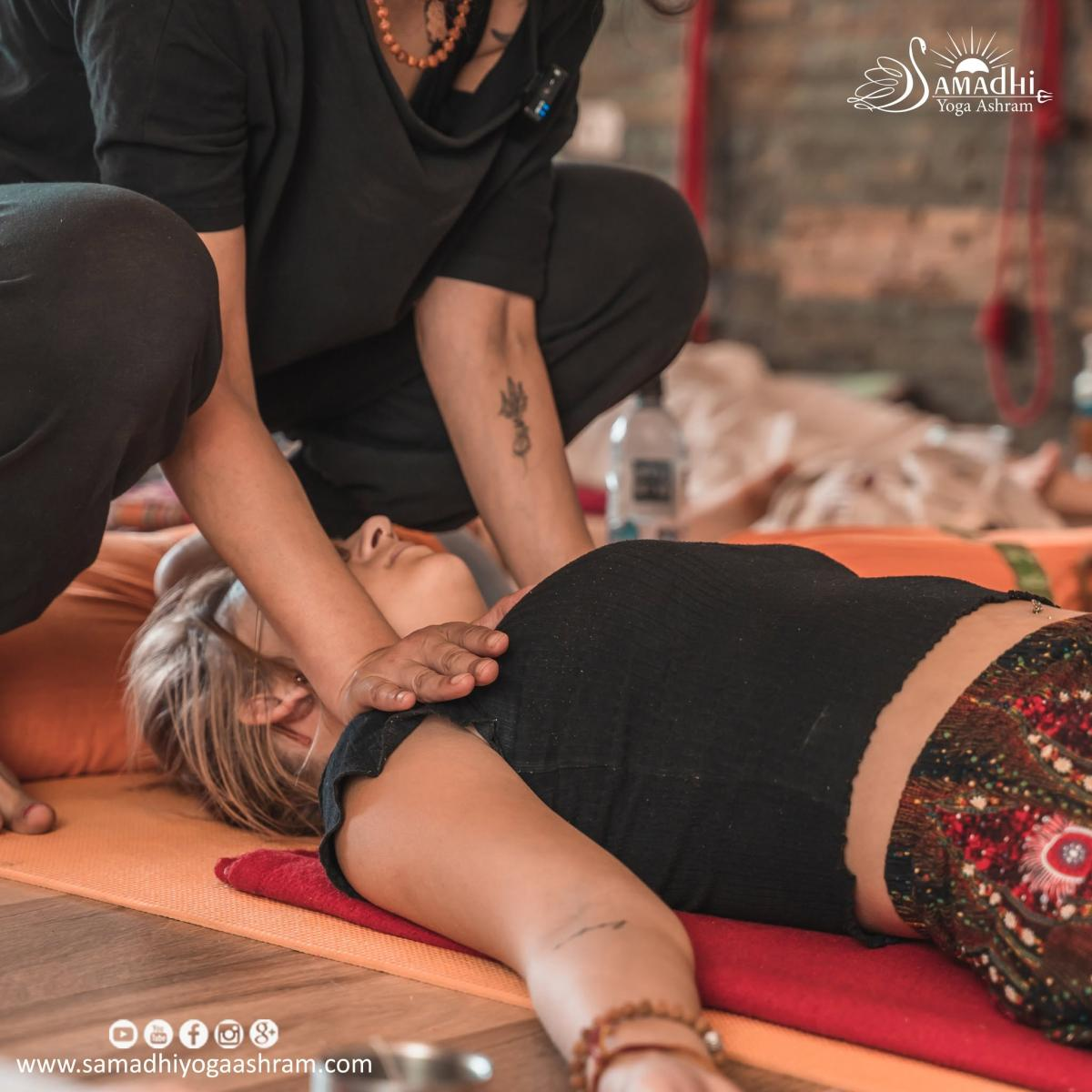
The guided process invites practitioners to release unnecessary muscular tension and rest comfortably.
2. Develops Body Awareness
Moving attention through different body parts can help people notice sensations they may usually overlook.
3. Creates A Pause From Daily Activities
A guided session offers dedicated time away from work, screens, and everyday responsibilities.
4. Supports Mindful Awareness
Practitioners learn to observe thoughts and sensations without immediately reacting to them.
5. Complements Meditation Practice
Yoga Nidra provides a different way to develop awareness. It may be useful for people who find seated meditation difficult.
These are possible benefits of a relaxation practice, not guaranteed medical outcomes.
What Is The Best Time To Practise Yoga Nidra?
Yoga Nidra can be practised at different times depending on personal preference and routine.
Some people prefer practising during the afternoon when they need a quiet break. Others prefer an evening session as part of their relaxation routine.
Beginners may find it helpful to practise when they are not extremely tired, especially if they want to remain aware throughout the session.
A quiet environment and comfortable temperature can make the experience more pleasant.
Common Mistakes Beginners Should Avoid
People new to Yoga Nidra sometimes misunderstand the purpose of the practice.
Here are some common mistakes:
-
Trying too hard to remain awake.
-
Forcing the mind to stop thinking.
-
Expecting immediate results.
-
Becoming uncomfortable by maintaining a rigid position.
-
Trying to visualise every instruction perfectly.
-
Feeling disappointed if they fall asleep.
The practice is about awareness, not performance. It is normal for the mind to wander.
If a person has a history of trauma or experiences distress during relaxation practices, guided Yoga Nidra may bring up difficult feelings. They should choose an appropriately trained facilitator and stop or modify the session if necessary.
The Role Of Yoga Nidra In Yoga Teacher Training
Yoga Nidra is a valuable subject for students who want to understand relaxation and meditation practices more deeply.
A 200 hour yoga teacher training in bali may introduce students to meditation, relaxation, breathing techniques, and traditional yogic practices.
At Samadhi Yoga Ashram, students can explore different aspects of yoga education, including meditation, pranayama, asana, and yoga philosophy. Learning about Yoga Nidra can help aspiring teachers understand how guided relaxation is structured and how verbal instructions influence the practice.
A future yoga instructor should understand the difference between guided relaxation, meditation, and ordinary sleep.
People researching yoga teacher training should check whether their chosen programme includes practical experience in meditation and relaxation techniques.
Those wishing to become a certified yoga teacher should also develop the ability to communicate instructions clearly and create a suitable learning environment.
When selecting a yoga instructor certification, students should examine the programme's curriculum and practical teaching opportunities. Understanding the eligibility for yoga teacher programmes is equally important because requirements differ between schools.
For those researching how to become a yoga trainer, studying relaxation methods alongside anatomy, teaching methodology, and yoga philosophy can provide a broader foundation.
A well-structured yoga training teacher course should include both theoretical understanding and practical learning. Strong yoga instructor qualifications also require responsible teaching skills and an understanding of student needs.
Yoga Nidra And Its Place In Modern Life
People today often move between different responsibilities without making time for rest. Yoga Nidra offers a structured opportunity to pause and observe the body and mind.
It does not require flexibility, physical strength, or previous meditation experience. This makes it accessible to many beginners when the practice is appropriately adapted.
For students considering a 200 hour yoga teacher training bali, studying Yoga Nidra can provide another perspective on yoga beyond physical postures.
At Samadhi Yoga Ashram, the traditional study of yoga encourages students to explore different practices that support awareness, discipline, and a deeper understanding of the yogic path.
Conclusion
Yoga Nidra is a guided relaxation practice that encourages physical rest and inner awareness. Although it is commonly called yogic sleep, its purpose is different from ordinary sleep. Practitioners are guided through stages such as preparation, body awareness, breathing observation, visualisation, and a gradual return to the surroundings.
Beginners can start with short sessions and gradually become familiar with the process. There is no need to force concentration or expect a particular experience.
For anyone interested in traditional yoga, Yoga Nidra provides an opportunity to explore the connection between relaxation and awareness. Learning this practice can also be valuable during a 200 hour yoga teacher training bali, where students study different methods of teaching and practising yoga.
Frequently Asked Questions
Samadhi Yoga Ashram offers 100, 200, 300 and 500 hour Yoga Teacher Training Courses and retreats in Rishikesh, India, and Bali, Indonesia.






Comments (0)