

What Should Be Checked Before Pouring a Backyard Seating Slab?

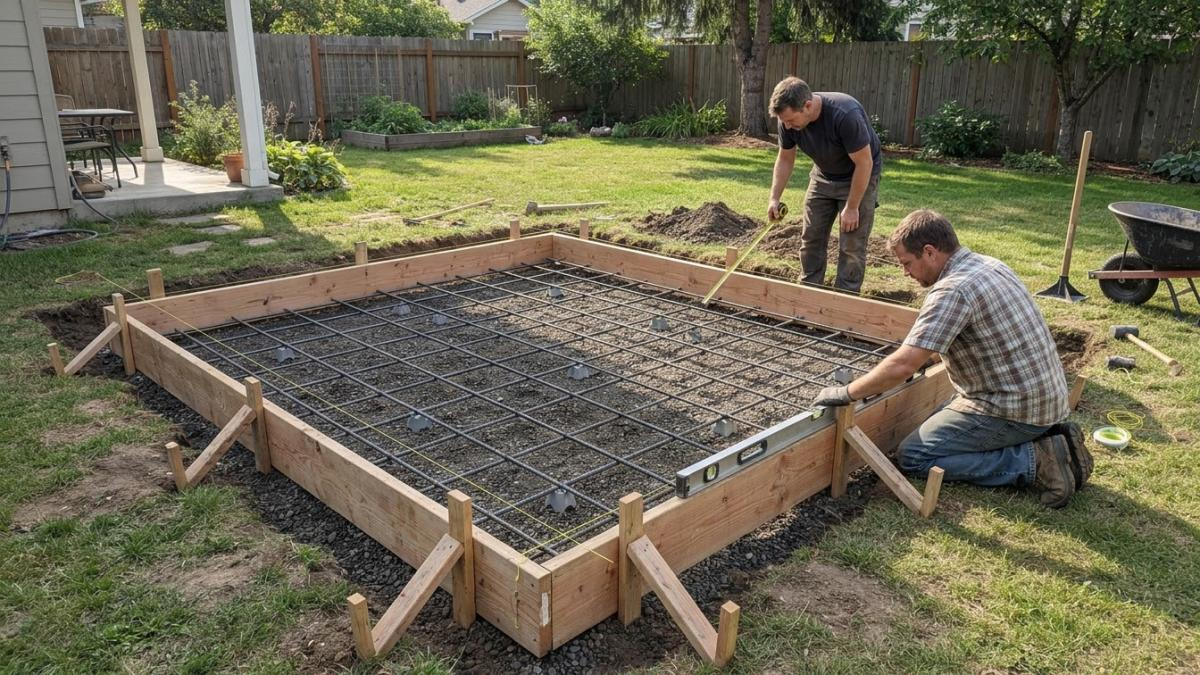
A backyard patio may look simple on a drawing, but the finished surface must work with the property around it. A slab that is too small may not accommodate the intended furniture, while poor drainage can allow water to collect beside the house. Even attractive decorative concrete can become frustrating when chairs wobble or the surface receives uncomfortable afternoon sun.
Successful planning starts before excavation. Homeowners should consider how the outdoor space will be used, where water travels during storms, and what loads the surface will support. These decisions affect the size, elevation, preparation, and finishing method of the project.
Why Patio Dimensions Should Follow Furniture Layout
A patio designed without considering furniture can feel crowded even when its total square footage seems reasonable. Dining chairs need space to move backward, while walkways should remain usable when people are seated. An outdoor grill or storage unit may require additional clearance.
Homeowners can mark the proposed patio boundaries on the ground and place temporary objects where furniture will sit. This allows them to test circulation before construction begins.
The layout should also consider doors, garden access, and frequently used routes through the yard. A useful patio should support movement as well as seating.
How to Plan Drainage Near the House
A new slab changes the way rainwater moves across the property. If its elevation or slope directs water toward the house, the project can create moisture problems that did not exist before.
The contractor should evaluate the surrounding grade and establish a suitable drainage route. The necessary slope depends on the site and applicable construction requirements, and it should be sufficient to manage surface runoff without making furniture uncomfortable.
Existing downspouts, landscape borders, and neighboring paved surfaces also affect the drainage plan. The finished patio should not block an established runoff path or direct concentrated water toward vulnerable building areas.
Why Soil Conditions Affect Patio Performance
Concrete relies on the ground beneath it for support. Soft fill, organic material, or unevenly compacted soil can contribute to settlement after construction. This may result in cracks, displaced sections, or drainage changes.
Preparation should reflect the actual ground conditions. The contractor may need to remove unsuitable material, establish a stable base, and address drainage before concrete is placed.
The slab design should also account for its intended use. Ordinary furniture places different demands on concrete than a hot tub or other heavy installation. Equipment with substantial concentrated loads requires suitable structural evaluation rather than an assumption that an ordinary patio slab will be sufficient.
Why Control Joints and Curing Matter
Concrete changes dimension as it hardens and responds to environmental conditions. Control joints provide planned locations for shrinkage-related cracking, helping manage where visible cracks may develop.
The appropriate joint layout depends on the slab's dimensions, thickness, geometry, and construction method. A decorative pattern does not necessarily provide the same function as correctly designed joints.
Curing is equally important. Fresh concrete needs suitable moisture and temperature conditions to develop its intended properties. Hot, dry, or windy weather can increase the risk of rapid moisture loss, so the contractor should select appropriate curing measures for the installation conditions.
How to Choose a Practical Surface Finish
Different finishes affect the patio's appearance, maintenance, and walking characteristics. A broom finish can provide texture, while stamped or decorative treatments create different visual effects.
The selected finish should be appropriate for outdoor use, including exposure to rainfall and regular foot traffic. A smooth or coated surface may require additional attention to slip resistance when wet.
Homeowners should also consider whether the finish will be easy to clean and maintain. Decorative materials may have particular sealing or care requirements that should be understood before installation.
Professional Concrete Patios planning should balance appearance with drainage, safe movement, and long-term usability.
What Should Be Confirmed Before Construction Begins?
Before excavation, homeowners should confirm the layout, proposed finished elevation, drainage arrangement, and intended surface treatment. It is also important to identify underground utilities and any applicable permit requirements.
Where utilities may be affected, the appropriate locating process should be completed before digging. Property boundaries, easements, and existing landscaping can also influence the location of the new slab.
A written project scope should explain preparation, materials, finishing, cleanup, and when the patio can safely be used. This helps avoid disagreements about whether the estimate includes removal of existing surfaces or changes to surrounding grades.
Conclusion
A useful backyard patio begins with practical decisions about layout, drainage, supporting soil, and intended use. Decorative finishes are important, but they cannot correct a slab that directs water toward the house or lacks suitable support. Understanding concrete curing helps explain why controlled conditions after placement influence the development of material properties. Planning these details before construction gives homeowners a better chance of creating an outdoor space that remains comfortable and functional.












Comments (0)