

Website Design for NDIS Business: A Complete Guide for Australian Providers
A successful NDIS business website combines clear information, accessible design, mobile usability, reliable performance and useful content.

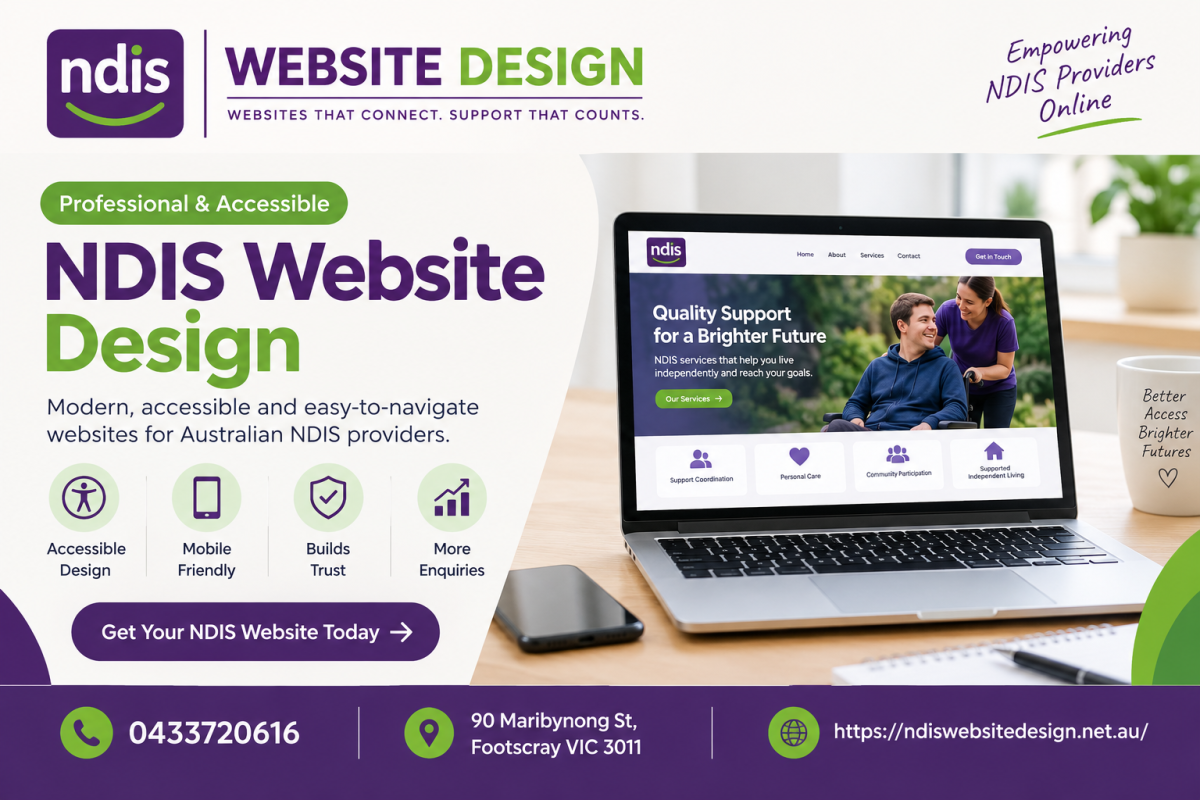
A website is an important digital resource for businesses operating in the National Disability Insurance Scheme (NDIS) sector. It allows providers to explain their services, introduce their team, share useful information and make it easier for people to contact them. For Australian providers, a well-planned website can also support business credibility and improve online visibility.
Choosing the right website design for ndis business involves more than selecting colours, images and layouts. It requires a clear understanding of your audience, the services you provide and the information visitors need before making an enquiry.
This guide explores the essential elements of an NDIS business website, from planning and accessibility to search engine optimisation and ongoing maintenance.
1. Start With Clear Website Goals
Before building a website, identify what you want it to achieve. Some providers need a website to introduce a new business, while others want to improve an existing website or expand into additional service areas.
Your goals may include:
-
Explaining your disability support services.
-
Helping visitors understand your service locations.
-
Providing information about your team and approach.
-
Receiving enquiries from prospective participants and representatives.
-
Improving visibility in relevant Google searches.
-
Sharing resources that answer common questions.
Clear goals help determine the pages, content and features your website needs. They also make it easier to evaluate whether the finished website is meeting your business objectives.
2. Organise Your Website Content
A website should make important information easy to find. Visitors should not have to navigate through several unrelated pages to understand what your business offers.
Most NDIS provider websites benefit from the following pages:
Home: Introduce your business, highlight your main services and provide clear navigation.
About Us: Explain your organisation's values, experience, team and approach to support.
Services: Describe each service separately, including its purpose, availability and relevant eligibility or access information.
Locations: Identify the suburbs, regions or communities your organisation serves.
Contact: Provide your phone number, email address, enquiry form and other relevant contact details.
Resources or Blog: Publish informative content that answers questions about your services and the NDIS.
Each page should have a specific purpose. Use descriptive headings, short paragraphs and straightforward language to help visitors understand the information.
3. Make Accessibility a Priority
Accessibility should be considered from the beginning of the design process. A website may be used by people with different disabilities, communication preferences and levels of digital confidence.
Useful accessibility improvements include:
-
Providing sufficient colour contrast between text and backgrounds.
-
Using readable font sizes and clear typography.
-
Adding meaningful alternative text to informative images.
-
Ensuring that forms have clear labels and instructions.
-
Supporting keyboard navigation.
-
Using descriptive links rather than vague phrases such as “click here”.
-
Adding captions or transcripts to relevant video and audio content.
-
Structuring pages with logical headings.
The Web Content Accessibility Guidelines (WCAG) provide an established framework for accessible digital content. Providers should assess their websites against appropriate accessibility requirements and test pages with different assistive technologies.
Accessible design can improve usability for a wider audience, but it should not be treated as a one-time task. New pages, forms and website updates also need consideration.
4. Create a Mobile-Friendly Experience
Many people access websites using smartphones or tablets. Your website should adapt to different screen sizes without requiring visitors to zoom in or scroll horizontally to read ordinary content.
A mobile-friendly website should have readable text, appropriately sized buttons, simple menus and forms that are easy to complete on a smaller screen.
Check how your phone number, contact form and service information appear on mobile devices. Important details should remain visible and easy to use.
Mobile usability is particularly important when visitors discover your organisation through Google and want to quickly check whether you provide a particular service in their area.
5. Build Trust Through Accurate Information
Visitors often need to understand a provider's services and approach before deciding whether to make contact. Your website should communicate this information clearly and honestly.
Consider including:
-
Accurate descriptions of your services.
-
Information about your team and relevant experience.
-
Current service locations and availability.
-
Genuine testimonials, where permission has been obtained.
-
Relevant qualifications, registrations or professional affiliations.
-
Clear explanations of how enquiries are handled.
-
Current contact information and privacy information.
Only make claims that your organisation can substantiate. For example, do not imply that your business is registered with the NDIS unless that is accurate.
Trust is built through consistent, transparent information rather than exaggerated promises or unnecessary marketing language.
6. Consider SEO During Website Development
Search engine optimisation (SEO) helps search engines understand your pages and determine when they may be relevant to a search.
Effective SEO begins with useful content and a logical website structure. Each important service should have a dedicated page when there is enough distinct information to justify it.
For example, ndis provider website design can be used naturally when discussing how a specialist website communicates disability support services and provider information. The phrase website design for ndis business can also appear in relevant educational content about website planning.
Other useful SEO practices include:
-
Writing unique page titles and meta descriptions.
-
Using descriptive URLs.
-
Creating helpful headings.
-
Linking related pages together.
-
Optimising images and page loading performance.
-
Maintaining a Google Business Profile when eligible.
-
Monitoring performance through Google Search Console.
Avoid repeating the same keyword excessively. Search-focused content should answer the reader's question first and use relevant terminology naturally.
7. Protect Website Performance and Security
Website performance affects how comfortably visitors can use your site. Large images, unnecessary scripts and unreliable hosting can make pages slow to load.
Compress images, use appropriate image formats and review page performance regularly. Choose hosting and technical support that suit your website's requirements.
Security is equally important. Keep your content management system, themes and plugins updated. Use HTTPS, strong passwords and suitable access controls. Back up website files and databases regularly.
If you collect enquiries through online forms, explain how personal information is handled and use appropriate safeguards. Providers should review applicable privacy obligations before collecting sensitive information.
8. Plan for Ongoing Improvements
Launching a website is the beginning of the process, not the end. Services, locations, team members and business priorities can change over time.
Review your website periodically to check that service descriptions, contact details and availability remain accurate. Remove outdated information and improve pages that visitors find difficult to use.
Google Search Console can help identify search queries, indexing problems and pages receiving impressions. Website analytics, where appropriately configured, can provide further insight into visitor behaviour.
Use these findings to make measured improvements instead of changing the entire website based on short-term ranking fluctuations.
Conclusion
A successful NDIS business website combines clear information, accessible design, mobile usability, reliable performance and useful content. It should help visitors understand your services and decide how to contact your organisation without unnecessary confusion.
At NDIS Website Design, we focus on creating accessible, user-friendly websites and digital marketing solutions for Australian NDIS providers. A thoughtful approach to website planning can help your business communicate more clearly, strengthen its online presence and provide a better experience for visitors.
Whether you are launching a new website or improving an existing one, begin with your audience's needs and build a website that can grow alongside your organisation.













Comments (0)