

How Do Voltage References Improve Precision in Electronic Measurement Systems?
Voltage references provide a stable and precise voltage level for accurate measurement, signal conversion, sensing, and control in electronic circuits. Learn how they support ADCs, DACs, industrial equipment, instrumentation, and other precision applications while improving stability, accuracy, and long-term system performance.

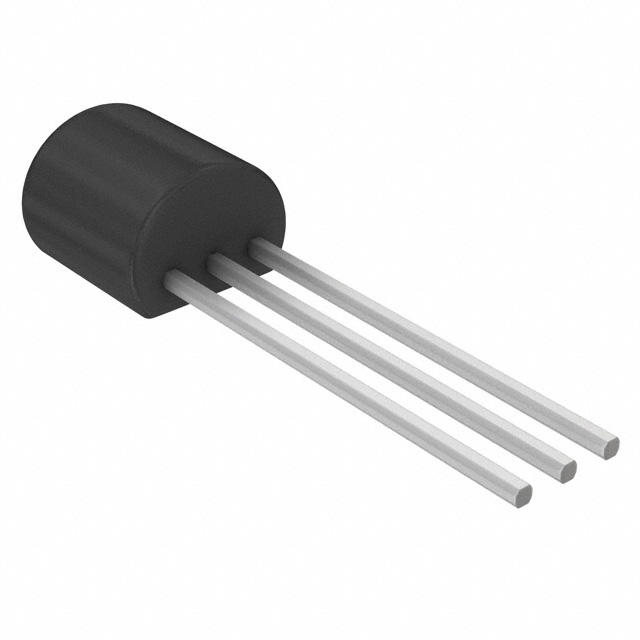
Modern electronic equipment increasingly depends on accurate sensing, conversion, monitoring, and control. From industrial automation systems to portable instruments and smart energy devices, many applications need a dependable voltage level against which other electrical signals can be measured. Voltage references provide this stable electrical standard and help sensitive circuits maintain consistent performance.
A voltage reference is designed to generate a precise output voltage with minimal variation. Its role is different from that of a conventional power supply because it is primarily intended to support measurement accuracy rather than deliver substantial current. When used correctly, it can improve the reliability of analogue circuits, converters, sensors, comparators, and monitoring systems.
Why Are Voltage References Important in Precision Circuit Design?
Voltage References provide a predictable benchmark that allows electronic circuits to interpret signals more accurately. Many measurements are based on the relationship between an incoming signal and a known reference voltage, so any instability in that reference can directly affect the final result.
For instance, a sensor may generate a small voltage representing temperature, pressure, current, or another physical quantity. A data converter then compares this signal with a reference to calculate a digital value. If the reference changes unexpectedly, the reported measurement may also change even though the real-world condition remains the same.
Stable references therefore help improve:
- Measurement repeatability
- Data conversion accuracy
- Sensor consistency
- Comparator threshold stability
- Calibration reliability
- Long-term circuit performance
- Overall system confidence
This makes them especially valuable where even small electrical errors can influence system behaviour.
How Does a Voltage Reference Influence the Error Budget?
Precision systems often use an error budget to estimate how much uncertainty each component contributes to the final measurement.
The voltage reference can be one of the most important elements in this calculation because several of its characteristics may introduce error. Initial tolerance, temperature drift, noise, load variation, and ageing can all affect the output.
A designer may therefore consider the reference alongside the sensor, amplifier, ADC, PCB layout, and environmental conditions.
Rather than choosing a component based solely on its nominal voltage, engineers typically examine how much error it can contribute under worst-case operating conditions.
What Is Reference Voltage Drift and Why Does It Matter?
Voltage drift refers to gradual changes in the output level caused by factors such as temperature or ageing.
A reference might provide excellent accuracy under room-temperature laboratory conditions but behave differently when installed in equipment exposed to changing temperatures. This is particularly important in industrial environments, vehicles, outdoor systems, and remote installations.
How Does Temperature Drift Affect Accuracy?
As the temperature of a semiconductor changes, its internal electrical characteristics can also change. A voltage reference is specifically engineered to minimise this effect, but no practical device is completely immune.
Datasheets commonly express temperature drift as a temperature coefficient, often in parts per million per degree Celsius.
A lower temperature coefficient generally indicates better performance across temperature changes, which can be important in applications such as:
- Precision instrumentation
- Industrial process control
- Smart metering
- Automotive electronics
- Medical measurement equipment
- Remote monitoring systems
The required level of stability depends on the total accuracy target of the system.
Why Should Designers Consider Reference Noise?
Even when the average output voltage remains stable, small unwanted electrical fluctuations may still appear.
This noise can become significant when the reference is used with high-resolution ADCs or very small sensor signals. If reference noise is excessive, the converter may report slightly different values even when the input has not changed.
This can reduce effective measurement resolution and make the system appear less stable.
Low-noise references are therefore particularly useful in applications involving:
- Scientific measurement equipment
- Data acquisition systems
- Medical instrumentation
- High-resolution sensor interfaces
- Calibration equipment
- Precision analogue circuits
Filtering capacitors and careful PCB layout can also help reduce unwanted noise.
How Do Series Voltage References Operate?
A series voltage reference is connected between the input supply and the circuitry using its output.
It regulates its output internally and usually draws only a relatively small amount of operating current. This architecture can be efficient because the device does not continuously shunt significant current away from the load.
Series references are commonly attractive in battery-powered or energy-sensitive designs.
Their advantages can include:
- Low quiescent current
- Efficient operation
- High output accuracy
- Simple circuit integration
- Good suitability for portable equipment
The exact performance varies according to the device and application.
How Does a Shunt Voltage Reference Work?
A shunt reference is connected across the load and regulates voltage by controlling the amount of current flowing through itself.
An external resistor is commonly used to limit current and establish the correct operating conditions.
Shunt references can be useful where circuit simplicity, flexible biasing, or compact implementation is important.
They are often used in:
- Power supply feedback networks
- Threshold circuits
- Voltage monitoring
- Protection circuits
- Low-power analogue systems
The designer must ensure that sufficient operating current is available while keeping power dissipation within acceptable limits.
Why Do ADCs Depend So Heavily on Stable References?
An analogue-to-digital converter transforms an analogue voltage into a numerical value, but that numerical result is typically calculated relative to the converter's reference voltage.
This means that the reference acts as the measuring scale of the ADC.
If the reference increases or decreases, the apparent value of the input may also change. A high-resolution ADC can therefore fail to achieve its expected accuracy if the reference circuit is poorly selected or implemented.
This is why precision data acquisition systems often devote significant attention to reference selection, decoupling, PCB routing, and thermal management.
How Do Voltage References Support DAC Performance?
Digital-to-analogue converters also depend on reference stability.
A DAC creates an analogue output based on a digital code, and the available output range is often determined by the reference voltage. If the reference varies, the resulting analogue output can also vary.
Stable references are therefore useful in systems generating accurate control voltages, programmable outputs, calibration signals, and industrial command signals.
The combined performance of the DAC and its reference determines how accurately the final analogue value can be generated.
What Should Engineers Check Before Selecting a Voltage Reference?
Selecting a suitable device requires understanding the complete operating environment.
Engineers should normally evaluate several factors together rather than focusing on a single specification.
Important considerations include:
- Required output voltage
- Initial accuracy
- Temperature coefficient
- Output noise
- Supply voltage range
- Quiescent current
- Load current capability
- Line and load regulation
- Long-term stability
- Package size
- Operating temperature range
Application priorities determine which of these specifications matters most.
A portable sensor may prioritise power efficiency, whereas laboratory equipment may require exceptionally low drift and noise.
How Can PCB Layout Help Maintain Reference Stability?
Physical circuit layout can strongly influence reference performance.
Switching power supplies, microprocessors, motors, and high-current traces can introduce electrical noise. Heat-producing components can also create temperature gradients across the board.
Designers can improve performance by placing the reference close to the circuits that use it, maintaining short signal paths, providing good grounding, and positioning it away from major sources of heat or switching noise.
Appropriate bypass and output capacitors should also be selected according to the component manufacturer's recommendations.
Where Are Voltage References Used in Modern Electronics?
Voltage references support many types of electronic products and systems.
They can be found in:
- Digital multimeters
- Industrial automation equipment
- Battery management systems
- Smart meters
- Medical electronics
- Sensor modules
- Communication hardware
- Motor control systems
- Test instruments
- Power monitoring equipment
- Embedded control systems
Their function may be largely invisible to the end user, but they can have a major influence on system accuracy.
Why Will Voltage References Remain Critical as Electronics Advance?
Future electronics will rely even more heavily on precise sensing and accurate data processing. Smart factories, electric vehicles, renewable energy systems, advanced medical equipment, robotics, and connected industrial devices all depend on trustworthy electrical measurements.
As ADC resolution and sensor sensitivity continue to improve, reference quality becomes increasingly important because unstable reference voltages can limit the performance of otherwise advanced circuitry.
Voltage references therefore remain essential building blocks for precision electronics. By providing a stable and predictable electrical standard, they help engineers create systems that measure more accurately, control processes more reliably, and maintain consistent performance across demanding operating conditions.











Comments (0)