

How to Build an Effective Pest Prevention Routine at Home

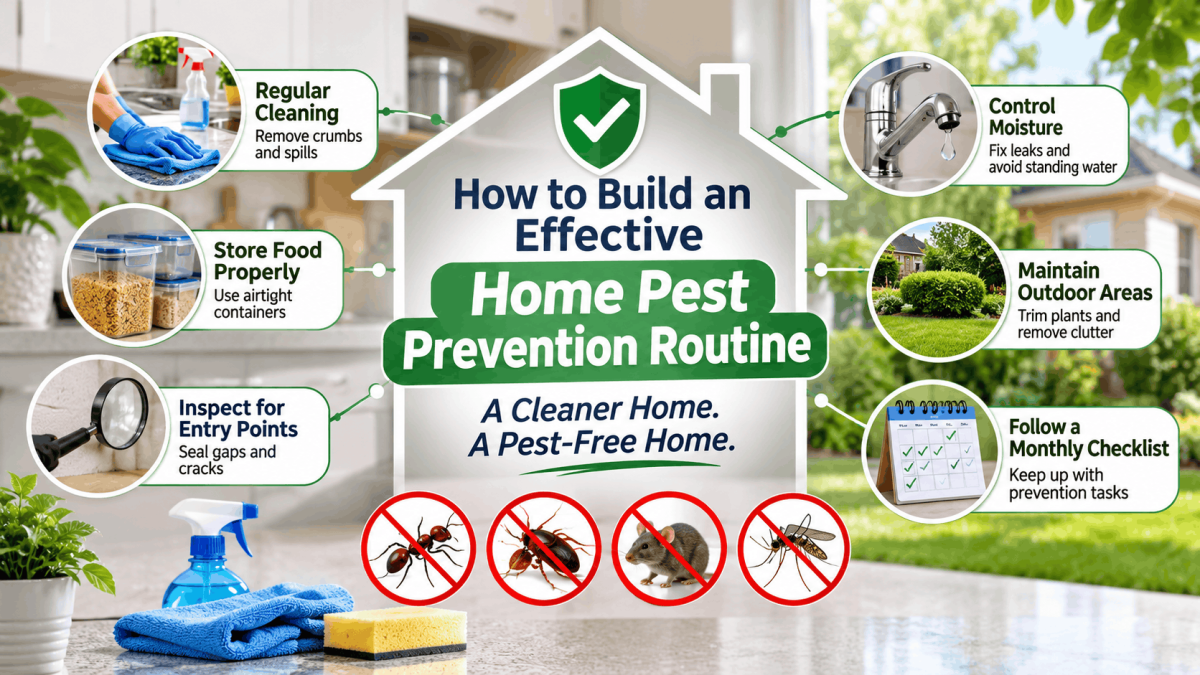
Keeping pests out of your home is easier when prevention becomes part of your regular routine. Insects and rodents often enter properties in search of food, water, warmth, and shelter. Small issues, such as uncovered food, standing water, or gaps around doors, can make a home more inviting to unwanted visitors.
A consistent pest prevention routine helps reduce these risks before they develop into larger problems. By combining simple cleaning habits, regular inspections, and timely maintenance, homeowners can create an environment that is less attractive to common household pests.
Start With a Regular Cleaning Schedule
A clean home is not automatically pest-free, but good housekeeping removes many of the conditions that attract insects and rodents. Food crumbs, grease, and household waste can provide easy sources of nourishment.
Focus on these everyday habits:
-
Wipe kitchen counters and dining surfaces after meals.
-
Sweep or vacuum floors regularly, especially beneath appliances and furniture.
-
Clean spills as soon as they happen.
-
Empty indoor trash bins frequently and use containers with secure lids.
-
Avoid leaving dirty dishes in the sink overnight.
Pay attention to less visible areas, too. Spaces behind refrigerators, ovens, cabinets, and washing machines can collect crumbs and moisture. Cleaning these spots regularly makes it harder for pests to find food and hiding places.
Store Food and Household Supplies Properly
Food storage plays an important role in preventing pest activity. Open packages and poorly sealed containers can attract ants, cockroaches, pantry moths, and rodents.
Transfer dry goods such as rice, cereal, flour, and pet food into airtight containers. Keep these containers in clean, dry cupboards and check stored items for signs of insects or damaged packaging.
Pet food also needs attention. Avoid leaving bowls filled overnight, and store unused food in sealed containers. If you keep birdseed or animal feed at home, use sturdy storage bins that rodents cannot easily chew through.
Inspect Your Home for Entry Points
Even a well-maintained home can experience pest problems if insects and rodents have easy ways to enter. Small openings around pipes, windows, doors, vents, and foundations may provide access.
Make a habit of checking these areas every few weeks. Look for damaged window screens, loose weather stripping, cracks in walls, and gaps around utility lines. Seal suitable openings with materials designed for the surface and location.
Door sweeps can help close gaps beneath exterior doors, while properly fitted screens reduce the chance of flying insects entering through open windows. Also inspect garage doors and basement access points, as these areas are sometimes overlooked.
Control Moisture Around the Property
Many household pests depend on water to survive. Leaking pipes, damp cupboards, clogged drains, and standing water can create favorable conditions for insects and rodents.
Check beneath sinks, around toilets, near water heaters, and behind washing machines for leaks or signs of moisture. Repair plumbing problems promptly and improve ventilation in bathrooms, kitchens, and laundry areas.
Outside, clear blocked gutters and make sure water drains away from the foundation. Empty containers that collect rainwater, including buckets, plant trays, and unused pots. Reducing standing water can also help limit mosquito breeding.
Keep Outdoor Areas Well Maintained
Pest prevention should extend beyond the walls of your home. Overgrown vegetation, piles of leaves, unused equipment, and clutter near the foundation can provide shelter for insects and rodents.
Trim shrubs so they do not touch exterior walls, remove fallen leaves, and keep firewood raised off the ground and away from the house. Store outdoor bins with tight-fitting lids and clean them when food residue builds up.
These steps reduce potential hiding places and make it easier to notice signs of pest activity around the property.
Monitor for Early Signs of Pest Activity
Regular inspections help homeowners identify problems before infestations become difficult to manage. Look for droppings, gnaw marks, damaged food packaging, shed insect skins, unusual odors, and small holes near walls or storage areas.
Pay particular attention to kitchens, basements, attics, garages, and utility spaces. These locations often contain the food, moisture, warmth, or shelter that pests need.
If rodents are a concern, compare available prevention options carefully. The best rat deterrent for a particular property will depend on the entry points, food sources, and conditions attracting the animals. Removing those attractants and blocking access should remain the foundation of a prevention plan.
Make Pest Prevention a Monthly Habit
A simple monthly checklist can help keep prevention tasks manageable. Set aside time to:
-
Inspect cupboards and food storage areas.
-
Check pipes, drains, and other moisture-prone locations.
-
Look for gaps around doors, windows, and utility openings.
-
Clean behind major appliances where practical.
-
Examine the attic, basement, garage, and outdoor storage areas.
-
Remove clutter and dispose of unnecessary packaging.
Keeping a record of unusual activity or recurring problem areas can also help you identify patterns and decide when further action is needed.
Conclusion
An effective home pest prevention routine does not require complicated measures. Consistent cleaning, secure food storage, moisture control, property maintenance, and regular inspections can make a meaningful difference. When homeowners address the conditions that attract pests and respond quickly to early warning signs, they can reduce the risk of recurring problems and maintain a cleaner, more comfortable living space.








Comments (0)