

Why Retail Compliance Needs to Extend Beyond the Checkout
Discover how retail compliance helps businesses manage product safety, customer privacy, supplier obligations and governance across stores and online channels.

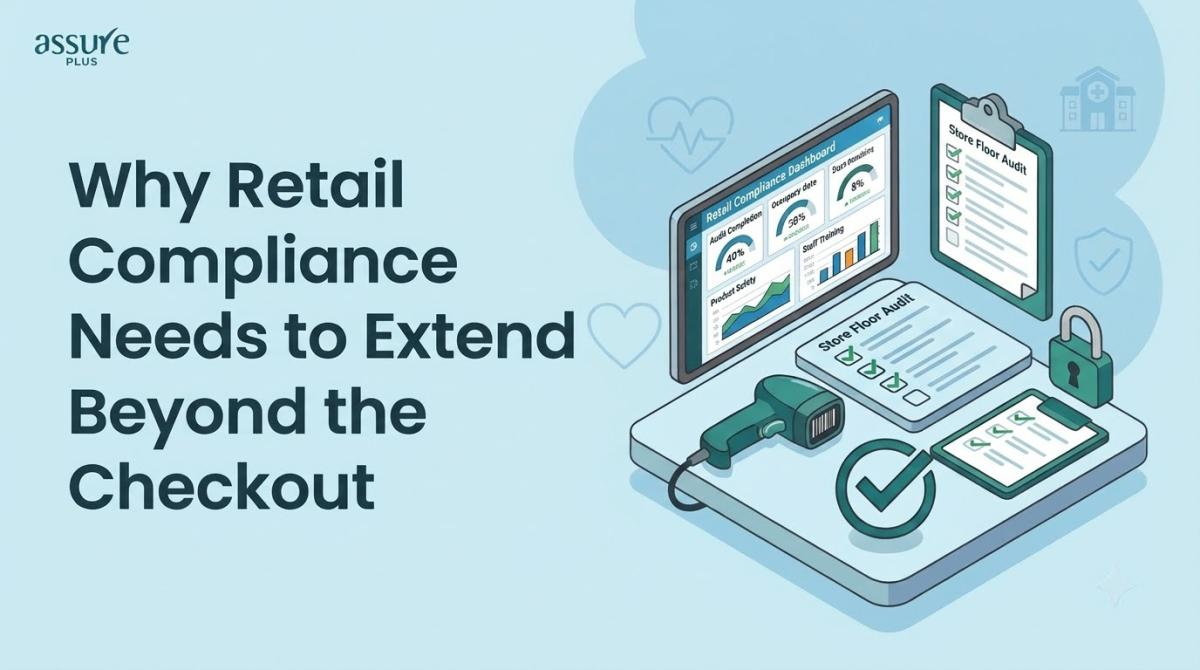
A retailer's responsibilities do not end when a customer completes a purchase. Businesses must consider whether products meet safety requirements, whether customer information is handled appropriately, and whether suppliers follow relevant standards. These responsibilities apply across physical stores, e-commerce platforms, warehouses, and distribution networks.
As retailers introduce new digital services and collect more customer information, compliance has become closely connected to everyday business decisions. A product safety issue can lead to a recall, while inappropriate handling of personal information can damage customer trust. Retail compliance therefore needs to be part of operational planning rather than a task reserved for audit periods.
Why Are Product Safety and Supplier Controls Important?
Retailers often work with manufacturers, importers, wholesalers, and distributors. Although these relationships support product availability, they can create gaps in accountability if safety requirements and responsibilities are not clearly understood.
A product may arrive with incomplete documentation, incorrect labelling or a failure to meet a mandatory safety standard. If checks are inconsistent, the problem may not be discovered until customers have already purchased the product.
The Australian Competition and Consumer Commission explains that businesses selling products must ensure they are safe and comply with applicable mandatory standards and product bans. Its product safety responsibilities guidance also outlines recall and reporting responsibilities for businesses.
Retailers can strengthen oversight by maintaining supplier assessments, recording compliance evidence and tracking issues through to resolution. A consistent process helps purchasing, store operations and compliance teams work from the same information.
How Is Customer Data Changing Retail Compliance?
Retailers collect customer information through loyalty programmes, online accounts, payment services, delivery applications and in-store technology. This information can improve customer experiences, but it also creates responsibilities around collection, access, storage and use.
The use of facial recognition technology in physical stores has brought additional attention to privacy governance. In July 2026, the Office of the Australian Information Commissioner published updated guidance on facial recognition in retail settings following the Bunnings proceedings. The OAIC update on facial recognition technology highlights the need for careful assessment of privacy obligations when retailers consider using this technology.
Retailers should assess the purpose of collecting information, the sensitivity of the data and whether customers receive appropriate notice. They should also establish clear procedures for investigating privacy incidents and assessing notification requirements.
A coordinated risk and compliance framework can connect privacy controls with supplier reviews, audits and incident records. AssurePlus supports these activities through its GRC framework for retail and consumer goods, which addresses areas such as privacy breach management, ethical supply chain audits and compliance monitoring.
What Helps Retailers Maintain Consistent Compliance Across Channels?
Retail businesses often operate through several channels with different teams, systems and procedures. A store may follow one process for product checks, while an online operation uses another. Without shared standards, evidence and responsibilities can become fragmented.
Retailers benefit from maintaining centralised policies, clear control ownership and repeatable audit processes. Compliance reviews should cover physical stores and digital operations, with findings assigned to responsible teams and monitored until resolved.
Technology can help make this work more consistent. AssurePlus also offers integrated operational resilience planning that connects critical services, dependencies, scenario testing, and continuity arrangements. This provides another way to consider how compliance weaknesses or operational disruptions could affect the wider business.
Conclusion
Retail compliance involves more than meeting individual regulatory requirements. It requires consistent oversight of products, suppliers, customer information, and business processes across every sales channel. By connecting compliance evidence with risk assessments, audits, and operational planning, retailers can improve accountability, protect customer trust, and respond more effectively when problems arise.









Comments (0)