

How Smart EV Chargers Prevent Electrical Overloading: A Complete Guide to Dynamic Load Management
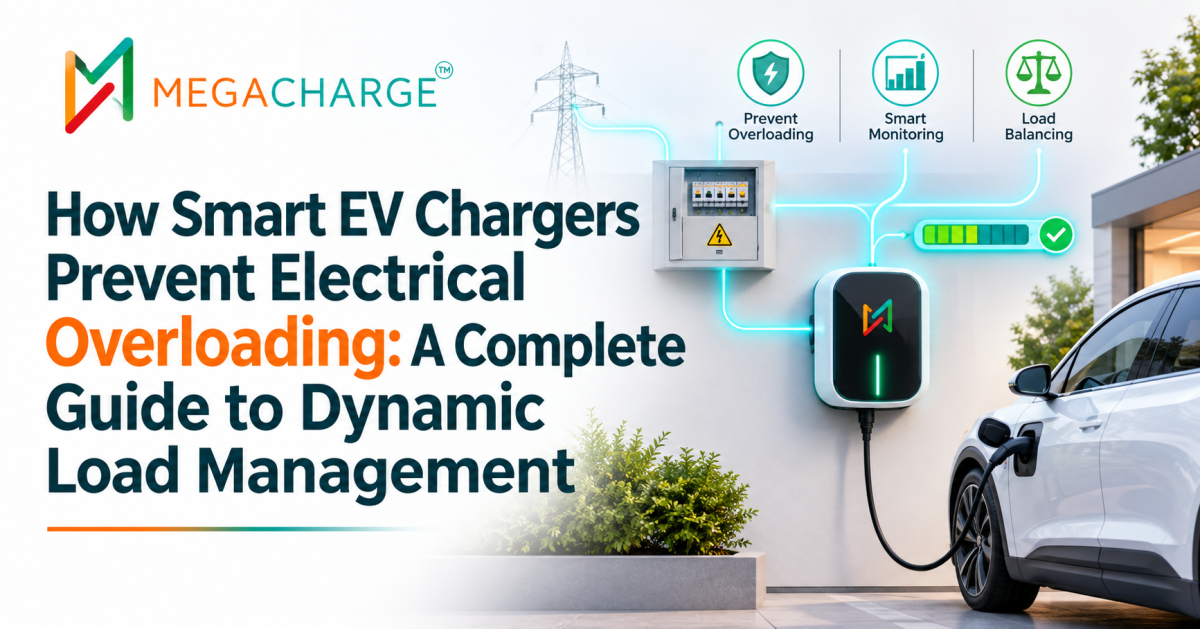
Dynamic load management is a way for an EV charger to adjust how much power it delivers in real time, based on how much electricity the rest of the building is using. Without it, a charger can draw a steady, high current while an oven, heater and dryer run at the same time, and the main breaker trips or the wiring runs hotter than it should. A smart EV charger with load management avoids this by reducing its own current when the building needs the power. This guide explains how it works, where it helps most and what to check before buying.
Why EV Charging Can Overload a Supply
Charging is a long, steady load
Most home appliances draw power in short bursts. An EV charger can draw a high current for hours. Over that time, other loads come and go, so the total demand on the supply keeps changing. If the combined demand exceeds what the breaker or main fuse is rated for, protection devices trip. In a worse case, undersized or loose wiring heats up.
Older installations have limited headroom
Many homes, flats and small businesses have supplies sized long before EVs. Adding a charger on top of existing loads can leave very little margin, particularly in the evening when cooking, heating and charging overlap. Electrical codes generally treat EV charging as a continuous load, so the circuit and supply need to be sized with a margin. Rules differ by country, so have a qualified electrician check your local requirements.
How Dynamic Load Management Works
Step 1: Measure the whole site
A current sensor, often a clamp around the incoming supply or a connection to a smart meter, reports the building’s total consumption. The charger compares this with the allowed supply limit.
Step 2: Adjust the charging current
The charger tells the vehicle how much current it may draw using a standard control signal between the charger and the car. When the house load rises, the charger lowers the allowed current. When the load falls, it raises it again. Charging slows rather than stops, so the car still fills up, usually by morning.
Step 3: Share capacity between chargers
In car parks, workplaces and apartment blocks, one supply may feed several chargers. Load management divides the available current among them, often prioritising by arrival time or user settings. This avoids installing a larger supply for every parking space.
Static, Dynamic and Smart Scheduling: What Is the Difference?
Static load limiting sets a fixed maximum current for the charger, for example a lower value than the hardware could deliver. It is simple but cannot react to changes. Dynamic load management responds to actual site consumption. Smart scheduling shifts charging to cheaper off-peak periods and can run alongside the first two. Many systems combine all three.
Three-phase balance
On three-phase supplies, a smart system can monitor each phase and avoid overloading a single one. Some chargers can also reduce current if one phase is already heavily used.
Where Portable Chargers Fit In
A portable electric car charger is a charging cable with a control box that plugs into a standard or industrial socket and connects to the car. It is useful for travel, rental properties or a second location, and it often charges more slowly than a fixed wall unit. Because it relies on an existing socket and wiring, it deserves extra care.
Check that the socket and circuit are rated for continuous high-current use, and avoid extension cords and multi-way adaptors. A plug and socket that feels warm during charging is a warning sign. Some portable units let you set the maximum current, which is a simple way to match a weaker circuit. Load management features vary, so confirm whether a model can respond to site load or only offers manual current settings.
Benefits Beyond Preventing Trips
Load management can reduce the need for supply upgrades, which can be expensive and slow. It can lower peak demand, which matters where tariffs charge for it. It also supports renewable use: some systems adjust charging to use surplus solar generation rather than exporting it.
What to Look For in a Smart Charger
Check which sensor types it works with and whether the sensor is included. Confirm it supports the load control you need, such as dynamic control, phase monitoring or multi-charger sharing. Look for adjustable current limits, a clear app or display and a safe fallback that reduces current if communication with the meter or sensor is lost. Confirm the charger meets standards recognised in your country, and that a qualified installer will commission it. Ask what happens during a network outage, because charging should remain safe even if the app goes offline.
Mega Charge supplies EV charging products, so ask about load management options, sensor compatibility and installation requirements for your supply before choosing a model.
Common Mistakes to Avoid
Assuming the charger’s maximum rating is the right setting for your home. Ignoring the main supply capacity. Using a portable unit on an old socket or an extension lead. Placing the current sensor incorrectly, which causes inaccurate readings. Skipping a professional installation, which can also affect insurance and warranty.
Conclusion
Overloading happens when long, steady charging meets a supply with limited headroom. Dynamic load management prevents it by measuring the whole site, adjusting current in real time and sharing capacity between chargers. When choosing a smart EV charger or a portable unit, check sensor compatibility, safe fallback behaviour and the condition of your wiring. For help matching a charger to your electrical setup, Mega Charge can advise on options, and a qualified electrician should confirm the installation.








Comments (0)