

How to Choose Pure Aloe Vera Gel in the UK: Ingredients, Quality and Safety Guide

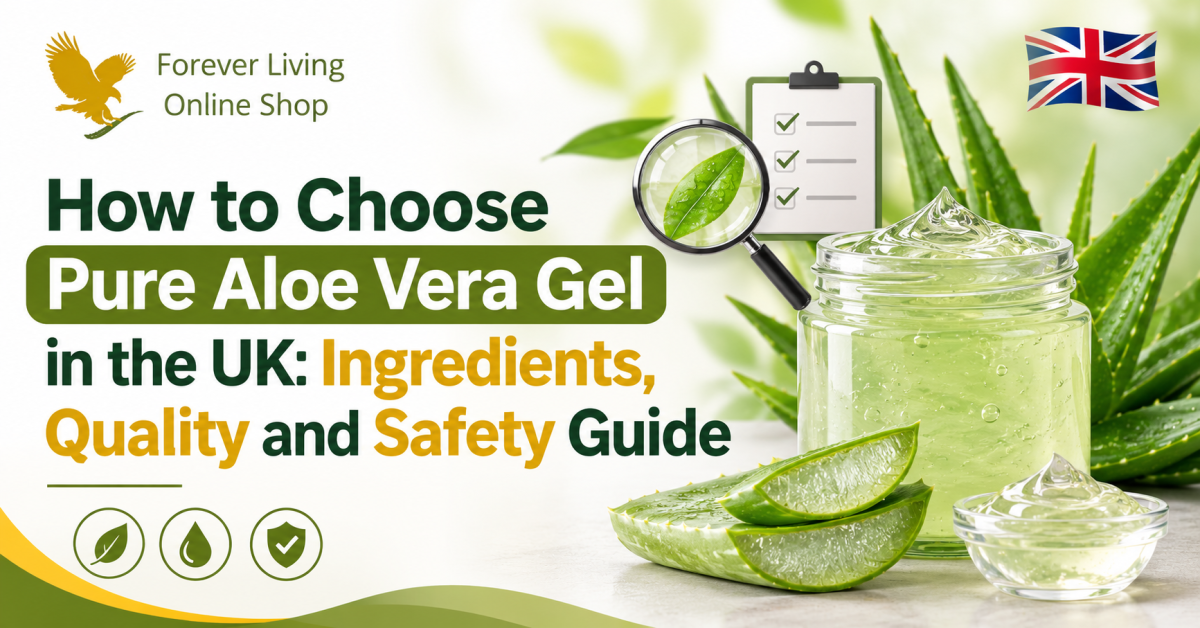
Aloe vera gel is the clear, jelly-like substance from the inner leaf of the aloe plant, and it is widely used on skin for light hydration and a cooling feel. In the UK, the label “pure” is not always straightforward, because products range from almost entirely aloe to formulas where aloe is one ingredient among many. This guide explains how to read a label, judge quality and use aloe safely. It also covers where body-care products such as Forever Living aloe heat lotion differ from a simple gel, so you pick the right product for the job.
What “Pure Aloe Vera Gel” Should Mean
Check the ingredient list, not the front of the pack
Phrases like “pure”, “100% natural” or “aloe-based” are marketing terms. The ingredient list is the reliable guide. In the UK and EU, cosmetic ingredients are listed in descending order of quantity using INCI names. Aloe gel appears as Aloe barbadensis leaf juice or similar. If that is the first ingredient, aloe is the main component. If it appears after several other items, the product is mostly something else.
Expect a few supporting ingredients
Fresh aloe gel is mostly water and spoils quickly, so a shelf-stable gel usually contains a preservative and a thickener. That is not a flaw. It is what keeps the product safe once opened. A genuine pure aloe gel will have a short list, with aloe first and only the ingredients needed for stability and texture.
Quality Signals Worth Checking
Stabilised aloe and processing
Aloe gel breaks down when exposed to air and light, so quality products use stabilisation methods. Ask or look for information on how the gel is processed and whether the product states the aloe content on the pack or website.
Independent certification
Some aloe suppliers carry a certification from the International Aloe Science Council, which assesses aloe raw material. Seeing it is a useful signal, but it is not a legal requirement, so absence does not always mean poor quality. Check that any claim can be verified.
Colour, smell and texture
Good gel is usually clear to lightly cloudy and has a mild, fresh smell. Bright green or blue colour suggests added dye. Strong perfume can irritate sensitive skin. A watery, separated or stringy texture may indicate poor stability.
Safety Basics for UK Buyers
Regulation and labelling
Cosmetic products sold in the UK must comply with UK cosmetics regulations. They should show the responsible person’s name and UK address, a batch code, a period-after-opening symbol and a full ingredient list. If these are missing, think twice before buying, especially from unknown online sellers.
Patch test first
Aloe is generally well tolerated, but allergies and irritation can happen. Apply a small amount to the inner forearm and wait 24 hours before using it on the face or larger areas. Stop if you notice redness, itching or swelling.
Know the limits
Aloe gel is a cosmetic aid for dry, sun-tired or irritated-feeling skin. It is not a treatment for burns, wounds or skin conditions. For severe sunburn, blistering, infection or persistent rashes, speak to a pharmacist or GP. Avoid applying to broken skin unless a healthcare professional advises it.
Not all aloe products are for drinking
Gel made for skin is not the same as a drink formulated for consumption. Do not swallow topical products, and follow the label of any ingestible product carefully.
Gel, Lotion or Warming Product: Choosing the Right One
A plain gel suits light hydration, after-sun care and use under moisturiser. A lotion gives more cushioning for daily body care. Warming products, such as Forever Living aloe heat lotion, are designed for a different purpose: a lotion that gives a warming sensation when massaged in, often used before or after exercise. They are not the same as a cooling gel, and they may contain ingredients that can irritate sensitive skin or the eyes. Read the directions, avoid broken skin and sensitive areas, and wash hands after use.
How to Store and Use Aloe Gel
Keep the container tightly closed and away from heat and direct sun. Many people keep gel in a cool cupboard, and some like the feel of a chilled tub. Use clean hands or a spatula to avoid contaminating the product, and respect the period-after-opening symbol on the pack. Apply a thin layer, let it absorb and follow with a moisturiser if your skin needs more.
If you grow your own plant, use only the clear inner gel and rinse away the yellow sap near the leaf skin, because it can irritate. Homemade gel has no preservative, so use it quickly and refrigerate any leftover for a short time.
A Simple Buying Checklist
Aloe is listed first in the ingredients. The list is short and recognisable. Labelling shows the UK responsible person and batch code. The colour and scent are mild. The seller is clear about aloe content and processing. You have patch tested before regular use.
If you want a branded range, Forever Aloe Vera Products are sold through independent distributors, so check the label and ask the seller for the current ingredient list for the specific item you are buying.
Conclusion
To choose pure aloe vera gel in the UK, read the ingredient order, look for sensible preservation and clear labelling, and test on a small area first. Use gel for light hydration, choose lotions for body care and treat warming products as a separate category with their own directions. If you are comparing ranges, ask for the full ingredient list of each item, and check how Forever Aloe Vera Products compare against your priorities before you buy.










Comments (0)