

Organic Bamboo and OEKO-TEX® Standard 100 Explained: What the Labels Actually Mean
Walk through any kids' bedding section and you'll see the same words repeated: organic, natural, eco-friendly, tested, and safe. They look reassuring, but they don't all mean the same thing, and some mean very little at all. If you're choosing something your child will sleep under for hours every night, such as a bamboo weighted blanket, it pays to know what the labels actually promise. This guide breaks down "organic bamboo" and OEKO-TEX® Standard 100 and shows how to read a fabric label with confidence.
What Does "Organic Bamboo" Really Mean?
Bamboo is the plant, not always the fabric.
Bamboo grows quickly and needs relatively little attention, which is why it has a green reputation. But bamboo fabric isn't woven from raw stalks. The plant is usually broken down and turned into fiber, most often through a process that creates viscose or rayon, or through a closed-loop method that produces lyocell. The result is soft and smooth, but how the fiber is made affects both its feel and its environmental footprint.
Organic is about how the plant is grown.
In general, "organic" refers to how the raw material is farmed, with limits on synthetic pesticides and fertilizers. The term should be backed by a recognized certification, such as GOTS for organic fibres and processing. If a product says "organic bamboo" but names no certifier, treat it as a claim to question rather than proof.
Why "organic" and "natural" aren't the same
"Natural" is even looser. A fiber can come from a plant and still be heavily processed with chemicals. Natural origin tells you what the raw material was, not how it was treated.
What Does OEKO-TEX® Standard 100 Test For?
Harmful substances in the finished product
OEKO-TEX® Standard 100 is an independent testing system that checks textiles for substances that may be harmful to health. According to OEKO-TEX, the testing covers over a thousand substances, including things like formaldehyde, heavy metals, pesticides, and certain dyes. Every component of the product, including thread, labels and fillings, is tested, not just the outer fabric.
The four product classes
Products are tested against limits based on how they're used. Class I is for babies up to 36 months, Class II for items with direct skin contact, Class III for items without direct skin contact, and Class IV for decorative materials. The closer a product sits to the skin, the stricter the limits. For kids' bedding, look for Class I or II.
What it doesn't tell you
This is where marketing gets slippery. OEKO-TEX® Standard 100 says nothing about whether fibres were organically grown, how much water a factory used, or how workers were treated. It also can't predict an individual child's reaction. A product can be OEKO-TEX® certified without being organic and organic without being OEKO-TEX® certified. They answer different questions.
How to Read a Fabric Label Like a Pro
Check the fiber percentage.
Look at the content tag. "Bamboo" in a product name can still mean a blend with polyester or cotton. The legal fiber content is the part that counts.
Verify the certification.
A logo isn't proof on its own. OEKO-TEX® certificates carry a number you can check through the organization's online Label Check, usually by scanning the QR code on the label. If a brand claims certification but gives no number, ask for it.
Spot vague marketing language.
Be cautious with words like "eco," "natural," "pure," "chemical-free," and "green." They have no fixed legal meaning. Look for specific, checkable statements instead: which certification, which product class, which fiber.
Why This Matters for Your Child's Sleep
Children's bedding stays in close contact with their skin for hours, so what it's made of matters. Fabric that irritates, traps heat, or feels scratchy can interrupt sleep without parents realizing it. If your child wakes often or sleeps restlessly, it's worth reviewing the whole setup, and this guide on wrong bedding child sleep problems explains the common signs to watch for.
Putting It Together: A Quick Checklist
Before you buy
- Check the fibre content on the tag
- Look for a named organic certification if "organic" is claimed
- Confirm OEKO-TEX® Standard 100 and the product class
- Verify the certificate number online
- Check the care instructions and return policy
An example in practice
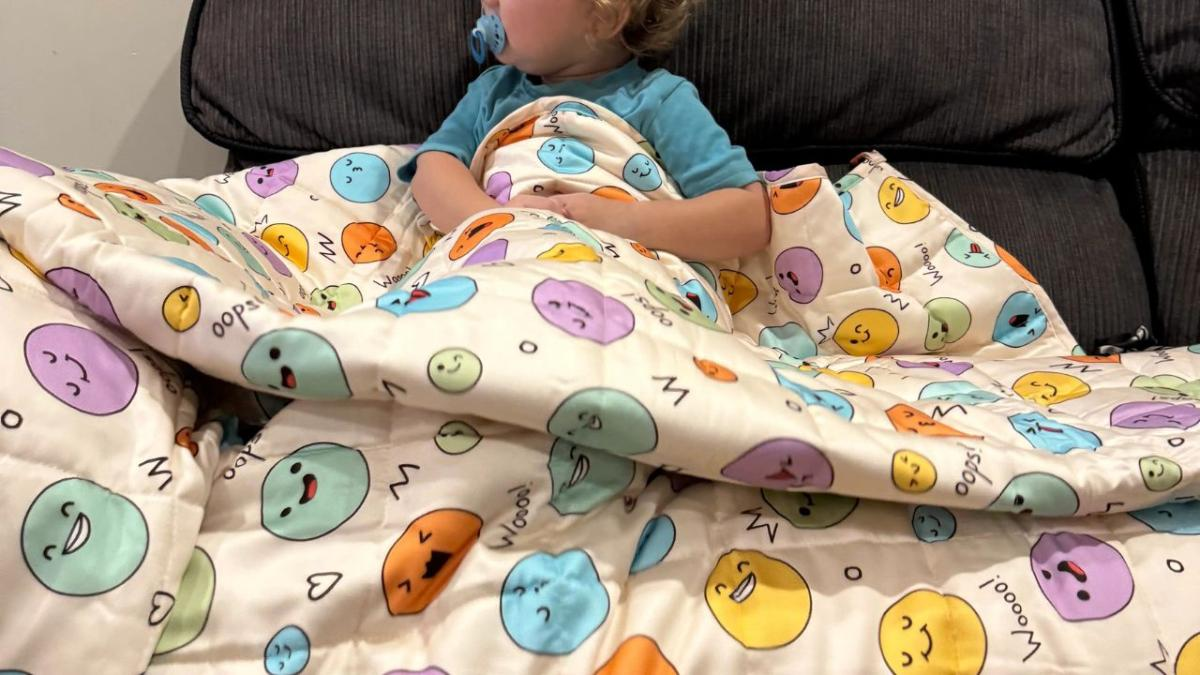
A children's weighted blanket is a good test case, because it sits against the body for hours. Auteeze lists its kids' range as made from organic bamboo and certified to OEKO-TEX® Standard 100, so a careful parent can follow the steps above: ask for the certificate number, confirm the product class and read the care label.
The Takeaway
Labels are useful when you know what they cover. "Organic" is about how a fibre is grown, OEKO-TEX® Standard 100 is about harmful substances in the finished product, and neither guarantees how a particular child will react. Read the fine print, verify certifications and choose what suits your child's skin and sleep.
Auteeze is a kids-focused online store offering thoughtfully designed sensory comfort products that support better sleep, relaxation, and emotional wellbeing. The range includes bamboo weighted blankets, memory foam pillows, and other child-friendly sensory essentials made to provide calmness and comfort. Each product is created with safe, soft, and high-quality materials to help children with sensory needs feel secure and sleep more peacefully every night.









Comments (0)