

Enterprise AI Agents Bring Structure to Business Work
Learn how enterprise AI agents support business workflows through connected systems, defined permissions, clear responsibilities, and measurable operational outcomes.

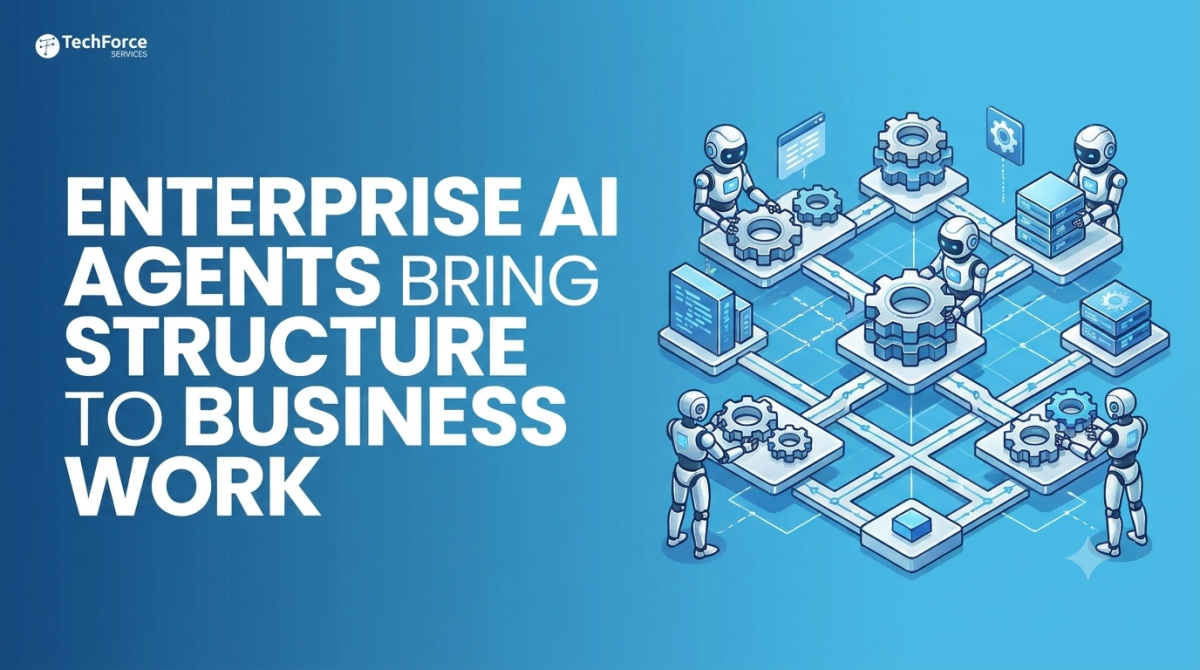
Enterprise AI agents are moving from experimental assistants toward practical participants in business operations. Rather than only summarising information or drafting responses, they can be configured to retrieve context, make decisions within defined limits, and perform approved actions across connected systems. This shift makes enterprise AI agents relevant to organisations looking to reduce repetitive work while maintaining control over business processes.
The challenge is not simply whether an agent can complete a task in a demonstration. Businesses need to know whether it can perform consistently, respect access rules, and respond appropriately when a situation falls outside its assigned scope. Successful adoption depends on designing the work around the agent, not adding an agent to an already confusing process.
Why Are Businesses Looking Beyond Traditional Automation?
Traditional automation is effective when a process follows stable rules and predictable inputs. It can move data between systems, trigger notifications, or complete routine transactions. But many enterprise workflows involve requests expressed in natural language, incomplete information, or decisions that depend on context.
An AI agent can interpret a request, search relevant information, and select from configured skills or actions. This makes it useful for tasks such as gathering case details, preparing a response, identifying missing information, or initiating a service workflow.
The distinction is important. An agent should not be given broad authority simply because it can reason through a request. Its responsibilities need to be tied to a defined business outcome, with clear limits on what it may access or change.
What Does an Enterprise Agent Need to Work Reliably?
An agent depends on the quality of its context. If customer details, service history, product records, and internal policies are spread across disconnected applications, the agent may lack the information needed to act correctly. Connected enterprise knowledge can help provide a more complete view of the task.
DevRev’s Agent Studio documentation describes agents that can search workspace knowledge and take actions based on their configured goals and skills. That capability makes the underlying information architecture especially important. Businesses exploring enterprise knowledge graph and AirSync integration can consider how connected records and synchronised systems support the context agents require.
Workflow design also matters. An agent should know when a task is complete, which system is authoritative, and what to do when information conflicts. Clear handoff rules prevent an automated process from continuing simply because it has not recognised an exception.
How Can Organisations Keep AI Agents Accountable?
Trust requires more than a successful response. Enterprise AI agents need appropriate permissions, activity monitoring, and a way to escalate sensitive or uncertain decisions. Actions involving financial commitments, customer entitlements, or changes to critical records may require human approval.
The NIST AI Risk Management Framework provides a useful reference for organisations establishing risk management practices around AI systems. Its emphasis on governing, mapping, measuring, and managing risk can help teams treat agent deployment as an ongoing operational responsibility.
Businesses should also evaluate agents against real workflow conditions. Useful measures include task completion, error rates, escalation frequency, time saved, and user satisfaction. These measures reveal whether automation is improving the process or merely shifting work to another team.
TechForce Services supports organisations exploring enterprise AI agents for business operations, alongside connected knowledge foundations that can help agents access relevant business context.
Conclusion: What Should Guide the Next Stage of Agent Adoption?
Enterprise AI agents can make business workflows more responsive when their roles are clearly defined and their information sources are reliable. Organisations should begin with a specific operational need, establish permissions and escalation paths, and measure performance before expanding autonomy. The goal is not to remove people from every process. It is to give teams dependable assistance while keeping responsibility for important decisions visible and controlled.










Comments (0)