

Programmable Logic Circuits: How Do They Create More Adaptable Electronic Systems?
Explore how Programmable Logic Circuits work, their key types, benefits, applications, and role in modern digital systems, automation, control, and high-speed electronic design.

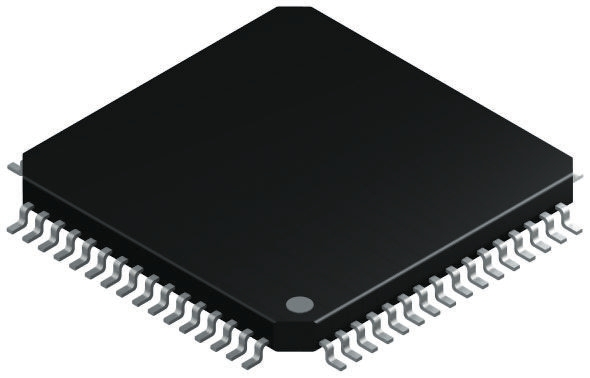
Electronic systems are expected to perform more tasks, react faster, and support greater levels of automation than ever before. This has created strong demand for hardware that can be configured around specific technical requirements rather than being limited to one fixed function. Programmable logic provides that flexibility by allowing designers to define how digital hardware behaves.
From compact control systems to advanced industrial equipment, programmable devices can manage signals, coordinate operations, and perform complex digital processing. Their ability to combine speed, flexibility, and integration makes them valuable in applications where traditional fixed logic may not provide enough adaptability.
Why Are Programmable Logic Circuits Valuable for Digital Engineering?
Programmable Logic Circuits give engineers the ability to create customised digital functions inside a configurable semiconductor device. Instead of connecting many individual logic components to achieve a specific result, designers can program one device to perform multiple operations according to the needs of the system.
This can make product development more efficient because changes to digital behaviour may be implemented through a new configuration rather than a major circuit redesign. Engineers can therefore test different ideas, refine system performance, and introduce new functionality while maintaining the same basic hardware platform.
The technology is especially useful where precise timing and rapid response are essential.
How Do Programmable Circuits Make Hardware More Flexible?
Traditional hardware normally performs functions determined during manufacturing. Programmable devices introduce another approach by allowing internal logic resources to be configured after the device has been produced.
This means a single component may be used to create many different types of digital systems.
A designer can configure programmable logic to handle tasks such as:
- Signal selection
- Timing generation
- Data comparison
- Communication control
- Pulse counting
- Digital filtering
- Motor coordination
- Interface management
The exact functionality depends on the programmed architecture.
What Makes Hardware Programming Different From Software Programming?
Software programming usually tells a processor which instructions to execute in a particular sequence. Hardware programming describes how digital logic should be physically organised inside a programmable device.
When the design is implemented, the programmable component creates interconnected logic structures that operate directly in hardware.
Why Does This Difference Matter?
Dedicated hardware paths can perform operations without waiting for a processor to complete a long sequence of instructions. Multiple logic sections may also operate independently.
This provides a major advantage in systems that require extremely predictable timing or simultaneous processing of many signals.
Which Building Blocks Are Used Inside Programmable Logic?
Programmable devices contain different internal resources that engineers can combine according to the requirements of a design.
How Do Logic Functions Make Decisions?
Digital logic resources process binary values represented by two electrical states. These resources can perform operations such as AND, OR, NOT, and XOR.
By combining many simple logical operations, engineers can create complex control architectures, data-processing functions, and state machines.
Why Are Registers Important?
Registers temporarily hold digital information and help programmable devices perform sequential operations. They are particularly important in counters, timers, communication circuits, and synchronised data-processing systems.
How Do Routing Resources Connect Everything Together?
Programmable routing networks connect logic resources with each other and with external input and output pins.
Changing the routing configuration can completely alter the functionality of the device without changing the physical component itself.
What Types of Programmable Logic Devices Can Engineers Choose?
Programmable logic is available in several forms, each suitable for different levels of system complexity.
Common technologies include:
- Simple Programmable Logic Devices
- Programmable Array Logic
- Complex Programmable Logic Devices
- Field Programmable Gate Arrays
- Programmable System-on-Chip platforms
A smaller device may be sufficient for basic logic replacement, while larger programmable architectures can support sophisticated processing and communication functions.
Why Are CPLDs Suitable for Predictable Control Tasks?
Complex Programmable Logic Devices are commonly used where designers need more functionality than a simple PLD can provide but do not require the full capacity of a large FPGA.
CPLDs can perform control, decoding, interface management, and timing operations with predictable behaviour.
They are often used for system start-up control, power sequencing, industrial interfaces, embedded electronics, and communication management.
Why Can FPGAs Handle Demanding Digital Workloads?
Field Programmable Gate Arrays provide significantly greater logic capacity and integration.
Modern FPGA architectures may include memory blocks, digital signal-processing resources, high-speed communication interfaces, programmable logic, and embedded processor capabilities.
One of their greatest advantages is parallel execution. Different sections of the FPGA can perform separate operations at the same time.
This makes FPGAs suitable for:
- Real-time image processing
- High-speed networking
- Machine vision
- Data acquisition
- Digital communications
- Signal analysis
- Hardware acceleration
- Advanced industrial control
How Can Programmable Logic Improve System Response Time?
Many applications depend on immediate responses to changing input conditions.
A programmable device can monitor inputs continuously and trigger an output as soon as the programmed condition is detected. Because the required functionality is implemented directly in hardware, response times can be highly predictable.
This is particularly useful in automation, measurement, safety monitoring, and high-speed communication systems.
Why Is Programmable Logic Useful in Industrial Environments?
Industrial systems often combine sensors, actuators, communication interfaces, motors, and monitoring equipment.
Programmable logic can coordinate these elements while maintaining precise timing.
For example, a programmable device could monitor encoder signals, control a motor, check safety conditions, and exchange information with another controller at the same time.
This makes programmable technology useful in automated machinery, robotics, process equipment, inspection systems, and production control.
How Can Programmable Devices Simplify Circuit Boards?
Building complex control systems from individual logic chips can increase component count and wiring complexity.
A programmable component can integrate many digital functions into a single device.
Possible advantages include:
- Fewer separate ICs
- Reduced circuit-board space
- Simpler signal routing
- Lower interconnection complexity
- Easier design updates
- Better integration of control functions
This can make hardware architectures easier to manage while supporting greater functionality.
What Should Designers Evaluate Before Selecting a Device?
The correct programmable component should match both present and future system requirements.
Engineers should consider:
- Number of logic resources
- Available memory
- Required processing speed
- Input and output count
- Communication interfaces
- Power requirements
- Operating temperature
- Package type
- Development tools
- Device availability
Choosing a device with some additional capacity can also provide room for future feature expansion.
How Can Programmable Logic Support Intelligent Machines?
Modern machines are becoming more connected and capable of processing larger amounts of information.
Programmable logic can support these systems by performing fast control operations close to the hardware. This is useful in applications where information must be processed immediately instead of being sent to a remote computer.
Such capabilities make programmable hardware increasingly relevant to robotics, smart manufacturing, edge computing, automated inspection, and intelligent sensing systems.
Why Could Programmable Logic Become Even More Important in the Future?
Future digital systems will require greater processing performance, lower latency, and improved adaptability.
Programmable hardware can meet these needs by allowing engineers to optimise logic around specific workloads. Instead of depending entirely on general-purpose processing, designers can create specialised hardware paths for tasks that need faster execution.
This may become increasingly important in artificial intelligence, advanced communications, autonomous systems, machine vision, and high-speed industrial networks.
Why Are Programmable Logic Circuits a Powerful Choice for Modern Design?
Programmable Logic Circuits combine configurable hardware with rapid digital processing, giving engineers greater freedom when developing advanced electronic systems. Their ability to integrate multiple functions, execute operations in parallel, and adapt to changing technical requirements makes them valuable across many industries.
As electronic products continue to demand more intelligence, connectivity, and real-time performance, programmable logic will remain an important technology for creating systems that are efficient, responsive, and capable of evolving with future requirements.













Comments (0)