

Credit Bureau API: How It Works and Why Lenders Are Moving to It
Learn what a credit bureau API is, how it speeds up credit checks, and what to look for before you integrate one into your lending or fintech product.
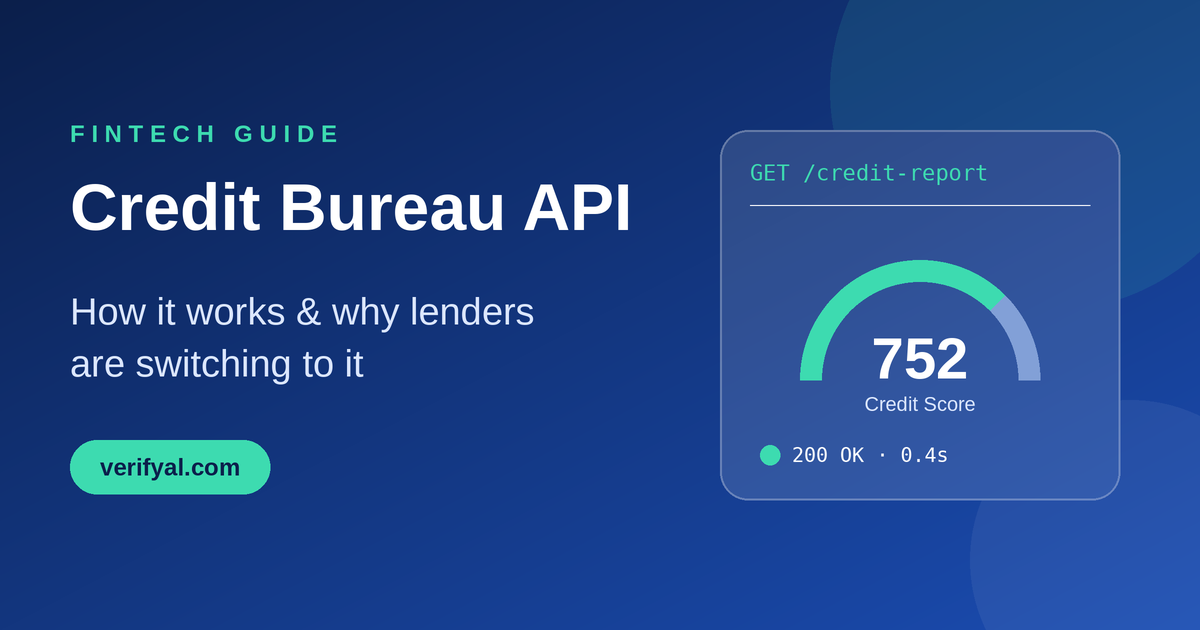
A few years ago, checking someone's creditworthiness meant paperwork, phone calls, and a lot of waiting. Today, a borrower can apply for a loan on their phone and get a decision in minutes. A credit bureau API is a big part of what makes that possible.
If you run a lending business, a fintech app, or any product that needs to assess risk, here's a plain-English look at what these APIs do and how to choose one.
What Is a Credit Bureau API?
A credit bureau API is a connection that lets your software request credit information straight from a credit bureau. Your system sends a request with the applicant's details and gets back structured data, such as credit score, repayment history, active loans, and credit enquiries.
There's no manual lookup and no waiting on a third party. Your system asks, the bureau answers, and your decision engine uses the result right away.
Why Businesses Are Switching to It
1. Speed. Instant responses mean faster approvals. In lending, a delay of even a few hours can cost you the customer.
2. Fewer manual errors. Typing details into portals or reading PDF reports invites mistakes. An API passes data in a consistent format.
3. Better scalability. Whether you handle 50 applications a day or 50,000, the integration works the same way, with no need to grow a verification team.
4. Smarter risk decisions. With credit data flowing into your scoring model automatically, you can set rules, flag risky profiles, and approve good applicants with more confidence.
5. A smoother customer experience. Applicants don't want to upload documents and wait days. A quick, automated check makes onboarding feel effortless.
Who Uses a Credit Bureau API?
- Banks and NBFCs for loan underwriting
- Fintech and digital lending apps
- Credit card issuers
- Buy-now-pay-later platforms
- Insurance and leasing companies
- Property and rental platforms that screen applicants
What to Look for Before You Integrate
Not every provider is the same. Before you commit, check these points:
- Data coverage and accuracy: Is the data fresh and complete?
- Response time: Can it perform under heavy traffic?
- Security and compliance: Look for encryption, consent handling, and compliance with local data protection and credit reporting regulations.
- Documentation: Clear docs and sandbox access save your developers weeks.
- Support: When something breaks at 2 a.m., you want a real person to answer.
- Pricing transparency: Avoid hidden per-call charges that appear after launch.
Tips for a Smooth Integration
Start in a sandbox environment and test with sample data before going live. Always get explicit consent from the applicant before pulling their credit data, and store only what you need. Build fallback logic too, so a temporary API timeout doesn't block your whole application flow.
It also helps to pair credit data with identity verification, so you know the person applying is who they say they are. Platforms like Verifyal focus on verification solutions that fit into this kind of workflow, which makes it easier to build a complete, trustworthy onboarding process.
Final Thoughts
A credit bureau API isn't just a technical upgrade. It changes how fast and how fairly you can serve customers. Faster decisions, cleaner data, and less manual work add up to a real competitive edge, whether you're a startup or an established lender.
If you're planning to add credit checks to your product, choose a provider carefully, test thoroughly, and keep compliance at the center of the build.

Verify AL offers fast, secure verification and credit report API solutions that help businesses make confident, fact-based decisions. Visit verifyal.com.












Comments (0)