

Why Does a Circuit Breaker Buzz Even When It Has Not Tripped?

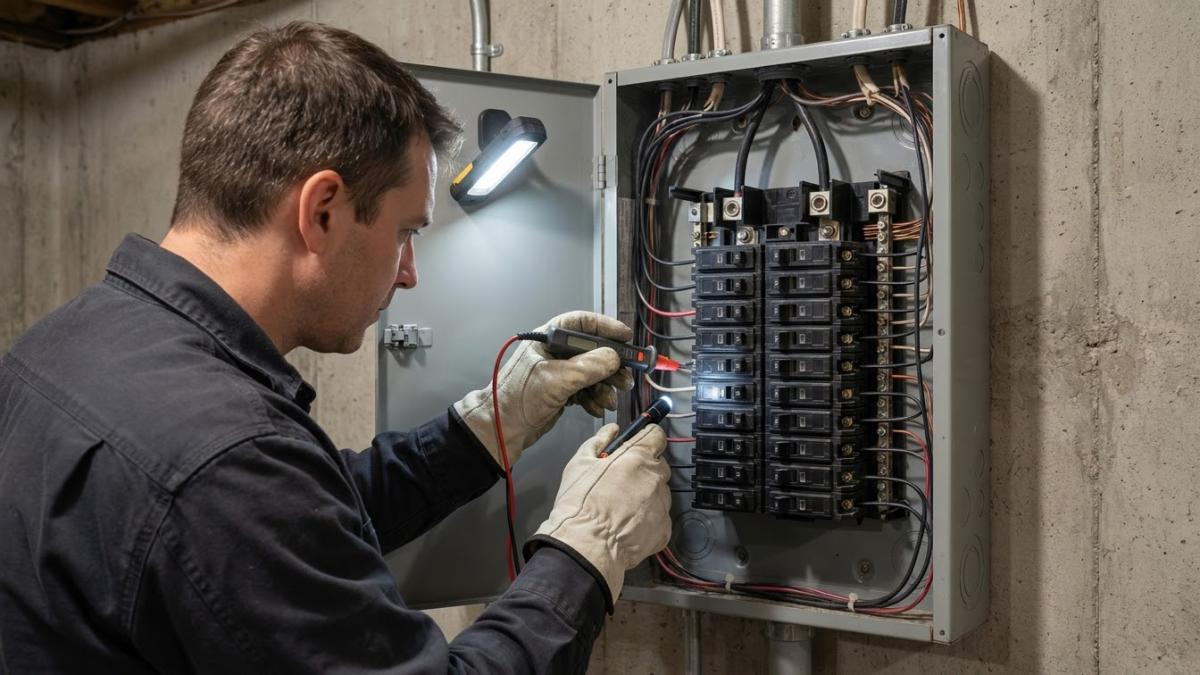
A homeowner hears a faint buzzing sound coming from the electrical panel while the air conditioner and other appliances are running. None of the circuit breakers appear tripped, and the lights work normally. However, the noise becomes louder at certain times of day.
Electrical panel buzzing can result from several conditions, including components responding to electrical loads, deteriorated connections, or defective equipment. Some electrical devices produce ordinary operating noise, but new, persistent, or worsening buzzing from a breaker panel deserves professional assessment. The absence of a tripped breaker does not establish that the installation is safe.
Why Electrical Equipment Can Produce Sound
Certain electrical components experience small mechanical forces associated with alternating current and magnetic fields. Depending on their design, these forces can produce a faint hum during ordinary operation.
However, the sounds expected from transformers or other equipment should not automatically be considered normal for every circuit breaker. A qualified electrician should identify which component is producing the noise. The sound's location, timing, and relationship to connected loads can help narrow the investigation.
Can a Loose Connection Cause Buzzing?
A deteriorated or loose electrical connection can create abnormal electrical behavior and localized heating. Some faults may produce intermittent sounds associated with arcing or vibration.
However, buzzing alone cannot identify a particular connection defect. The electrician should inspect the panel using appropriate safety procedures and test relevant components where necessary. Homeowners should not remove the panel cover or attempt to tighten breakers or terminals. Electrical panels contain hazardous energized parts even when individual breakers are switched off.
Why a Breaker May Not Trip During a Problem
Circuit breakers are designed to respond to specified overcurrent conditions. They do not detect every possible electrical defect, and their operation depends on the type and magnitude of the fault.
A high-resistance connection may generate significant localized heat without creating enough current to trip a conventional breaker. However, not every buzzing panel has this type of defect. The electrician should evaluate the electrical conditions and protective equipment rather than judge safety solely from breaker position.
How Large Appliances Influence Panel Noise
Air conditioners, motors, and other substantial loads can change the current flowing through electrical equipment. If buzzing becomes noticeable only when a particular appliance runs, that pattern may help the electrician identify where to investigate.
However, the appliance is not necessarily defective. The condition could involve a breaker, connection, or another component in the supply circuit. Recording the timing of the noise is useful, but homeowners should avoid repeatedly operating equipment to reproduce a potentially hazardous symptom.
What Warning Signs Require Urgent Attention?
Buzzing accompanied by burning odors, smoke, visible sparking, discoloration, or unusual heat is particularly concerning. Occupants should avoid touching the panel and seek prompt qualified assistance.
Do not repeatedly reset breakers or open electrical enclosures to look for the source. If there is smoke, fire, or another immediate threat, leave the affected area and call emergency services. A panel can contain dangerous faults even while electricity continues reaching household circuits.
Can Replacing One Breaker Solve the Problem?
A defective breaker may require replacement, but the electrician should first determine whether the issue involves that breaker or the panel's connections and other components.
Replacement equipment must be listed or approved for the specific panel. A breaker that appears physically compatible is not necessarily suitable. If damage extends beyond one component, broader corrective work may be necessary. Replacing a breaker without addressing the actual source can allow the problem to continue.
When Is Professional Electrical Repair Necessary?
Professional Electrical Repair can involve identifying the noise source, evaluating panel components, and testing the relevant circuit. The repair may be limited to a specific component or require correction of a more substantial installation defect.
The homeowner should ask what caused the noise and whether any associated equipment needs further attention. A qualified assessment provides a safer solution than assuming buzzing is harmless because the breaker has not tripped.
Conclusion
A buzzing circuit breaker or electrical panel may indicate ordinary component vibration or a serious electrical defect. The sound must be evaluated in context, particularly when it is new or accompanied by heat or unusual odors.
Understanding electric arcing helps explain why certain electrical faults can generate energy and damage without behaving like ordinary overloads. Qualified diagnosis is essential before returning questionable equipment to normal use.










Comments (0)