

Cricket Bat Repair or Replacement: What Should You Choose?
Not every damaged cricket bat needs replacement. Learn how to assess cracks, handle damage, toe issues, wear, and overall condition to decide whether repairing or replacing your bat is the better option.
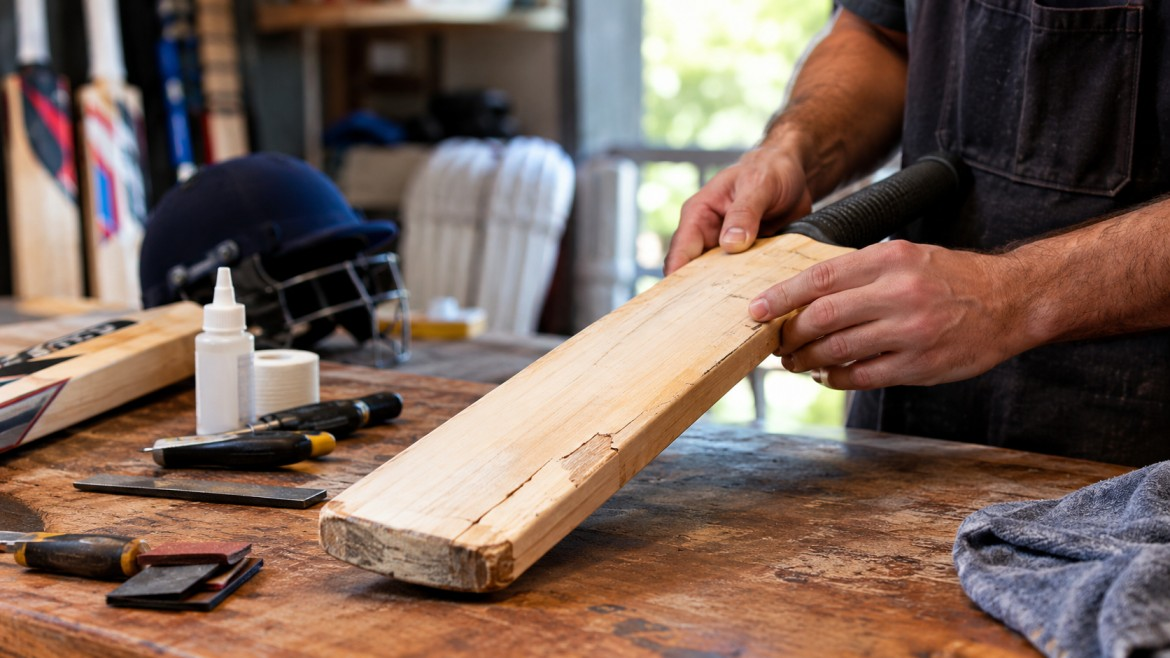
A cricket bat may experience minor problems after continuous use. The handle of the bat may get loose, the toe of the bat may get injured, or cracks may form at the edge of the bat. In such situations, many players face a dilemma between getting their bat repaired and purchasing a new one.
The best decision in such circumstances will vary depending on the nature of the problem, age of the bat, its condition, and frequency of use. Sometimes, a damaged bat might perform effectively after repairs; otherwise, the player may have to consider purchasing a new one.
Knowing the difference can help you avoid unnecessary spending and keep your equipment in good playing condition.
When Should You Consider Cricket Bat Repair?
Cricket bat repair may prove to be a viable solution in cases where there is no major damage, and the handle is in relatively good condition.
Examples of some issues that can generally be fixed include:
-
Handle damage
-
Cracks on the edge
-
Toe damage
-
Grip damage
-
Sticker damage
-
Damaged protective sheets
-
Regular marks
-
Damage on the shoulders and edges of the bat
As an illustration, in case of a bat having a crack but the blade itself being strong and playing well, there might be no need for the total replacement of the bat.
When Is Replacement a Better Option?
Not every damaged bat should be repaired. Sometimes, the cost and effort involved in fixing it may not make sense, particularly when the bat has already been used for several seasons.
Replacement may be worth considering when:
-
The blade has major structural damage
-
There are deep or multiple cracks
-
The handle has suffered serious damage
-
The bat has lost its shape
-
The blade has become very thin after extensive use
-
Previous repairs have already been carried out several times
-
The bat no longer provides the performance you need
A badly damaged bat can also become unreliable during play. If the structure has been seriously affected, continuing to use it may lead to further damage.
Common Bat Problems and the Usual Choice
The following table gives a simple starting point for deciding between repair and replacement:
|
Bat Problem |
Repair or Replacement? |
What to Consider |
|
Worn grip |
Repair |
A new grip is usually enough |
|
Small edge crack |
Repair |
Depends on crack depth and location |
|
Loose handle |
Repair |
Professional handle work may restore the bat |
|
Damaged toe |
Repair |
Suitable if the main blade is still strong |
|
Major blade crack |
Replacement may be better |
Structural damage can affect performance |
|
Multiple deep cracks |
Replacement |
Repair may not provide a long-term solution |
|
Surface marks |
Repair/maintenance |
Usually does not require a new bat |
|
Severely damaged handle |
Depends on damage |
Professional inspection is recommended |
|
Old and heavily used bat |
Replacement may be better |
Repair costs may not justify continued use |
This is not a fixed rule for every bat. The condition of the individual bat matters more than the appearance of a single damaged area.
Cricket Bat Handle Damage: Repair or Replace?
The handle plays an important role in controlling the bat. It absorbs vibrations and transfers the force generated during a shot. Because of this, handle damage should not be ignored.
A loose handle or minor handle issue may sometimes be fixed by a professional. However, if the handle is badly broken or the damage has affected the connection between the handle and blade, a detailed inspection is necessary.
A proper cricket bat handle repair should be carried out by someone familiar with bat construction rather than through a quick home fix. An incorrect repair can affect the bat's balance, feel, and durability.
What About Cracks in the Bat?
Cracks are among the most common concerns for players. Not every crack means the bat has reached the end of its life.
Small cracks can sometimes be repaired, particularly when they are located in areas that have not suffered major structural damage. However, deep cracks, cracks running through important sections of the blade, or multiple cracks may indicate that the bat needs replacement.
With cricket bat crack repair, the location, size, depth, and number of cracks should all be considered. A professional assessment is useful before deciding what to do.
How Does Cricket Bat Maintenance Help?
Regular cricket bat maintenance can help reduce avoidable damage and extend the usable life of your equipment.
Simple habits can make a difference:
-
Store the bat in a dry place away from excessive moisture.
-
Avoid leaving it in a very hot car or direct sunlight for long periods.
-
Use the right protective equipment when appropriate.
-
Check the edges, toe, handle, and blade regularly.
-
Do not use the bat for hitting unsuitable objects.
-
Address small problems before they become larger.
-
Keep the bat clean and inspect it after intensive sessions.
Players who regularly check their bats can often notice problems earlier. This makes it easier to decide whether a repair is needed.
Repair vs Replacement: What Should You Check?
Before making a decision, ask yourself a few simple questions.
How serious is the damage?
A small cosmetic mark is very different from a deep crack or broken handle.
How old is the bat?
A relatively new bat in good condition may be worth repairing. An older bat with several problems may not be.
How much has the bat been used?
A heavily used bat may already have natural wear across the blade, edges, and toe.
Do you still like the bat's performance?
If the bat has the weight, balance, pickup, and profile you prefer, repairing a minor issue can make sense.
What is the repair likely to involve?
A simple grip replacement is very different from major structural work. Ask about the repair before deciding.
Choosing a Cricket Bat Repair Service
If you decide to repair your bat, choose a cricket bat repair service that has experience handling different types of bat damage.
Before handing over the bat, ask what caused the damage, what repair is required, and whether the repair is expected to be suitable for regular match use. It is also useful to understand the estimated cost and whether any further maintenance is recommended.
For valuable or heavily used bats, getting an assessment before approving the repair can help you make a more informed decision.
A Simple Way to Make the Decision
The simplest way would be to consider the entire cricket bat as opposed to looking at just the problem area.
If the blade is in good condition, the damage is insignificant, and you like the performance of your bat, then repairing could be the way to go.
If your cricket bat is in bad structural condition, has several large cracks, a broken handle, or lots of wear and tear, then you should consider replacing.
Players who are sentimental about their bats because of the bat's balance, handle and feel could benefit from repairing insignificant damage. However, players looking for a change in weight and handle profile could view damage as a reason to get a new cricket bat.
Final Tips Before You Decide
Do not discard a bat solely because you see a crack or damage to the handle. This does not mean you should keep using the bat even if it has become too damaged despite having done well in the past.
One needs to consider what kind of damage it has, how extensive it is, its age, and whether it affects the structure of the bat.
This is because, besides giving a good appearance, the repair must also be suitable for the intended purpose. This may save one the cost and give one better utilization.
Frequently Asked Questions

NSS Cricket Store is a cricket equipment store in Dhakoli, Zirakpur, offering cricket bats, batting and wicket-keeping gear, kit bags, accessories, custom bat options, and professional cricket bat repair services. Established in 2016, the store helps players choose cricket equipment based on their playing level, preferences, and requirements, with delivery available across India and worldwide. Visit: https://nsscricketstore.com










Comments (0)