

Aluminium Scaffolding Saudi Arabia: A Practical Guide to Lightweight Access Solutions
Explore aluminium scaffolding in Saudi Arabia, including mobile towers, folding systems, applications, selection factors, and essential safety practices.

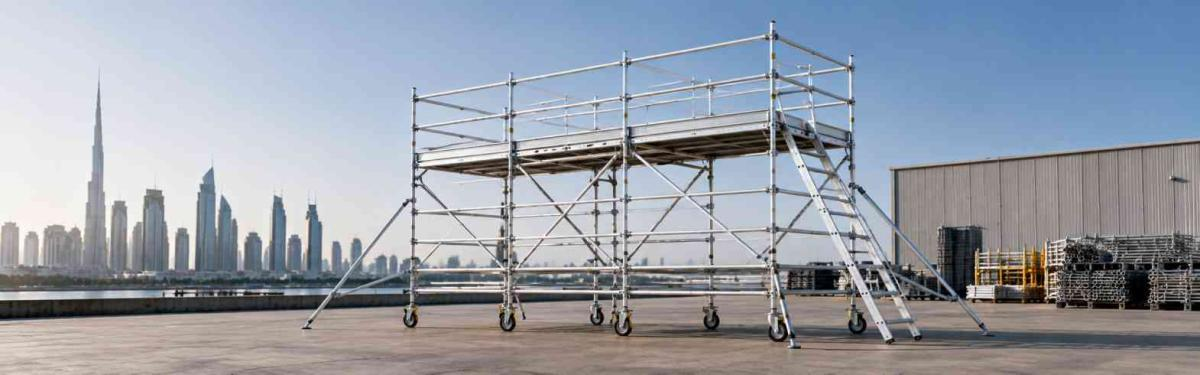 Construction, maintenance, and industrial projects often require temporary access equipment that is easy to handle, adaptable, and suitable for working at different heights. Aluminium Scaffolding Saudi Arabia is an important topic for contractors, facility managers, builders, and maintenance professionals looking for practical access solutions.
Aluminium scaffolding is widely considered for projects where portability, convenient assembly, and repositioning are important. From commercial buildings and warehouses to industrial maintenance and interior finishing, aluminium access systems can support a variety of activities when selected and used correctly.
Understanding the different types of aluminium scaffolding, their applications, and their limitations helps project teams make informed equipment decisions.
Why Aluminium Scaffolding Is Used in Saudi Arabia
Aluminium scaffolding offers several practical characteristics that make it suitable for specific construction and maintenance requirements.
Lightweight construction: Aluminium components are generally lighter than comparable steel components, making handling and transportation easier.
Convenient assembly: Many aluminium tower systems use modular components designed for straightforward assembly according to manufacturer instructions.
Portability: Lightweight sections can be easier to move between work areas, particularly in buildings where access space is limited.
Corrosion resistance: Aluminium naturally forms a protective oxide layer, providing resistance to atmospheric corrosion. However, equipment still requires appropriate inspection, cleaning, and storage.
Versatile applications: Aluminium scaffolding can be configured for different access requirements, depending on the system design and permitted working height.
These characteristics make aluminium systems worth considering for projects where frequent movement and temporary access are required.
Common Types of Aluminium Scaffolding
Different aluminium scaffolding configurations are designed for different working environments. Selecting the right type depends on the required height, platform size, access conditions, and intended workload.
1. Aluminium Mobile Scaffolding Tower
Mobile aluminium towers are equipped with wheels that allow the structure to be repositioned between nearby work areas.
They are commonly used for:
-
Ceiling installation and repairs
-
Indoor painting and decoration
-
Electrical maintenance
-
Warehouse lighting work
-
Commercial building maintenance
The wheels must be locked before use, and the tower must be assembled and stabilised according to the manufacturer's instructions.
2. Single-Width Aluminium Tower
A single-width tower has a relatively narrow base and is useful where working space is restricted. It may be suitable for corridors, narrow indoor areas, and maintenance locations where a wider structure cannot easily fit.
Its dimensions and permitted height must be checked before selecting it for a project.
3. Double-Width Aluminium Tower
Double-width towers provide a wider working platform than single-width configurations. The additional platform space can be useful when workers need more room for tools and materials.
Typical applications include:
-
Interior construction
-
Building maintenance
-
Installation work
-
Painting and finishing
-
Commercial property repairs
The permitted platform load must always be followed.
4. Folding Aluminium Scaffolding
Folding towers are designed to simplify storage, transportation, and setup for suitable applications. Their compact design can be useful for maintenance teams working across multiple locations.
Users should check the manufacturer's instructions for locking mechanisms, platform installation, stability, and permitted working conditions.
Applications of Aluminium Scaffolding Across Different Industries
Aluminium scaffolding is not limited to building construction. Its portability and adaptable configurations make it relevant to several industries in Saudi Arabia.
Residential and commercial construction: Workers may use aluminium towers for painting, plastering, ceiling work, and interior finishing.
Industrial maintenance: Access towers can support inspection and repair activities in factories and industrial buildings, subject to site-specific requirements.
Warehouses and logistics facilities: Maintenance teams may require elevated access for lighting systems, ventilation equipment, and ceiling repairs.
Hotels and commercial properties: Aluminium access systems can be useful for routine maintenance, decoration, and installation work.
Electrical and mechanical services: Technicians may use suitable towers to access overhead cables, fixtures, ventilation systems, and other building services.
For demanding industrial environments, the equipment must be assessed against the site's operating conditions and specific safety requirements.
Aluminium Scaffolding vs Steel Scaffolding
Both aluminium and steel scaffolding have important roles in construction. The appropriate choice depends on the application rather than assuming that one material is suitable for every project.
|
Comparison |
Aluminium scaffolding |
Steel scaffolding |
|
Weight |
Generally lighter |
Generally heavier |
|
Handling |
Easier to reposition in many applications |
May require more handling resources |
|
Portability |
Useful for mobile access systems |
Depends on system configuration |
|
Common applications |
Maintenance and interior work |
Construction and demanding site applications |
|
Corrosion behaviour |
Naturally corrosion resistant |
Often protected through galvanising or coatings |
|
Selection considerations |
Load rating and system limitations |
Structural capacity and component condition |
Aluminium scaffolding should not automatically be considered suitable for heavy-duty work simply because it is lightweight. The system's rated capacity, configuration, and manufacturer's specifications determine its suitability.
Important Factors When Choosing Aluminium Scaffolding
Before selecting aluminium scaffolding in Saudi Arabia, project managers and equipment users should evaluate several technical factors.
Working height: Identify the required platform height and confirm that the selected tower is approved for that configuration.
Platform dimensions: Consider the available space for workers, tools, and materials.
Load capacity: Check the manufacturer's maximum load rating and applicable duty classification.
Ground conditions: Ensure the tower will stand on a firm, level, and suitable surface.
Access requirements: Confirm that the system provides safe access through an appropriate ladder or internal access arrangement.
Indoor or outdoor use: Outdoor applications may involve wind exposure and additional stability requirements. Use only configurations approved for the intended environment.
Component compatibility: Frames, braces, platforms, wheels, and stabilisers should belong to a compatible system and be assembled as instructed.
Aluminium Scaffolding Safety and Inspection
Lightweight equipment still presents risks when incorrectly assembled or used. Proper inspection and safe working procedures are essential for every aluminium scaffolding installation.
Saudi Arabia's National Council for Occupational Safety and Health provides guidance on scaffold installation, inspection, common hazards, and fall prevention.
Important precautions include:
-
Allow trained and competent personnel to assemble and dismantle the tower.
-
Inspect frames, braces, platforms, wheels, and locking devices before use.
-
Never use bent, cracked, damaged, or incompatible components.
-
Keep the structure on a firm and level supporting surface.
-
Install guardrails and other required edge protection.
-
Lock the wheels before workers access a mobile tower.
-
Follow the manufacturer's height, loading, and stabilisation requirements.
-
Never move a mobile tower while workers or unsecured materials remain on it.
-
Reinspect equipment after alterations or events that could affect its stability.
Project teams should also follow applicable Saudi occupational safety requirements and any additional rules established by the project owner or facility operator.
Renting or Purchasing Aluminium Scaffolding
The choice between aluminium scaffolding rental and purchase depends on how frequently the equipment will be used.
Rental may be suitable for short-term maintenance, temporary installation work, and projects with changing access requirements. It can reduce the need for long-term storage and equipment ownership.
Purchase may be more practical for organisations that regularly carry out maintenance or construction activities. However, ownership involves responsibilities for inspections, storage, maintenance, and component replacement.
Before making a decision, compare the complete costs, including transportation, assembly, dismantling, maintenance, and inspection arrangements.
Conclusion
Aluminium Scaffolding Saudi Arabia is an important access solution for construction, commercial maintenance, industrial facilities, and interior finishing projects. Its lightweight construction, portability, and adaptable configurations make it useful for many temporary working-at-height requirements.
Choosing the right tower involves evaluating working height, platform dimensions, load capacity, ground conditions, and system compatibility. Regular inspection and correct assembly are equally important for maintaining safe working conditions.
To explore aluminium scaffolding systems and access equipment options in Saudi Arabia, visit Aluminium Scaffolding Saudi Arabia.
For businesses looking for Aluminium Scaffolding Saudi Arabia, choosing the right scaffolding equipment is important for accessing elevated work areas and meeting different project requirements. Aluminium scaffolding is suitable for residential buildings, commercial developments, warehouses, factories, and industrial facilities.






Comments (0)