

What Vehicles Can You Drive with an HGV Class 2 Licence?
An HGV Class 2 licence allows drivers to operate rigid vehicles such as delivery lorries, tipper trucks, tankers and refrigerated vehicles. This blog covers vehicle types, licence requirements, weight limits and career opportunities in the UK.
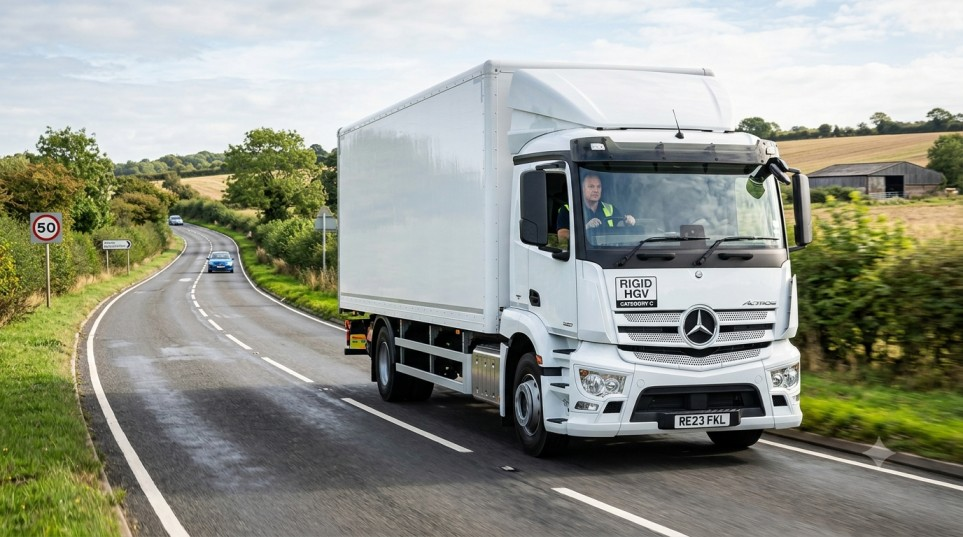
An HGV Class 2 licence is an important qualification for anyone looking to build a career in the UK's transport and logistics industry. It allows drivers to operate large rigid heavy goods vehicles (HGVs), which are commonly used for delivering goods, transporting materials and supporting commercial operations.
From supermarket delivery lorries to construction vehicles and waste collection trucks, a Category C licence opens up opportunities to drive different types of heavy vehicles.
However, it is important to understand which vehicles you can legally operate with this qualification and how it differs from an HGV Class 1 licence.
In this guide, we will explain what vehicles you can drive with an HGV Class 2 licence, the weight restrictions, common job opportunities and how to get qualified.
What Is an HGV Class 2 Licence?
An HGV Class 2 licence, officially known as a Category C licence, allows you to drive rigid heavy goods vehicles weighing more than 3,500kg Maximum Authorised Mass (MAM).
These vehicles have a fixed cab and load-carrying section rather than a separate tractor unit and trailer.
With a Category C licence, you can generally:
-
Drive rigid lorries weighing more than 3,500kg.
-
Operate vehicles with a trailer weighing up to 750kg MAM.
-
Transport commercial goods and materials.
-
Drive different types of rigid HGVs, depending on the vehicle's design and your additional qualifications.
-
Apply for suitable professional driving positions in transport, logistics and distribution.
A Class 2 licence is commonly used for local deliveries, regional transport and commercial operations that require rigid vehicles.
What Vehicles Can You Drive with an HGV Class 2 Licence?
A Category C licence covers a wide range of rigid heavy goods vehicles. The exact vehicle you can drive depends on its weight, configuration and any additional qualifications or restrictions.
Here are some common examples.
1. Rigid Delivery Lorries
Rigid delivery lorries are commonly used by supermarkets, wholesalers, retailers and distribution companies.
They transport products between warehouses, distribution centres and customer locations. These vehicles usually have a fixed cargo compartment attached to the cab and chassis.
Examples include:
-
Supermarket delivery lorries.
-
General goods delivery trucks.
-
Box-bodied commercial vehicles.
-
Regional distribution lorries.
2. Tipper Trucks
Tipper trucks are widely used in construction, landscaping and waste management.
They have a hydraulic tipping mechanism that allows materials to be unloaded by raising the cargo body.
Common uses include:
-
Transporting sand and gravel.
-
Moving soil and aggregates.
-
Delivering construction materials.
-
Removing building waste.
3. Flatbed Lorries
Flatbed lorries have an open loading platform rather than an enclosed cargo compartment. They are suitable for carrying large or awkwardly shaped materials.
These vehicles are commonly used for:
-
Transporting timber and steel.
-
Delivering construction materials.
-
Moving machinery and equipment.
-
Carrying palletised goods.
Depending on the load, drivers may also need appropriate training in securing cargo safely.
4. Curtain-Sider Lorries
Curtain-sider lorries have flexible side curtains that can be opened to make loading and unloading easier.
They are commonly used in logistics and commercial distribution because goods can be accessed from the sides as well as the rear.
Typical applications include:
-
Pallet deliveries.
-
Retail distribution.
-
Warehouse transportation.
-
General commercial freight.
5. Refrigerated Lorries
Refrigerated lorries, sometimes called reefer trucks, are designed to transport products that need controlled temperatures.
They are important for businesses handling perishable goods and temperature-sensitive products.
Common deliveries include:
-
Fresh fruit and vegetables.
-
Meat and dairy products.
-
Frozen food.
-
Temperature-sensitive commercial products.
Drivers operating these vehicles may also need to understand refrigeration systems and temperature monitoring procedures.
6. Skip Loader and Waste Collection Trucks
Skip loaders and waste collection vehicles are frequently used by local authorities, construction businesses and waste management companies.
They are designed to collect, transport and unload waste materials.
Examples include:
-
Skip collection lorries.
-
Commercial waste collection trucks.
-
Recycling collection vehicles.
-
Municipal refuse collection vehicles.
Some vehicles use specialised lifting equipment, so employers may require additional machinery training.
7. Tanker Lorries
Tanker lorries have specially designed tanks for transporting liquids, gases or other materials.
Rigid tanker vehicles can fall within Category C, provided they meet the relevant vehicle and trailer requirements.
They may be used to transport:
-
Water.
-
Food-grade liquids.
-
Industrial liquids.
-
Certain fuels and chemicals.
Important: Transporting dangerous goods may require an additional ADR qualification. A Category C licence alone does not automatically qualify you to carry every type of hazardous material.
8. Vehicle Recovery Trucks
Some larger vehicle recovery trucks also fall within Category C.
These vehicles are used by recovery companies to transport broken-down, damaged or specialist vehicles.
Typical work includes:
-
Recovering commercial vehicles.
-
Transporting larger vans and trucks.
-
Moving specialist machinery.
-
Providing roadside recovery services.
The vehicle's weight and configuration must fall within your licence entitlement.
What Is the Weight Limit for an HGV Class 2 Licence?
A Category C licence allows you to drive vehicles with a Maximum Authorised Mass (MAM) exceeding 3,500kg, with a trailer of up to 750kg MAM.
MAM refers to the maximum permitted weight of a vehicle when fully loaded, including its load, passengers and fuel.
Here is a simple comparison of the main HGV categories:
|
Licence category |
Vehicle entitlement |
Trailer allowance |
|---|---|---|
|
Category B |
Standard cars and light vehicles |
Depends on entitlement |
|
Category C1 |
Vehicles over 3,500kg up to 7,500kg |
Up to 750kg |
|
Category C (Class 2) |
Vehicles over 3,500kg |
Up to 750kg |
|
Category C+E (Class 1) |
Category C vehicles with heavier trailers |
Over 750kg |
The important difference is that Category C+E allows you to operate larger vehicle-and-trailer combinations, including articulated lorries.
What Vehicles Cannot You Drive with an HGV Class 2 Licence?
Although a Category C licence covers many rigid HGVs, it does not allow you to operate every type of commercial vehicle.
Some examples include:
-
Articulated lorries: These generally require a Category C+E licence.
-
Large lorries with trailers over 750kg MAM: You need the appropriate C+E entitlement.
-
Buses and coaches: These require the relevant passenger vehicle licence, such as Category D.
-
Certain specialist vehicles: Additional training, qualifications or licence entitlements may be required.
Before driving any commercial vehicle, check your driving licence entitlement and the vehicle's specifications.
What Jobs Can You Get with an HGV Class 2 Licence?
Gaining a Category C licence can open up several employment opportunities across the UK's transport and logistics industry.
Some common job roles include:
|
Job role |
Main responsibilities |
|---|---|
|
Class 2 Delivery Driver |
Delivering goods to businesses and customers |
|
Supermarket Delivery Driver |
Transporting food and retail products |
|
Construction HGV Driver |
Moving building materials and aggregates |
|
Waste Collection Driver |
Collecting and transporting waste |
|
Distribution Driver |
Moving goods between warehouses |
|
Refrigerated Transport Driver |
Delivering temperature-controlled products |
|
Rigid Tanker Driver |
Transporting approved liquids and materials |
The availability of these roles depends on the employer, vehicle type, driving experience and any additional qualifications required.
What Is the Difference Between HGV Class 2 and Class 1?
The main difference between these two licences is the type of vehicle and trailer combination you are permitted to drive.
|
Feature |
Class 2 (Category C) |
Class 1 (Category C+E) |
|---|---|---|
|
Vehicle type |
Rigid HGV |
Articulated HGV |
|
Vehicle structure |
Fixed cab and body |
Separate tractor unit and trailer |
|
Trailer limit |
Up to 750kg MAM |
Over 750kg MAM |
|
Common work |
Local and regional deliveries |
Long-distance and large-scale transport |
|
Career options |
Rigid HGV driving roles |
Articulated lorry driving roles |
If you already hold a Class 2 licence, you can upgrade to Class 1 by completing the required C+E training and practical tests.
What Qualifications Do You Need to Drive HGV Class 2 Vehicles?
Before operating a Class 2 vehicle professionally, you need to meet the relevant licensing and professional driving requirements.
The main requirements include:
-
Full UK car licence: You need a valid Category B driving licence to begin the HGV licensing process.
-
Medical examination: You must meet the medical standards required for HGV drivers.
-
Provisional HGV entitlement: You need the appropriate provisional Category C entitlement from the DVLA.
-
Theory test: You must pass the required HGV theory tests.
-
Practical driving test: You must pass the relevant Category C practical assessments.
-
Driver CPC: If you drive professionally, you will generally need the appropriate Driver CPC qualification unless an exemption applies.
Start Your HGV Class 2 Training with GS Driver Training
If you want to drive rigid heavy goods vehicles professionally, gaining an HGV Class 2 licence is an important first step.
GS Driver Training provides HGV Class 2 (Category C) training in Surrey for people looking to gain the skills and qualifications needed to operate rigid HGVs.
The training includes practical driving instruction using modern DAF rigid vehicles and preparation for the DVSA driving test.
Why consider GS Driver Training?
-
Practical Category C driving lessons.
-
Modern rigid HGV training vehicles.
-
Experienced driving instructors.
-
Preparation for the DVSA practical test.
-
Different training packages to suit learners.
Whether you want to work in delivery services, construction, distribution or waste management, the right training can help you prepare for your next career step.
Frequently Asked Questions
GS Driver Training offers professional HGV & LGV Driver Training in Surrey, including Class 1, Class 2, Fast Track C+E, C1, Driver CPC and ADR courses. Whether starting a driving career or upgrading your licence, get expert course guidance and a free 15-minute Readiness Check.









Comments (0)