An office can have modern furniture, elegant finishes, and a well-designed layout yet still feel outdated because of inefficient lighting. Poor illumination can affect employee comfort, productivity, energy consumption, and the overall appearance of a workplace. As businesses increasingly focus on operational efficiency and sustainable building practices, upgrading existing lighting systems has become an important consideration. A well-planned
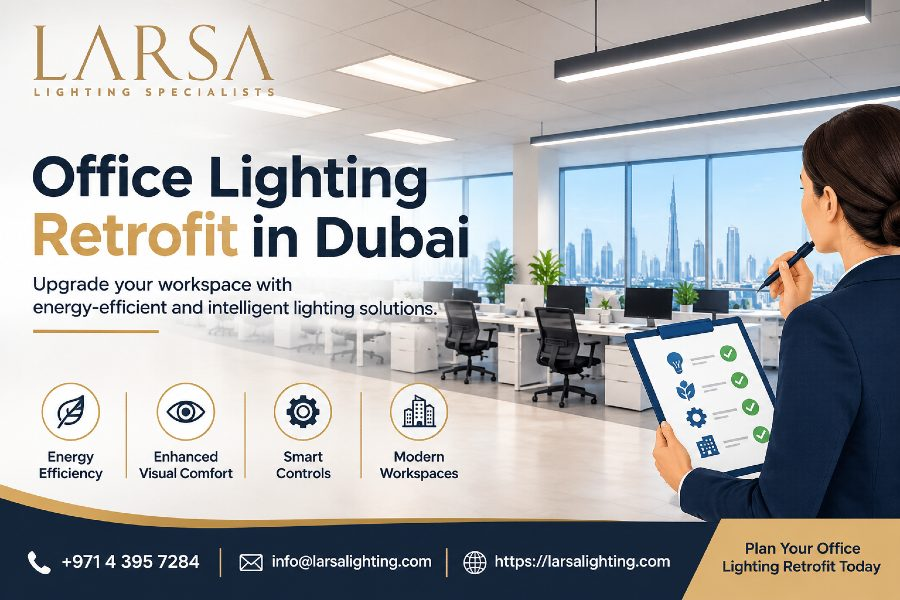
Office Lighting Retrofit in Dubai offers an opportunity to reduce electricity consumption while creating a more comfortable and visually appealing working environment.
Rather than simply replacing old fixtures with LED alternatives, a successful retrofit considers the building's layout, lighting requirements, available daylight, and daily operational patterns. The objective is to achieve better lighting performance without unnecessary energy use or major disruption to office activities.
Understanding the Need for Office Lighting Retrofits
Many commercial buildings continue to operate with outdated fluorescent tubes, halogen lamps, or inefficient lighting installations. These systems may consume more electricity, require frequent maintenance, and provide inconsistent illumination. Over time, their operating costs can become significant, particularly in offices where lighting remains switched on for extended periods.
An office lighting retrofit addresses these limitations by introducing energy-efficient technologies and improving the overall lighting arrangement. LED luminaires, intelligent controls, occupancy sensors, and daylight-responsive systems can help reduce unnecessary electricity consumption.
For businesses in Dubai, where commercial spaces operate under demanding schedules, improving lighting efficiency can contribute to better facility management. A carefully designed upgrade also helps align workplace interiors with contemporary expectations for comfort, functionality, and sustainability.
Begin With a Detailed Lighting Assessment
Before selecting replacement fixtures, it is important to understand how the existing lighting system performs. A professional site assessment helps identify inefficient installations, poorly illuminated areas, excessive brightness, and opportunities for improvement.
The assessment should consider:
- Existing fixture types, wattage, and electrical consumption.
- Ceiling heights, construction, and luminaire positioning.
- Natural daylight entering through windows and glazed partitions.
- Desk arrangements, computer screen positions, and work activities.
- Areas experiencing glare, shadows, or uneven illumination.
- Existing electrical circuits, controls, and maintenance requirements.
Different office areas require different lighting approaches. Reception areas need welcoming illumination, while workstations require comfortable and consistent light for screen-based activities. Meeting rooms may need adjustable lighting for presentations and video conferences, whereas corridors and storage spaces have different operational requirements.
Understanding these differences helps create a retrofit plan that improves performance throughout the workplace.
Choose Energy-Efficient LED Lighting Solutions
LED technology is one of the most effective ways to reduce energy consumption in commercial environments. Compared with conventional fluorescent and incandescent lighting, LED fixtures generally offer higher energy efficiency, longer service life, and lower maintenance requirements.
For an Office Lighting Retrofit in Dubai, selecting appropriate LED products is just as important as choosing the technology itself.
Several fixture types can support different workplace requirements:
LED Panel Lights
LED panel lights provide broad, relatively uniform illumination and are commonly used in offices with suspended ceilings. Their clean appearance makes them suitable for open-plan workstations, training rooms, and administrative spaces.
Linear LED Luminaires
Linear lighting systems can create an organised ceiling arrangement while delivering consistent illumination across desks and shared work areas. Suspended or recessed options can be selected according to ceiling design and interior requirements.
LED Downlights and Spotlights
LED downlights work well in corridors, private offices, and circulation spaces. Adjustable spotlights can highlight reception features, artwork, architectural details, and branded elements.
Selecting fixtures according to their intended application prevents over-lighting and helps achieve a balanced lighting scheme.
Improve Visual Comfort and Reduce Glare
Energy savings should not come at the expense of employee comfort. Excessively bright fixtures, poor light distribution, and reflections on computer screens can make office environments uncomfortable.
A retrofit should therefore prioritise appropriate illumination levels and effective glare management. Fixtures with diffusers, microprismatic optics, or controlled light distribution can help minimise direct glare. Their placement should also consider workstation orientation, ceiling height, and the position of windows.
Colour temperature is another important factor. Neutral white lighting is often suitable for general office activities because it creates a clear and professional atmosphere. Warmer lighting may be more appropriate for lounges, breakout areas, and hospitality-inspired reception spaces.
Consistent colour quality across connected spaces also helps maintain visual harmony. High colour rendering can improve how interior finishes, furniture, and materials appear under artificial lighting.
Introduce Smart Lighting Controls
Replacing inefficient fixtures is only one part of reducing energy consumption. Smart lighting controls can further improve efficiency by ensuring that lights operate according to actual workplace requirements.
Several control solutions can be incorporated into a retrofit:
- Occupancy sensors: Automatically adjust lighting in meeting rooms, private offices, and other intermittently used spaces.
- Daylight sensors: Reduce artificial lighting when sufficient natural daylight is available.
- Scheduled controls: Switch or dim lighting according to business operating hours.
- Zoned lighting: Allow different office areas to operate independently.
- Dimming systems: Give occupants greater control over illumination levels.
For example, an office with large windows can use daylight-responsive controls to reduce artificial lighting near the perimeter while maintaining appropriate illumination in internal work areas.
However, controls should remain simple and intuitive. Complicated systems can discourage employees from using them effectively. Proper coordination between luminaires, LED drivers, sensors, and control interfaces is essential for reliable operation.
Consider Installation Costs and Long-Term Savings
An office retrofit involves an initial investment, but its financial benefits should be evaluated over the entire operating life of the lighting system. Looking only at the purchase price of replacement fixtures can lead to decisions that increase maintenance expenses later.
Businesses should consider several factors when comparing lighting solutions:
- Energy consumption: Compare the wattage and expected operating hours of existing and proposed fixtures.
- Maintenance costs: Evaluate product lifespan, driver quality, replacement requirements, and access to components.
- Control efficiency: Consider the additional savings available through occupancy detection, scheduling, and dimming.
- Installation requirements: Assess whether existing wiring, ceiling openings, and electrical infrastructure can be reused.
- Warranty and support: Review product warranties, spare-parts availability, and technical assistance.
A phased installation may also be practical for offices that cannot accommodate a complete lighting upgrade at once. Prioritising areas with inefficient fixtures or long operating hours can help businesses manage budgets while gradually improving overall performance.
Plan Installation Around Office Operations
Lighting upgrades in occupied commercial buildings require careful coordination. Installation activities should be planned to minimise interruptions to employees and daily business operations.
Before procurement, the project team should confirm fixture dimensions, ceiling compatibility, electrical connections, emergency lighting provisions, and control requirements. Samples or mockups can help stakeholders evaluate brightness, colour appearance, glare, and fixture positioning before full installation begins.
Commissioning is equally important. Once the new system is installed, lighting levels, sensor responses, dimming functions, and control zones should be tested. Facilities teams should also receive the necessary documentation and operating guidance to manage the system effectively.
Dubai projects should additionally consider applicable local authority requirements, building regulations, and relevant electrical and emergency-lighting standards.
Creating More Efficient Workplaces With Better Lighting
A successful lighting upgrade should deliver more than lower electricity bills. It should create a workplace where employees can concentrate comfortably, meeting rooms function effectively, and architectural details receive appropriate attention.
A thoughtfully planned Office Lighting Retrofit in Dubai combines energy-efficient LED technology, suitable fixture selection, intelligent controls, and practical installation strategies. When these elements work together, businesses can improve lighting quality while managing long-term operational costs.
With its focus on balancing technical performance and architectural design, Larsa Lighting highlights the importance of selecting lighting solutions that respond to the actual needs of each workspace. A carefully coordinated retrofit can help offices become more efficient, comfortable, and adaptable to changing workplace requirements.








Comments (0)