

Topiramate 50 mg Explained: Why It Is Used for Both Epilepsy and Migraine Prevention
Topiramate 50 mg is a prescription tablet used to prevent seizures in epilepsy and to reduce how often migraine attacks occur. This guide explains how it works, how it is taken, which side effects matter and who needs extra care.
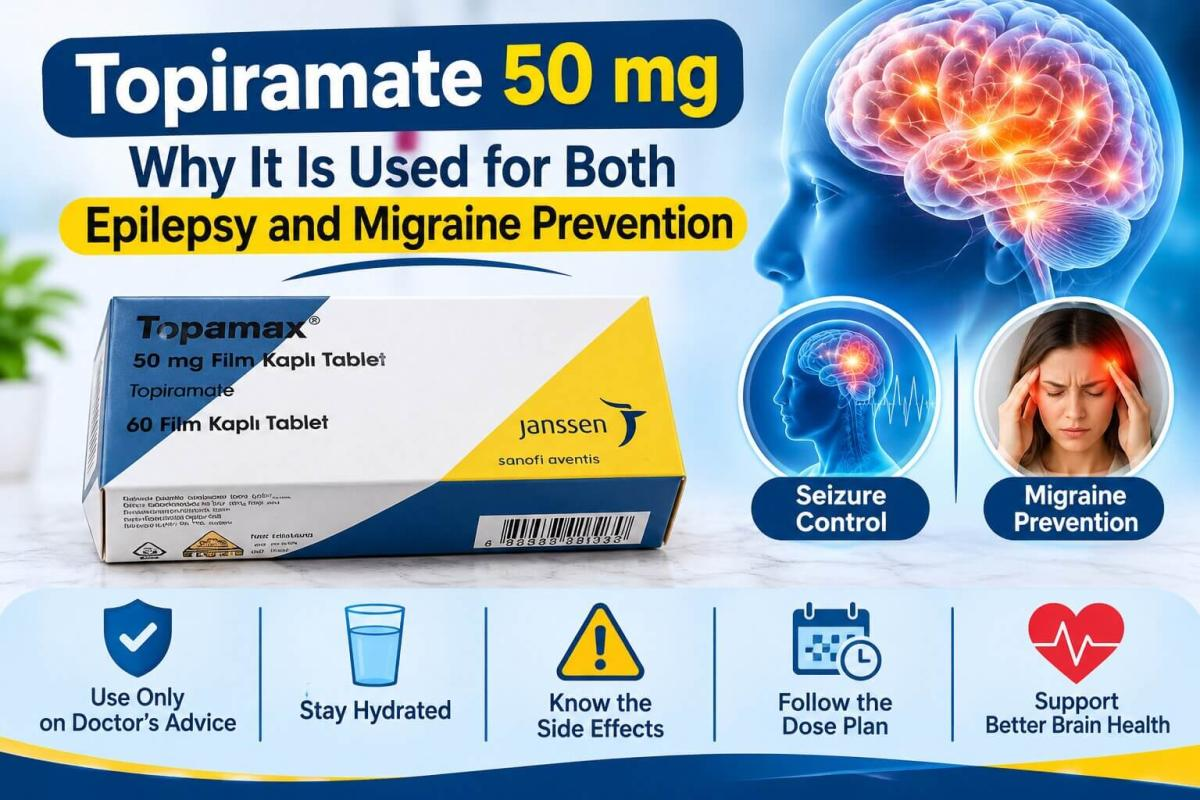
Topiramate 50 mg is a prescription tablet that helps prevent seizures in people with epilepsy and reduces how often migraine attacks occur. It works by settling overactive nerve signalling in the brain, which is the shared thread between the two conditions. For many patients, the 50 mg strength is a step along the way to the final dose rather than the finish line.
This guide covers what the tablet does, how doctors use it for each condition, which side effects matter, and what to discuss before starting. It is general information and does not replace advice from your own doctor.
What Is Topiramate 50 mg?
Topiramate belongs to a group of medicines called antiepileptic drugs, or anticonvulsants. It has been approved in the United States since 1996 and is sold under several names, including Topamax. Tablets are made in 25 mg, 50 mg, 100 mg and 200 mg strengths.
The 50 mg tablet is useful because it fits neatly into a gradual dose plan. A doctor can add or remove one tablet at a time instead of making big jumps. It is a prescription only medicine, so it should be taken only under medical supervision.
How Does Topiramate Work in the Brain?
Nobody has pinned down the exact mechanism. Topiramate is thought to act in a few ways at once. It limits the activity of sodium channels on nerve cells, it strengthens the calming chemical GABA, and it dampens glutamate, the main excitatory signal. It also mildly blocks an enzyme called carbonic anhydrase, which helps explain some of its side effects.
Picture a crowded room where everyone is talking at full volume. Topiramate does not silence the room. It turns the volume down so that a sudden burst of noise is less likely to spread.
Why That Matters for Seizures
A seizure happens when groups of nerve cells fire in a runaway, synchronised way. Reducing excitability makes it harder for that pattern to start and spread.
Why That Matters for Migraine Prevention
Migraine is not simply a bad headache. It involves sensitive, easily triggered pathways in the nervous system. Researchers believe that calming the same kind of excitability helps explain why topiramate lowers the number of attacks, although the full picture is still being studied.
What Is Topiramate 50 mg Used For?
Epilepsy
For epilepsy, topiramate is approved as a first treatment on its own for partial onset seizures and primary generalised tonic clonic seizures from age 2. It can also be added to other medicines for those seizure types and for Lennox Gastaut syndrome. Doses are raised slowly, often by 25 to 50 mg a week, because starting too fast increases side effects. The final daily dose is set individually and depends on age, weight and response.
Migraine Prevention
For migraine, topiramate is approved as a preventive treatment from age 12. That word matters. It is taken every day to make attacks less frequent, not swallowed once a migraine has already started. The labelled target is 100 mg a day split into two doses, which means a 50 mg tablet in the morning and another in the evening.
Here is a typical example. Someone with frequent migraines starts on 25 mg at night, moves up by 25 mg each week, and reaches 50 mg twice daily after about four weeks. Their doctor then reviews a headache diary to see whether attacks have become fewer or milder.
How Is Topiramate 50 mg Taken?
Doctors usually follow a few simple rules:
- Tablets are swallowed whole, because chewing leaves a bitter taste.
- It can be taken with or without food.
- Drinking enough water through the day lowers the risk of kidney stones.
- Doses are spaced evenly, usually morning and evening.
- The dose should never be changed without medical advice, even if you feel better or worse.
What Are the Common Side Effects of Topiramate?
Most side effects appear while the dose is being built up. The ones reported most often in clinical trials include:
- Tingling or numbness in the hands and feet
- Loss of appetite and weight loss
- Tiredness and dizziness
- Trouble with memory or finding words
- Changes in taste
Many people find these ease after the first weeks, though not everyone does. If you cannot concentrate at work or driving feels unsafe, tell your doctor rather than stopping the tablets on your own.
Warning Signs That Need Prompt Medical Attention
Some reactions are uncommon but serious. Contact a doctor urgently if you notice:
- Sudden blurred vision or eye pain, which can signal a rare type of glaucoma
- New or worsening low mood, or thoughts of self harm
- A spreading rash, blisters or peeling skin
- Severe pain in the side or back, or blood in the urine, which may point to a kidney stone
- Unusually fast breathing with deep tiredness, a possible sign of metabolic acidosis
- Reduced sweating with a raised temperature, especially in children
Eye problems can lead to permanent loss of vision if they are not treated, so do not wait them out.
Who Needs Extra Care With Topiramate?
Pregnancy and Contraception
Topiramate used in pregnancy can cause cleft lip and palate and a lower birth weight than expected. Anyone who could become pregnant should discuss reliable planning with their doctor before starting. The label also notes that topiramate can make hormonal contraceptives less effective, particularly at doses above 200 mg a day. If you become pregnant while taking it, ask your doctor before changing anything.
Children, Kidneys and Other Medicines
Children on long treatment need their growth monitored. People with kidney problems may need a lower dose. Alcohol and sedating medicines can add to drowsiness, and combining topiramate with valproic acid calls for particular monitoring.
Frequently Asked Questions
Q1. What is topiramate 50 mg used for?
Ans: It is used to prevent seizures in epilepsy and to prevent migraine attacks. The 50 mg strength is often part of a stepwise dose plan, and the final daily dose depends on the condition being treated and how the person responds.
Q2. How long does topiramate take to work for migraine?
Ans: It is not an instant fix. Doses are increased over several weeks, and doctors generally judge the benefit once the dose has been steady for a while. Keep a headache diary so you can both see whether attacks are getting fewer.
Q3. Does topiramate cause weight loss?
Ans: Loss of appetite and weight loss are among the commonly reported effects. It should not be used as a weight loss treatment, and anyone losing weight without meaning to should tell their doctor.
Q4. Can I stop topiramate suddenly?
Ans: No. Stopping abruptly can bring on seizures in people with epilepsy, and a slow reduction is the safer approach for everyone. Your doctor will give you a step down plan.
Q5. Is topiramate safe during pregnancy?
Ans: Not without careful medical advice. It has been linked to cleft lip and palate and smaller babies, so doctors weigh the risks and alternatives before prescribing it to anyone who is pregnant or planning a pregnancy.
Conclusion
Topiramate 50 mg works across epilepsy and migraine prevention because it calms overactive nerve signalling through several routes at once. In epilepsy it lowers seizure risk, and in migraine it reduces how often attacks arrive. The 50 mg tablet is mainly a building block that lets doctors raise the dose gradually and check tolerance along the way.
Side effects such as tingling and tiredness are common, while eye pain, skin reactions and mood changes need urgent attention. If you think this medicine could help you, speak with a doctor, share your full medical history, and follow the dose plan exactly.

Online Dawai is a trusted online healthcare and pharmacy platform in Pakistan, dedicated to making authentic medicines and healthcare products more accessible. We share informative content about medicines, health conditions, wellness, treatment awareness, and safe medication practices. Our mission is to help people make informed healthcare decisions through reliable information, convenient access to medicines, and a customer-focused approach to healthcare.





Comments (0)