

Why Is a Manganese Dioxide Button Battery a Smart Power Solution for Modern Electronics?
Explore how a Manganese Dioxide Button Battery delivers compact power, with insights into battery capacity, discharge performance, compatibility and safety.

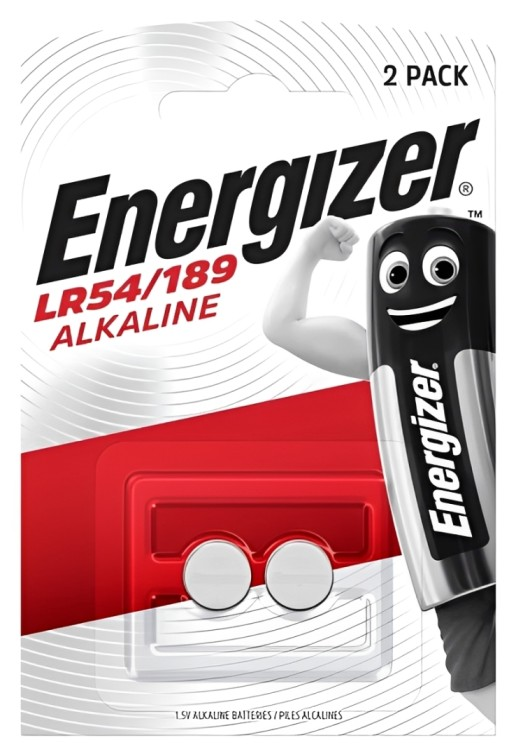
Electronic innovation increasingly focuses on developing smaller, lighter, and more energy-efficient devices. Many of these compact technologies rely on a miniature power source that supports essential functions without taking up much space. A Manganese Dioxide Button Battery meets this need by providing practical energy storage in a compact, circular design.
From wireless monitoring devices to miniature electronic instruments, these batteries support applications where physical size and dependable power delivery matter equally. However, achieving peak performance requires more than choosing a battery that fits. Understanding battery identification, discharge behaviour and device compatibility is essential for effective power management.
What Makes a Manganese Dioxide Button Battery an Effective Energy Source?
A Manganese Dioxide Button Battery uses manganese dioxide as its positive electrode material, enabling electrochemical reactions that generate electricity. Depending on the battery chemistry, the negative electrode typically consists of lithium or zinc.
Lithium manganese dioxide batteries generally deliver a nominal voltage of 3 V, whereas alkaline zinc-manganese dioxide button cells typically provide 1.5 V.
Their compact size lets manufacturers add independent power sources to electronic assemblies without significantly increasing device weight or size.
This combination of miniature construction and practical electrical performance makes them particularly valuable in space-constrained applications.
How Can You Identify Different Manganese Dioxide Button Batteries?
Battery identification codes provide useful information about chemical composition and physical dimensions. Understanding these markings helps users distinguish between batteries that may look similar but have different electrical characteristics.
Common battery designations include:
- CR2032: A 3 V lithium cell measuring 20 mm in diameter and 3.2 mm in thickness.
- CR2025: A thinner 3 V lithium cell measuring 20 mm in diameter and 2.5 mm in thickness.
- CR2016: A slim lithium cell designed for compatible devices with restricted battery compartment depth.
- LR44: A 1.5 V alkaline button battery commonly used in miniature electronic equipment.
Although several CR-series batteries share the same diameter and nominal voltage, differences in thickness and capacity can affect compatibility and operating life.
Why Does Battery Discharge Behaviour Matter?
Battery performance is not determined solely by its initial voltage. As the cell consumes stored chemical energy, its electrical characteristics gradually change.
Discharge behaviour describes how voltage and available energy vary throughout the battery's operating life.
How Do Continuous and Pulse Loads Affect Performance?
Some electronic devices require a small, continuous current, while others demand short bursts of higher current during specific operations.
For example, a computer's real-time clock typically requires very little power, whereas a wireless key fob demands additional energy when transmitting a signal.
Factors influencing discharge performance include:
- Electrical current demanded by the device.
- Duration and frequency of power consumption.
- Internal battery resistance.
- Ambient operating temperature.
- Minimum voltage required by the electronic circuit.
Selecting a battery with suitable discharge characteristics helps maintain dependable device operation.
How Does Battery Capacity Influence Operating Life?
Battery capacity, expressed in milliampere-hours (mAh), indicates how much electrical charge a cell can deliver under defined test conditions.
For example, Panasonic specifies nominal capacities of 225 mAh for its standard CR2032 and 165 mAh for its CR2025 lithium coin cell.
However, a higher capacity does not automatically guarantee proportionally longer operation. Actual service life depends on electrical load, temperature, discharge patterns and the equipment's voltage requirements.
Manufacturers' discharge curves provide valuable information when estimating battery performance for specific applications.
Which Technologies Depend on Manganese Dioxide Button Batteries?
Miniature batteries support a growing range of technologies that require autonomous operation and compact energy storage.
Their applications include:
- Smart monitoring systems: Powering compatible wireless temperature and environmental sensors.
- Security equipment: Supporting selected remote transmitters and access control accessories.
- Computer hardware: Maintaining real-time clock functions when the main power supply is disconnected.
- Portable instruments: Operating compact digital thermometers and measuring equipment.
- Automotive technology: Supplying power to compatible vehicle keyless entry devices.
- Wearable accessories: Supporting selected miniature electronic products.
- Industrial electronics: Providing independent power for suitable monitoring and memory backup circuits.
Each application requires a battery matched to its particular energy consumption and physical design.
Can a Manganese Dioxide Button Battery Be Replaced with Another Battery Type?
Never base battery replacement solely on appearance. Different chemical systems may share similar dimensions while producing different voltages and discharge characteristics.
For instance, alkaline LR44 batteries and silver oxide SR44 batteries have similar physical dimensions, but their voltage behaviour and performance characteristics differ.
Before selecting a replacement, verify:
- The original battery identification code.
- Nominal operating voltage.
- Chemical composition.
- Battery diameter and thickness.
- Electrical discharge requirements.
- Equipment manufacturer recommendations.
Using an incompatible replacement may cause inaccurate readings, intermittent operation, or damage to sensitive circuitry.
How Do Storage Conditions Affect Battery Quality?
Even when disconnected from equipment, batteries gradually lose stored energy through a process known as self-discharge.
Unsuitable storage conditions can accelerate deterioration and reduce available service life.
Recommended storage practices include:
- Keeping batteries in their original protective packaging.
- Storing cells in a cool, dry environment.
- Avoiding prolonged exposure to direct sunlight.
- Preventing contact with metallic objects.
- Checking expiry dates before installation.
- Separating depleted batteries from unused stock.
Proper inventory management is especially important in industrial environments where large quantities of miniature batteries may be stored before use.
What Safety Measures Are Essential for Button Battery Handling?
Button batteries require careful handling because their small dimensions create significant ingestion hazards. Improper electrical handling can also cause short circuits, overheating, or leakage.
Important precautions include:
- Never recharging non-rechargeable button cells.
- Keeping batteries away from children and pets.
- Avoiding crushing, puncturing or dismantling cells.
- Installing batteries with the correct polarity.
- Ensuring battery compartments remain securely closed.
- Covering used battery terminals with non-conductive tape before appropriate recycling.
If someone is suspected of swallowing a button battery, seek emergency medical treatment immediately. Do not wait for symptoms to develop, as severe internal injuries can occur rapidly.
Why Will Manganese Dioxide Button Batteries Remain Important in Electronic Innovation?
The continued development of miniature devices creates demand for power sources that combine compact construction with application-specific electrical performance. A Manganese Dioxide Button Battery provides a versatile solution for technologies that require independent, space-efficient energy storage.
By understanding battery chemistry, discharge characteristics and replacement compatibility, users can make informed decisions that support reliable equipment operation and minimise unnecessary battery replacements.
Ultimately, developing efficient modern technology depends on carefully integrating miniature power sources with high-quality electronic components. Selecting compatible batteries, following responsible handling practices and understanding energy requirements can contribute to more dependable, efficient and sustainable electronic systems.














Comments (0)