

Smart Plug Safety: What to Check Before Buying in Pakistan
Not all smart plugs are equally safe for Pakistan's electrical conditions. Here's what to check before buying, including voltage rating and certification.

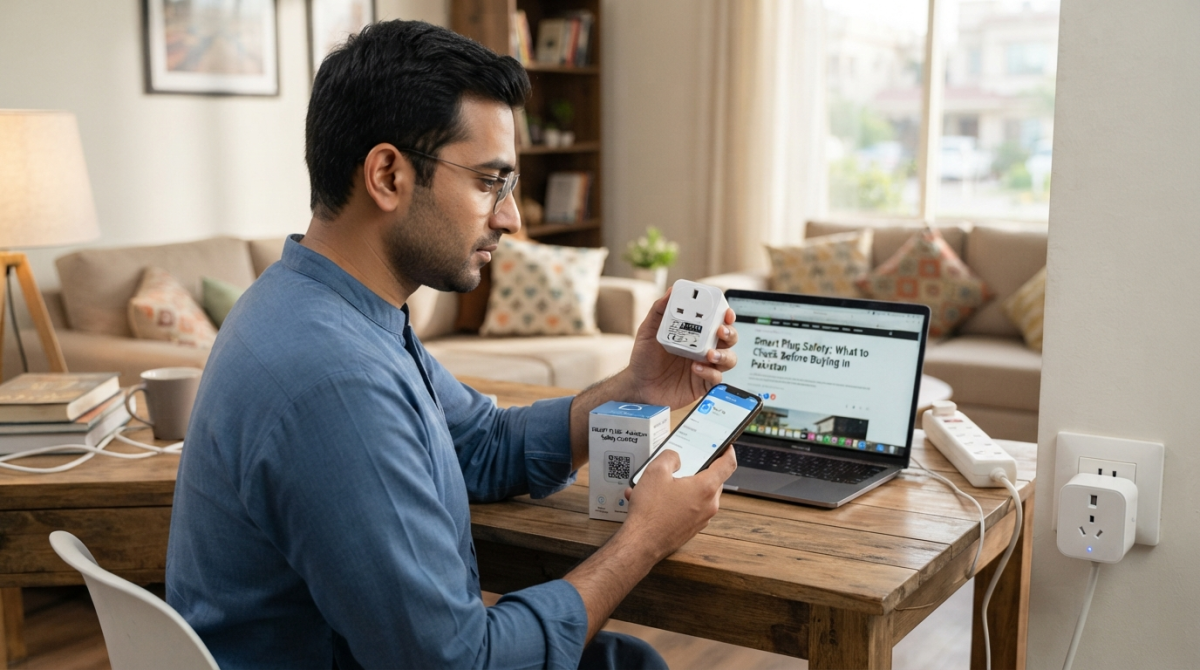
Electrical safety isn't the most exciting part of buying a smart plug, but it's genuinely the most important, particularly given voltage fluctuations that are a known reality in parts of Pakistan's electrical grid.
Why Voltage Stability Matters for Electronics
Voltage fluctuations — brief spikes or dips in electrical supply — are a documented reality in some parts of Pakistan's power infrastructure, and they can affect the reliability and lifespan of connected electronics, smart plugs included, more than in regions with more consistently stable grid power.
Checking the Voltage Rating Before Buying
A smart plug's specification sheet should list its rated voltage range. Choosing a device rated appropriately for local conditions, ideally with some tolerance for fluctuation, is worth checking rather than assuming any imported smart plug is automatically suited to local electrical conditions without verification.
Amperage Rating Matters as Much as Voltage
Beyond voltage, checking that a smart plug's amperage rating (commonly 10A or 16A) matches what you intend to plug into it is a basic but important safety step — plugging a high-wattage appliance like a water heater into a plug rated for lower current can pose a genuine fire risk over time.
Look for Safety Certifications
Reputable smart plugs typically carry safety certifications relevant to electrical products, worth checking on the product listing or packaging rather than assuming an ultra-cheap, unbranded option has undergone the same safety testing as an established brand's product.
Overload and Surge Protection Features
Some smart plugs include built-in overload protection, automatically cutting power if a connected device draws more current than the plug is rated for — a meaningful safety feature worth prioritizing, particularly for higher-wattage appliances.
Avoiding Daisy-Chained Overloading
A common but risky practice is plugging a power strip or extension board into a single smart plug, then connecting multiple high-wattage devices to that strip — this can easily exceed a smart plug's rated capacity even if each individual device seems modest on its own. Understanding a smart plug's total rated capacity, and not exceeding it through daisy-chaining, is a basic but often overlooked safety practice.
Why Cheap, Unverified Imports Carry More Risk
Ultra-low-cost, unbranded smart plugs sourced without clear certification or safety testing carry a real, if often overlooked, risk — inconsistent build quality and unclear safety margins matter considerably more for an always-plugged-in electrical device than for many other types of cheap imported goods.
Physical Installation Considerations
Beyond the plug itself, ensuring the wall socket it's plugged into is in good condition — no visible damage, looseness, or exposed wiring — matters just as much as the smart plug's own quality, since a smart plug can't compensate for a faulty or damaged outlet.
When to Involve a Qualified Electrician
For anything beyond simply plugging a smart plug into an existing, properly functioning outlet — like installing a smart switch that requires accessing house wiring, or addressing a socket that shows signs of damage or wear — bringing in a qualified electrician is the appropriate step rather than attempting electrical work without the relevant expertise.
Reading Reviews for Real-World Reliability Signals
Beyond the specification sheet, genuine customer reviews mentioning long-term reliability, or conversely repeated failures or overheating, are a useful additional signal worth checking before buying, alongside the manufacturer's own stated specifications.
Choosing a Safety-Conscious Option
Given how much voltage stability and build quality matter specifically in Pakistan's electrical conditions, sourcing from an established retailer with clearly listed specifications and appropriate certifications is worth prioritizing over the cheapest available option. A range of smart plugs with clearly stated amperage ratings and safety features is easier to evaluate against these criteria than an unbranded, unclear import.
A Pre-Purchase Safety Checklist
-
Check the voltage rating and confirm it suits local electrical conditions
-
Match the amperage rating (10A/16A) to your intended appliance
-
Look for relevant safety certifications on the packaging or listing
-
Prioritize models with overload protection for higher-wattage use
-
Avoid daisy-chaining multiple high-wattage devices through a single smart plug
-
Have a qualified electrician handle anything beyond simple plug-and-play installation
Summary
A smart plug is a genuinely low-risk device when chosen and used correctly, but "correctly" specifically means checking voltage and amperage ratings, prioritizing certified products, and avoiding overloading — steps worth taking seriously given the real electrical conditions many households in Pakistan actually deal with.








Comments (0)