

Synoptek vs. Cambay Solutions Azure Cloud Transformation Services in the USA
Compare Synoptek and Cambay Solutions for Azure cloud transformation, migration, security, cost control, and managed support.
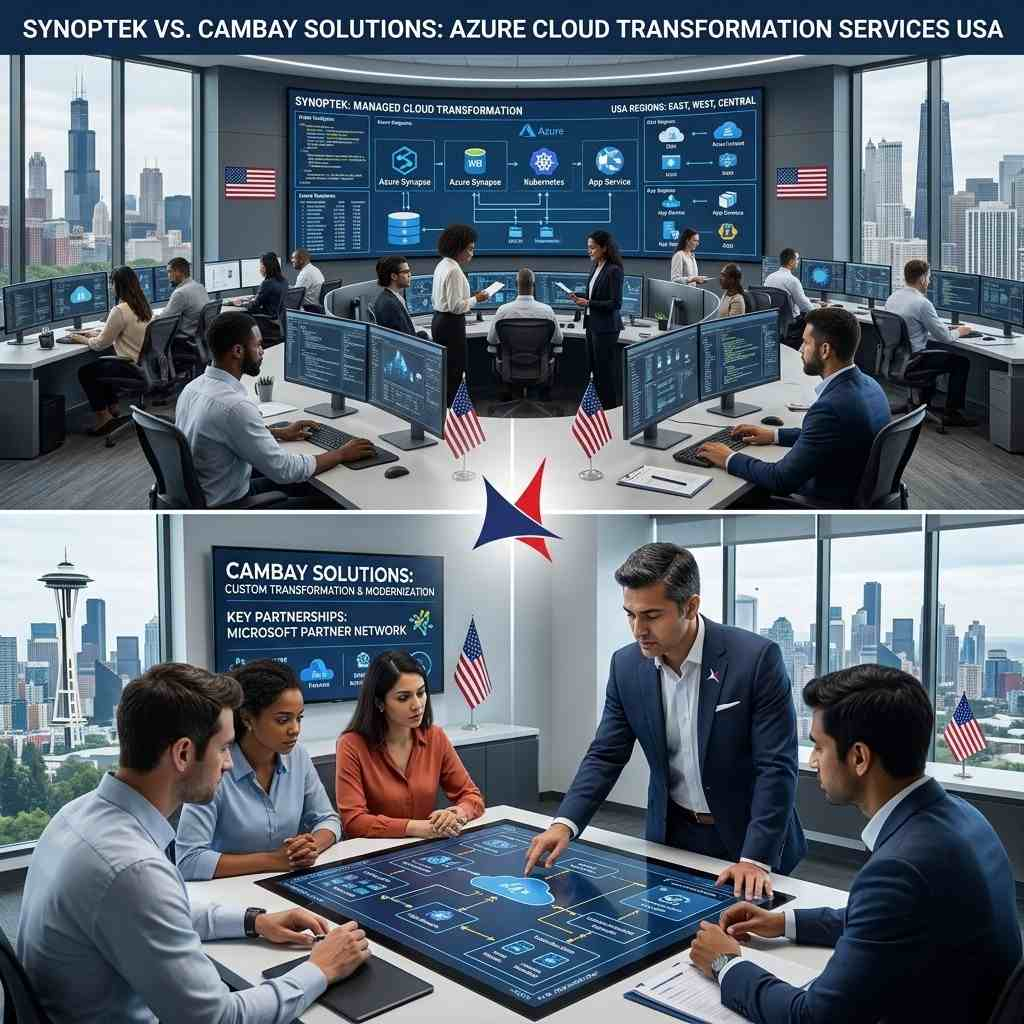
Moving business systems to Microsoft Azure involves more than transferring applications from physical servers to the cloud. You need a clear migration plan, secure architecture, predictable costs, and support after deployment. When comparing Azure Cloud Transformation Services, businesses often evaluate providers such as Synoptek and Cambay Solutions to understand which partner can meet their technical and operational requirements.
Both companies offer services across cloud strategy, migration, security, and ongoing management. However, their service portfolios, delivery approaches, and areas of emphasis differ. Understanding these differences can help you select a provider that matches your existing infrastructure, internal IT capabilities, compliance obligations, and long-term plans.
Understanding Synoptek’s Azure Cloud Services
Synoptek provides cloud consulting and managed infrastructure services across Azure, AWS, hybrid environments, and other technology platforms. Its Azure practice covers the cloud lifecycle, from initial planning and migration to ongoing operations and optimization.
Its publicly described services include workload assessments, dependency mapping, Azure architecture planning, and migration using lift-and-shift, re-platforming, or re-architecting approaches. These options help businesses decide how much change each application requires before moving it.
Synoptek also emphasizes managed cloud operations. Its services include continuous monitoring, incident response, performance management, cost governance, and security support. The company describes using its aiXops platform to support cloud visibility and operational management.
For organizations managing complex or multi-cloud environments, this broader service coverage may be useful. Its Azure Expert Managed Service Provider credentials are also a relevant point to examine when evaluating enterprise-level Azure expertise.
Understanding Cambay Solutions’ Azure Transformation Services
Cambay Solutions focuses on Microsoft technologies, including Azure, Dynamics 365, Microsoft 365, Power Platform, and related business applications. Its cloud transformation services cover assessment, architecture, migration, security, and post-migration optimization.
The company describes several migration approaches, including lift-and-shift, application modernization, and cloud-native architecture. Its Azure practice also includes landing zone design, network planning, identity management, and governance.
Security is another important part of its service offering. Cambay identifies technologies such as Microsoft Defender for Cloud, Azure Policy, role-based access control, and Microsoft Sentinel as part of its broader Microsoft security capabilities.
Its services also include FinOps and cost optimization. This can involve reviewing resource usage, identifying oversized or idle services, and considering Azure Reserved Instances where they fit the workload.
Cambay also offers managed cloud operations, including monitoring, patching, incident management, and capacity planning. This combination can appeal to businesses that want their Azure environment supported alongside other Microsoft business systems.
Synoptek vs. Cambay Solutions: Key Service Differences
The right provider depends on the environment you need to manage. Both companies offer cloud migration and ongoing support, but their wider portfolios provide different options.
Cloud strategy and migration: Synoptek describes a broad cloud practice covering Azure, AWS, hybrid infrastructure, workload assessment, and migration planning. Cambay places stronger emphasis on Microsoft Azure and its connection with the wider Microsoft technology stack.
Multi-cloud management: If your organization operates across Azure and AWS, Synoptek's multi-cloud management services may be relevant. Cambay's published service portfolio is more Microsoft-focused, which may suit businesses standardizing on Azure and Microsoft business applications.
Security and governance: Both providers describe cloud security and compliance capabilities. During evaluation, ask how each team handles identity controls, network security, vulnerability management, backup validation, and ongoing compliance reviews.
Cost optimization: Both companies discuss cost governance and resource optimization. Compare how frequently each provider reviews spending, reports savings opportunities, manages reservations, and assigns responsibility for implementing recommendations.
Ongoing support: Synoptek describes 24/7 managed cloud services and SLA-driven operations. Cambay also presents managed Azure operations, monitoring, incident response, and ongoing optimization. Compare the actual service hours, response commitments, escalation process, and reporting included in each proposal.
What Should You Check Before Selecting a Provider?
A provider comparison should go beyond service descriptions. Ask each company to explain how its team will handle your specific workloads and business requirements.
Start with a technical assessment. Request an inventory of applications, databases, servers, network dependencies, identity systems, and current security controls. This helps prevent overlooked dependencies from causing problems during migration.
Next, ask for a phased migration plan. It should identify which workloads will move first, how testing will take place, what downtime may be expected, and how the team will restore services if a migration step fails.
Review the proposed Azure architecture carefully. Check network segmentation, identity permissions, backup policies, disaster recovery arrangements, monitoring, and data protection controls.
You should also request a detailed cost estimate. Separate one-time migration expenses from recurring Azure consumption and managed service fees. Ask whether the estimate includes licensing, data transfer, support, monitoring tools, and future capacity requirements.
Finally, confirm who owns each responsibility after deployment. Your agreement should define service levels, incident priorities, response times, reporting frequency, maintenance windows, and escalation contacts.
Which Provider Is the Better Fit?
Synoptek may be worth considering if you need a provider with a broad cloud management practice spanning Azure, AWS, hybrid infrastructure, and enterprise operations. Its documented Azure services cover strategy, migration, security, cost governance, and managed support.
Cambay Solutions may be a suitable option if your organization is primarily invested in Microsoft technologies and wants Azure transformation connected with Dynamics 365, Microsoft 365, data analytics, and security services. Its focus on Microsoft platforms can help when cloud infrastructure decisions affect business applications and daily operations.
When evaluating Azure Cloud Transformation Services, do not choose based on a single certification, advertised savings figure, or migration timeline. Ask both providers for a proposed architecture, delivery schedule, sample reporting, service-level commitments, and references relevant to your industry.
The strongest choice is the provider that can explain the technical decisions, document responsibilities, and support your environment after the migration is complete.
How Cambay Solutions Supports Azure Cloud Transformation
Cambay Solutions provides Microsoft-focused consulting across Azure cloud transformation, security and compliance, data and analytics, business applications, and managed services. Its published Azure offering includes cloud architecture, workload migration, application modernization, security configuration, and cost optimization.
For businesses planning a move from on-premises infrastructure, Cambay can assess current workloads and develop a migration roadmap based on technical requirements and business priorities. Its wider Microsoft services may also be relevant when Azure needs to support Dynamics 365, Microsoft 365, or Power Platform deployments.
If you are comparing providers, ask Cambay for a clear project scope, migration phases, estimated costs, security responsibilities, and post-launch support terms. This gives you a practical basis for deciding whether its approach fits your organization.
Frequently Asked Questions
Is Synoptek an Azure service provider?
Yes. Synoptek offers Azure strategy, migration, security, cloud management, and ongoing operational support. It also describes broader services for AWS and hybrid cloud environments.
Does Cambay Solutions provide Azure migration services?
Yes. Cambay Solutions describes Azure migration, architecture design, application modernization, security, cost optimization, and managed cloud operations among its services.
What should an Azure migration proposal include?
A useful proposal should cover workload assessment, architecture, migration phases, testing, downtime planning, security controls, backup and recovery, costs, and post-migration support.
Can you keep some systems on-premises after moving to Azure?
Yes. A hybrid cloud approach allows suitable workloads to remain on-premises while other systems run in Azure. The decision depends on application dependencies, compliance requirements, performance, and operating costs.
How do you compare Azure managed service providers?
Compare their technical experience, service coverage, security practices, monitoring arrangements, response times, reporting, pricing, and contract terms. Ask for written service-level commitments before signing.
Cambay Solutions is a Microsoft-focused technology and consulting company that helps businesses modernize their operations through cloud transformation, Business Applications, data and analytics, AI, Microsoft 365, Azure, and managed IT services. The company delivers scalable technology solutions designed to improve efficiency, innovation, and business growth.








Comments (0)