

When Should You Repair or Replace a Door Lock?
When Should You Repair or Replace a Door Lock?

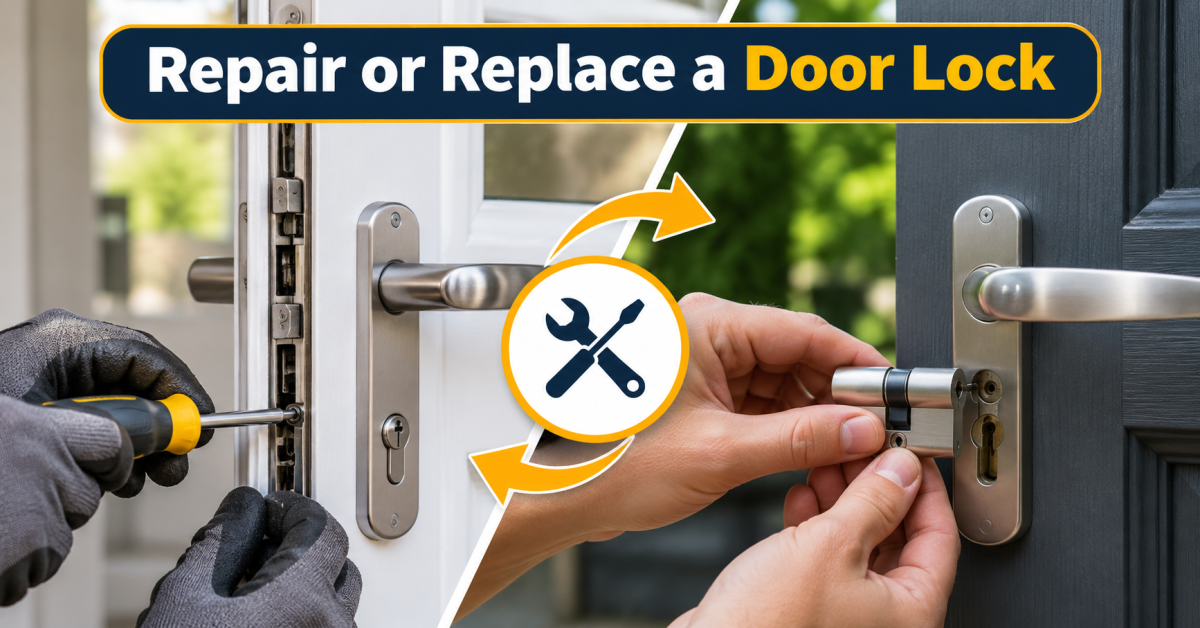
A faulty door lock does not always need to be replaced.
Sometimes the real problem is a worn spring, loose handle, slightly dropped door, sticking cylinder, or misaligned locking mechanism. In other cases, the lock may be damaged beyond reliable repair or no longer provide the level of security the property requires.
Knowing the difference can help homeowners, landlords, and businesses avoid unnecessary replacement while also recognising situations where continuing to use an old or damaged lock creates a genuine security risk.
The decision should be based on the condition of the complete door and locking system rather than the age of the lock alone.
Start With the Symptoms
Locks often give warning signs before complete failure. The key may feel slightly stiff. The handle may droop after use. The door may need to be pushed or lifted before it locks.
A cylinder may feel loose. The key may turn but fail to operate the locking mechanism correctly.
These symptoms do not automatically mean a new lock is required. They do mean the problem should be investigated before additional force causes further damage.
Property owners considering broader locksmith services in Coventry should first identify whether the fault involves the cylinder, handle, door alignment, multipoint mechanism, or another component.
Replacing the wrong part will not solve the underlying problem.
A Stiff Lock May Be Repairable
A lock that becomes difficult to turn is one of the most common early warning signs. The cause may be relatively simple.
Dirt or incorrect lubrication can affect internal movement. A door may have dropped slightly on its hinges.
The keeps in the frame may no longer line up correctly with the locking points. The cylinder itself may also be beginning to wear.
If the lock still operates and the components remain structurally sound, adjustment or repair may restore normal operation. The important thing is not to keep forcing the key.
Repeated force can turn a minor fault into a snapped key, damaged cylinder, or failed mechanism.
Door Alignment Can Look Like a Lock Failure
This is particularly common with uPVC and composite doors.
If the door has moved slightly, the hooks, rollers, or bolts of a multipoint system may no longer enter the keeps smoothly.
The homeowner may assume the lock is broken because the handle becomes difficult to lift or the key becomes stiff.
However, replacing the cylinder alone will not fix an alignment problem. The door, hinges, frame, keeps, and locking mechanism should be considered together.
Correcting alignment early can reduce unnecessary strain on the gearbox and other moving parts.
A Floppy Handle Does Not Always Mean a New Lock
A loose, drooping, or spinning handle may be caused by worn springs, loose fixings, a damaged spindle, or a problem inside the gearbox.
The lock cylinder may still be perfectly serviceable. This is why diagnosis matters.
Replacing a complete locking system because of a failed handle component can be unnecessary.
At the same time, a failing handle should not be ignored. On multipoint doors, the handle often operates several locking points at once. If it can no longer lift or engage them correctly, the door may not be securing as intended.
Replace a Lock When Security Has Been Compromised
Some situations make replacement more appropriate than repair.
A lock that has been physically attacked may have internal damage even if it still appears to operate.
A cracked lock body, badly damaged cylinder, broken internal components, or defeated locking mechanism may no longer provide reliable security.
This becomes especially important after an attempted break-in. A damaged lock should not be judged only by whether the key still turns. The surrounding door, frame, handle, keeps, and locking mechanism should also be checked.
If the security of the existing lock cannot be confidently restored, replacement is usually the better option.
Burglary Damage Can Affect More Than the Lock
Forced entry can transfer considerable force into the entire door assembly.
The frame may split. Keeps may pull away. Handles can become distorted. Hinges may move.
uPVC or composite mechanisms can be damaged internally.
Professional burglary repair Coventry work should therefore consider the complete entry point rather than simply inserting a new cylinder into a damaged door.
Temporary securing may be needed first. Permanent repair can then address the lock, mechanism, frame, hardware, and any other affected parts.
The goal should be restoring the security of the door as a system.
Lost or Stolen Keys Can Justify Replacement
A perfectly working lock may still need changing if key security has been compromised.
If keys are stolen, or lost together with information that could identify the property, continuing to use the same lock may create unnecessary risk.
The same issue can arise with rental properties. Previous tenants, contractors, cleaners, tradespeople, or other authorised users may have had access to keys.
When access control becomes uncertain, replacing or reconfiguring the relevant lock can restore control over who can enter the property.
In these situations, the condition of the lock is not the main issue. The problem is key security.
Replacement Can Also Be a Planned Upgrade
Not every lock replacement happens because something has failed. A property owner may want to improve security.
An older cylinder may be replaced with an anti-snap option. A timber door may need a lock that better matches current security or insurance requirements.
A business may need better control over staff access. The decision should still begin with the door type and existing hardware. A more expensive lock is not automatically a better choice if it is poorly suited to the door.
Compatibility, installation quality, and the condition of the complete entry point all matter.
Know When Emergency Help Is Needed
Some lock problems cannot wait for a convenient appointment. A front door may suddenly refuse to lock.
A key may snap inside the cylinder. A multipoint mechanism may fail while the property is open.
Someone may become locked outside after losing keys or after the door shuts unexpectedly.
In these situations, emergency locksmith in Coventry services may be appropriate for restoring access or securing the property.
The immediate goal depends on the situation. A lockout requires safe entry. A failed external door requires security to be restored.
A broken mechanism may need repair or replacement before the property can be left unattended.
Non-Destructive Entry Should Be Considered First
Being locked out does not automatically mean the lock needs drilling. Depending on the door, lock, and circumstances, non-destructive entry may be possible.
If the existing lock is still functioning correctly, preserving it can reduce unnecessary cost and damage.
Drilling or destructive entry may be required when the lock has failed internally or cannot be opened by another suitable method.
The important point is that replacement should follow actual need rather than being treated as the default response to every lockout.
uPVC Mechanisms Need Proper Diagnosis
uPVC doors often contain more than a simple cylinder. The key operates a cylinder, but the handle may control a gearbox connected to hooks, rollers, or bolts running along the door edge.
When one part fails, the symptoms can be confusing.
The key may turn while nothing happens. The handle may lift without engaging the locking points.
The mechanism may jam partway. Replacing only the cylinder will not solve a failed gearbox.
Likewise, replacing an entire multipoint strip may be unnecessary if the fault is limited to a compatible gearbox or alignment issue.
Diagnosis should identify the failed component before replacement parts are chosen.
Do Not Ignore a Key That Keeps Sticking
A sticking key may seem minor, particularly if the lock still works most of the time.
However, repeated resistance can indicate wear. The cylinder may be deteriorating.
The key itself may be damaged. The door may be placing pressure on the lock because of alignment.
If the problem gradually becomes worse, waiting until the key snaps can create a more difficult lockout.
Early inspection can often determine whether cleaning, adjustment, repair, or replacement is appropriate.
Consider the Age and Condition of the Lock
Age alone does not determine whether a lock needs replacing. A well-maintained older lock can sometimes continue working reliably.
A newer lock can fail early if it has been poorly fitted, frequently forced, or installed on a badly aligned door.
Condition matters more than the calendar. Ask whether the lock operates smoothly. Check whether components feel loose.
Look for corrosion, cracking, movement, or visible damage. Consider whether the lock still provides suitable security for the property.
These factors provide a better basis for replacement decisions than age alone.
Insurance Requirements May Affect the Decision
Property insurance can include requirements relating to external door security. The exact requirements vary by insurer and policy.
Property owners should check their own documents rather than assuming every working lock automatically meets the required standard.
If an existing lock no longer meets the applicable requirement, replacement may be appropriate even when the mechanism still works.
This is especially relevant when moving into a property, reviewing older doors, or upgrading security after a claim.
Rear and Patio Doors Deserve the Same Attention
Front-door locks receive most of the attention, but secondary entrances can develop the same faults.
Rear uPVC doors may become misaligned. Patio door locks can wear. Sliding mechanisms may become difficult to operate.
Doors used less frequently can sometimes hide developing problems because occupants do not notice changes as quickly.
Test all external doors periodically. Make sure they close correctly and lock without excessive force.
A property is only as secure as the entry point with the weakest combination of lock, frame, hardware, and everyday use.
Repair Is Sensible When Full Security Can Be Restored
Repair is often the better option when the damaged component can be corrected without compromising reliability or security.
Examples may include a dropped door, loose hardware, worn spring, damaged handle, sticking mechanism, or replaceable internal part.
The important test is what the repair achieves. If the door operates smoothly afterward and the locking system is fully secure, replacing everything may offer little benefit.
A repair should not be treated as a temporary cosmetic fix. It should restore proper function.
Replacement Is Better When Repair Leaves Doubt
A repair is not worthwhile if the lock remains unreliable or security has been permanently compromised.
Severe physical damage, cracked components, badly worn lock bodies, unsuitable outdated locks, or damage after forced entry may justify replacement.
A lock replacement Coventry service can also be appropriate after lost keys, property moves, tenancy changes, or planned security upgrades.
The purpose should be clear. Replacement should solve a defined security or reliability problem, not simply replace parts for the sake of doing so.
Think About the Whole Door Before Upgrading
A strong new lock cannot compensate for a badly damaged frame. An upgraded cylinder cannot fix a failing gearbox.
A secure multipoint mechanism cannot work correctly if the door is badly misaligned. Security upgrades therefore need to consider the complete entry point.
The door, lock, frame, hinges, handles, keeps, glazing, and user habits can all influence overall security. This is especially important after burglary damage or when upgrading an older property.
Commercial Properties Need Access Control as Well
Businesses may have additional reasons for changing locks. Employees leave. Keys are copied.
Contractors require temporary access. Some rooms need tighter security than others.
A business may therefore replace locks even when they remain mechanically functional.
The goal is access control. Property managers should know who currently has keys or credentials and whether those permissions still make sense.
Lock replacement, restricted access systems, or other security measures may be considered depending on how the premises are used.
Regular Checks Can Reduce Emergency Failures
Many emergency lock problems begin as smaller faults.
Test external doors periodically. The key should turn smoothly. Handles should return to position normally.
The door should close without needing excessive force. Multipoint locking points should engage consistently. Look for loose hardware or movement around cylinders and handles.
Early attention to these changes can reduce the chance of discovering a complete failure when leaving for work, returning home late, or trying to secure the property at night.
Final Thoughts
Choosing between lock repair and replacement should not be based on guesswork.
A stiff lock, loose handle, or misaligned door may be repairable. A compromised lock after forced entry, lost keys, severe physical damage, or an unsuitable security standard may justify replacement.
The most important step is identifying what has actually failed. Repair makes sense when it restores reliable operation and full security.
Looking at the complete door rather than one isolated component usually leads to a more practical and secure result.










Comments (0)