

Hidden Property Damage After Water, Fire or Storm Events

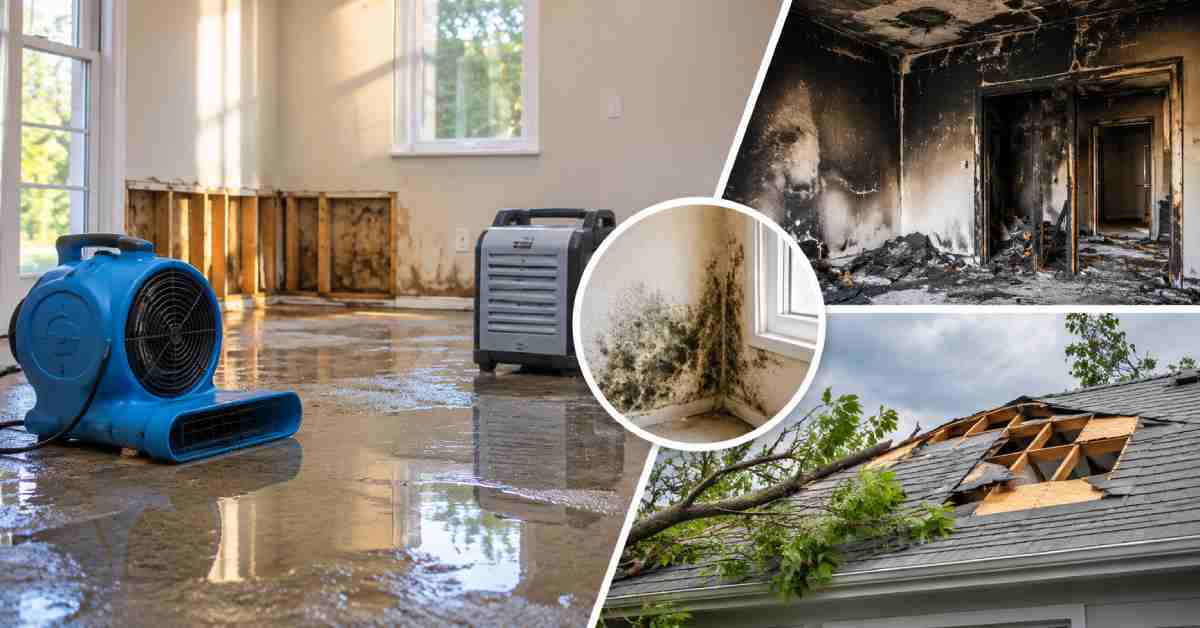
Property damage is not always limited to what can be seen immediately after an emergency.
A flooded room may look dry after standing water is removed. Fire damage may appear concentrated in one area even though smoke has travelled through several rooms. A storm may leave only a small roof opening while moisture has already moved into insulation, ceilings, or wall cavities.
These hidden problems matter because they can continue affecting a building after the obvious emergency appears to be under control.
For homeowners, property managers, and commercial building owners, understanding where secondary damage can develop makes it easier to decide what should be inspected before repairs begin.
Visible Damage Is Only the Starting Point
The first inspection after a property loss usually focuses on obvious problems.
Water on the floor, burned materials, broken roofing, damaged windows, or fallen debris are easy to identify.
However, building materials can conceal damage. Drywall can absorb moisture internally.
Insulation can remain wet even when the wall surface feels dry. Smoke residue can settle above ceilings, inside cabinets, or throughout ventilation pathways.
Storm-related movement can also affect roofing, framing, and exterior finishes without creating dramatic visible damage.
This is why the first walk-through should be treated as the beginning of the assessment rather than the final answer.
Water Can Travel Beyond the Original Leak
Water rarely remains exactly where it first entered. A plumbing leak on one floor can move through wall cavities and ceilings before becoming visible elsewhere.
Roof leaks can follow rafters, pipes, or other structural components before dripping into a room far from the original opening.
Floodwater can also move beneath flooring and into baseboards, insulation, or lower wall materials.
Professional water damage restoration services may therefore include moisture detection, extraction, structural drying, dehumidification, and monitoring rather than simply removing visible water.
The important question is not only whether the floor looks dry. It is whether moisture remains inside materials that cannot be evaluated by appearance alone.
Flooring Can Hide Significant Moisture
Flooring is one of the easiest places for hidden moisture to remain. Carpet padding can hold water beneath a surface that already feels dry.
Laminate or wood flooring can trap moisture underneath. Water may also reach subflooring, adhesives, or structural materials below the finished floor.
Over time, this can cause swelling, staining, odour, or deterioration. In commercial properties, large floor areas may require systematic moisture assessment before new materials are installed.
Replacing the visible flooring without checking what is underneath can allow the original problem to remain.
Wall Cavities Can Stay Wet for Longer
Walls can appear normal while insulation or framing remains damp. This is particularly common when water enters from above or travels through plumbing cavities.
Paint and drywall surfaces may dry faster than materials inside the wall. That can create a false sense that the problem has been resolved.
When moisture is suspected inside a wall, assessment may involve moisture meters, selective opening, thermal imaging, or other inspection methods depending on the situation.
Drying should be confirmed before the wall is sealed again.
Mold Can Develop After the Water Is Gone
Water damage and mold are related, but they are separate problems.
Removing standing water does not automatically eliminate every condition that may support mold growth.
Moisture can remain in porous materials or concealed areas.
If growth is suspected, professional mold remediation and testing may help determine where contamination is present and what type of containment or removal may be required.
Mold work should not be reduced to cleaning a visible spot on the wall. The moisture source also needs to be addressed.
Otherwise, the same conditions can allow the problem to return.
Fire Damage Extends Beyond Burned Areas
Fire losses often create several types of damage at the same time.
There may be direct flame damage, heat damage, smoke residue, soot, water from firefighting, and structural impact.
A room that never burned can still be affected by smoke. Soot particles can settle on ceilings, walls, furniture, electronics, and porous materials.
Odour can also remain in areas that look visually clean. Professional Fire damage recovery may involve structural cleaning, residue removal, odour treatment, selective demolition, and preparation for repairs.
The goal is not simply to remove visibly burned materials. It is to understand how far fire-related contamination travelled through the building.
Smoke Can Move Through HVAC Systems
Heating and cooling systems can distribute smoke or odour beyond the original fire area.
Even when the system was not running during the incident, smoke can enter ductwork and nearby mechanical spaces.
This can make odour problems more difficult to isolate. Filters, vents, equipment, and accessible duct components may need assessment after significant smoke exposure.
Simply repainting walls may not resolve an odour if another source remains elsewhere in the building.
A complete inspection should consider how air moves through the property.
Storm Damage Can Affect More Than the Roof
After severe weather, property owners often look first for missing shingles, broken windows, or fallen branches.
These are important, but storms can also create less obvious damage. Wind may loosen flashing or roofing components without removing them completely.
Water may enter around roof penetrations, siding, windows, or damaged seals. Falling debris can also affect gutters, fascia, exterior cladding, or structural components.
Disaster response may include temporary board-up, debris removal, flood cleanup, tarping, and other stabilization measures while the full damage is investigated.
Temporary protection can reduce further exposure, but it does not replace permanent repair.
Small Roof Openings Can Cause Large Interior Problems
A relatively small roof defect can allow water into a much larger interior area. Water may travel along decking, framing, insulation, and ceiling materials before becoming visible.
By the time a ceiling stain appears, moisture may already have spread beyond the visible mark.
This is why post-storm inspection should include both exterior and interior areas. Attics, ceilings, walls, and upper-floor rooms may all need review.
A repair that addresses only the exterior opening can miss interior drying or material replacement requirements.
Electrical Systems May Also Be Affected
Water, fire, and storm events can involve electrical components. Outlets, wiring, fixtures, panels, appliances, and equipment may be exposed to moisture or heat.
Property owners should avoid assuming that an electrical component is safe simply because it still operates.
Where electrical exposure is suspected, qualified assessment may be required before normal use resumes.
This becomes particularly important in commercial or institutional buildings where electrical systems support larger areas or critical operations.
Structural Damage May Be Subtle
Not every structural problem looks dramatic. Fire can weaken materials without causing immediate collapse.
Long-term water exposure can affect wood framing or other building components. Storms can also shift or damage exterior structures.
Cracks, movement, sagging, or unusual changes should be documented and evaluated. The purpose is not to assume that every property loss involves structural failure.
It is to avoid overlooking conditions that may affect later repairs. Reconstruction should begin only after the damaged structure has been properly assessed.
Reconstruction Should Follow Mitigation
Restoration projects generally work best when the stages happen in the correct order. Emergency stabilization comes first.
Water, contamination, smoke residue, or unsafe materials may then need to be addressed. Only after the property is ready should permanent rebuilding begin.
Reconstruction may involve framing, drywall, flooring, roofing, painting, doors, windows, carpentry, and other repairs needed to return the property to normal use.
Starting this work too early can create problems. New finishes should not cover materials that are still wet, contaminated, or unstable.
Commercial Properties Can Hide More Complex Damage
Large commercial and institutional buildings may have more complicated systems than a typical home.
Water can travel through drop ceilings, wall assemblies, mechanical rooms, and shared utility spaces.
Smoke can spread between departments or floors. Business operations may also continue in unaffected areas while restoration work is underway.
Property managers need to understand which areas are safe, which require restricted access, and which systems need further assessment.
Clear communication and documentation become particularly important when multiple contractors or trades are involved.
Documentation Helps Reveal the Full Scope
Photographs and written records are useful from the beginning. Document obvious damage before cleanup where it is safe to do so.
Take wide photographs showing the overall area and closer images showing specific conditions. Keep inspection reports, moisture readings, estimates, invoices, and repair recommendations.
Good documentation makes it easier to understand how the project changes from emergency stabilization to permanent repair.
It can also support discussions with insurers, adjusters, contractors, and property stakeholders.
Do Not Let Temporary Repairs Become Permanent
Temporary repairs are essential after many emergencies. Tarps can protect damaged roofs.
Board-up can secure broken windows or doors. Temporary drainage can help redirect water.
However, temporary measures should eventually be replaced by appropriate permanent work.
A tarp does not restore roofing. A boarded opening does not replace a window.
Temporary drying equipment does not replace damaged materials that cannot be restored. Property owners should keep track of every temporary measure so nothing is forgotten during later phases.
Watch for Problems That Appear Weeks Later
Some damage becomes more noticeable over time. Paint may begin to blister.
Flooring may warp. Odours may return. Staining can reappear.
A previously quiet area may develop visible mold or material deterioration. These changes can indicate that moisture, residue, or another hidden issue was not completely resolved.
If new symptoms appear after cleanup, they should be investigated rather than treated only as cosmetic defects.
Full-Scope Assessment Can Reduce Repeated Work
Property restoration can become expensive when one stage has to be repeated because an earlier problem was missed.
Installing new flooring over a damp subfloor may lead to another replacement. Painting over smoke-contaminated surfaces may not resolve odour. Closing a wall before internal moisture is controlled may create another problem later.
Property owners researching restoration services in Crete, IL can benefit from looking at the full recovery scope rather than focusing only on the most visible emergency repair.
The sequence of work matters as much as the individual repair itself.
Final Checks Should Go Beyond Appearance
A property can look repaired without every issue being resolved. Before considering recovery complete, check that damaged areas are dry, secure, functional, and properly repaired.
Confirm that temporary measures have been replaced where necessary. Review areas that were previously concealed or restricted.
For larger projects, final inspections or additional approvals may also be required depending on the type of property and scope of work.
Keep final reports, photographs, warranties, and invoices with the property records.
Hidden Damage Deserves the Same Attention as Visible Damage
The most obvious damage is not always the most important damage.
Water can move behind walls. Smoke can spread beyond burned rooms. Storms can create concealed roof and building-envelope problems.
Moisture can remain after surfaces appear dry. A successful recovery therefore depends on identifying both visible and hidden conditions before permanent repairs are completed.
The goal is not simply to restore appearance.
It is to make sure that the underlying damage has been identified, controlled, and repaired in the correct order so the property can return to safe and reliable use.








Comments (0)